
Is Cantaloupe Good for Diabetics? A Doctor-Reviewed Guide for Type 2 Diabetes
Hey there! If you are living with type 2 diabetes, you know the “fruit struggle” is real. You want something sweet and refreshing, but that constant worry about your glucose monitor is always in the back of your mind. Specifically, you might be standing in the produce aisle wondering, is cantaloupe good for diabetics? I…

Reviewed by
David T. Broome, MD, MS
Written by

Quick Overview
Hey there! If you are living with type 2 diabetes, you know the “fruit struggle” is real. You want something sweet and refreshing, but that constant worry about your glucose monitor is always in the back of your mind. Specifically, you might be standing in the produce aisle wondering, is cantaloupe good for diabetics?
I recently spoke with a patient, Sarah, who has managed her type 2 diabetes for ten years. She was terrified of melons because she heard they were “pure sugar.” After we looked at the data together, she realized she could enjoy them safely.
This guide will show you exactly how to do that. We will dive into the science of blood sugar, compare different melons, and help you pick the best fruits for your plate.
TL;DR Summary Box
- Safety: Cantaloupe is safe for most diabetics in moderation.
- Portion: Stick to ½ to 1 cup of fresh cubes per serving.
- Timing: Eat it earlier in the day or before exercise.
- Pro Tip: Pair with Greek yogurt or nuts to slow sugar absorption.
- Status: Considered a “moderate GI” but “low glycemic load” fruit.
Is Cantaloupe Diabetic-Friendly?
When patients ask is cantaloupe good for diabetics, they are usually worried about the natural sugar content. It is true that cantaloupe contains fructose. However, it is also about 90% water. This high water content helps you feel full without consuming too many calories.
Is cantaloupe good for diabetes management specifically? Yes, because it provides essential nutrients like Vitamin C and potassium. These support heart health, which is vital for anyone with type 2 diabetes. While it has natural sugar, it lacks the “empty calories” found in processed snacks.
Therefore, is cantaloupe diabetic friendly? The answer is a resounding yes, provided you keep an eye on your total carbohydrate count for the meal.
Natural Sugar vs. Added Sugar
Unlike a candy bar, cantaloupe sugar comes wrapped in fiber and water. This structure changes how your body processes the glucose. You won’t get the same aggressive “sugar rush” as you would from a soda.
Will Cantaloupe Raise Blood Sugar?
Many of my clinic visitors ask, will cantaloupe raise blood sugar quickly? To answer this, we have to look at the Glycemic Index (GI). The GI of cantaloupe is roughly 65 to 70. This range is considered “moderate to high.”
However, the Glycemic Load (GL) is more important. The GL of a standard serving of cantaloupe is only about 4. This is very low. Since the fruit is mostly water, there isn’t much actual sugar in a single cup. So, will cantaloupe raise my blood sugar? If you eat an entire melon, yes. If you stick to a small bowl, most people see a very manageable rise.
Individual Glucose Variability
Every body reacts differently. Some people might see a spike from melon, while others don’t. I always recommend testing your blood sugar two hours after eating fruit. This helps you understand your unique “glucose thumbprint.”
| Melon Type | Glycemic Index (GI) | Glycemic Load (GL) | Sugar per Cup |
| Cantaloupe | ~70 (Moderate) | 4 (Low) | 12g |
| Watermelon | ~72 (High) | 5 (Low) | 9g |
| Honeydew | ~62 (Moderate) | 8 (Low) | 14g |
Is Cantaloupe High in Sugar?
You might hear people say melons are too sweet. So, is cantaloupe high in sugar compared to other snacks? Not really. One cup of diced cantaloupe contains about 12 to 13 grams of sugar. In contrast, a single medium banana has about 14 to 15 grams.
Is there too much sugar in cantaloupe for a daily diet? Most clinical guidelines suggest diabetics can have 2-3 servings of fruit per day. A cup of cantaloupe fits perfectly into this plan. It offers more volume for fewer grams of sugar than many tropical fruits.
Does Cantaloupe Contain Sugar Alcohol?
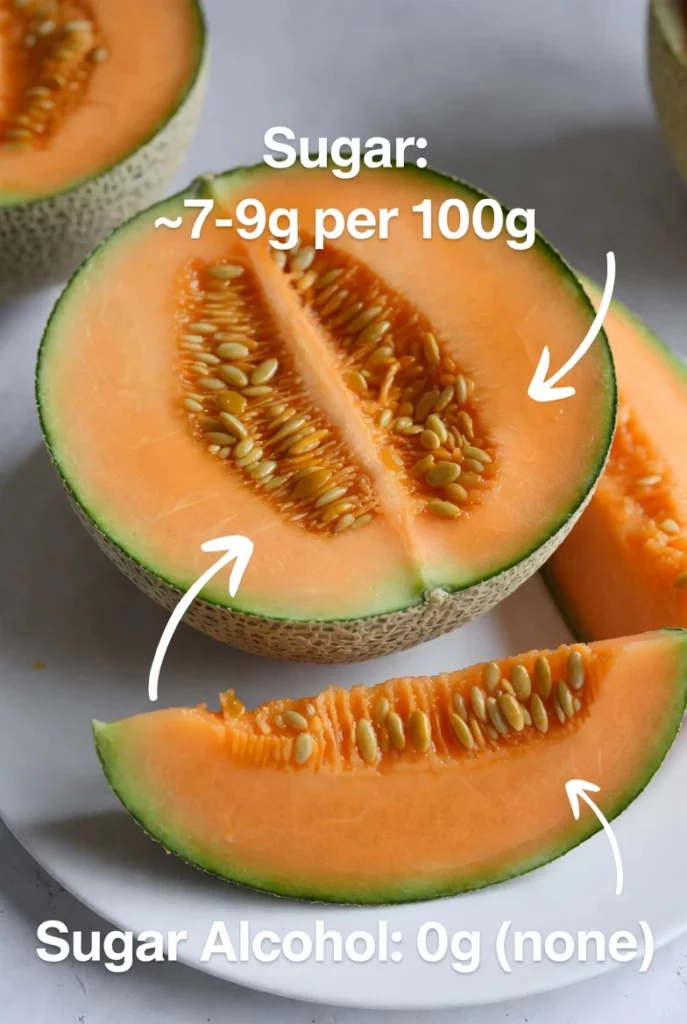
This is a common point of confusion. Does cantaloupe contain sugar alcohol? No, it does not. Sugar alcohols like erythritol or xylitol are usually found in “sugar-free” processed foods or some specific berries and stone fruits in tiny amounts.
Cantaloupe contains simple natural sugars: fructose, glucose, and sucrose. You don’t have to worry about the digestive upset sometimes caused by artificial sugar alcohols.
Is It Better to Eat Cantaloupe at Certain Times of Day?
Timing can be a secret weapon for blood sugar control. Some people worry about eating cantaloupe at night. Is this a bad idea? Your insulin sensitivity usually drops in the evening. If you eat a bowl of melon right before bed, your blood sugar might stay elevated longer.
I suggest eating fruit earlier in the day. Try it with breakfast or as a mid-afternoon snack. If you do want it at night, pair it with a protein source. Adding a few almonds or a piece of cheese can significantly flatten the glucose curve.
Is Watermelon and Cantaloupe Good for Diabetics?
Melon lovers often group these two together. Is watermelon and cantaloupe good for diabetics to eat at the same time? Both are very hydrating. However, watermelon has even less fiber than cantaloupe.
Watermelon for diabetes good or bad? It isn’t “bad,” but it does require more caution. Watermelon can spike blood sugar faster because it lacks structural fiber. If you are choosing between the two, cantaloupe is often the slightly “safer” bet for stability. Just remember that portion size is your best friend here.
Is Honeydew Good for Diabetics?
Next in the melon family is the green-fleshed honeydew. Is honeydew good for diabetics? It is very similar to cantaloupe in terms of calories. However, it usually has a slightly higher sugar content per serving.
While is honeydew good for diabetics to eat, you should be even more precise with your measuring cup. It tastes sweeter because it has a slightly higher concentration of fructose. Many of my patients find that honeydew causes a slightly higher post-meal reading than cantaloupe.
Is Muskmelon Good for Diabetes?
You might see “muskmelon” at a farmer’s market. Is muskmelon good for diabetes? Here is a fun fact: in the United States, what we call a cantaloupe is actually a type of muskmelon. They are essentially the same fruit.
So, if you are wondering is muskmelon good for diabetes, the same rules apply. Stick to the one-cup rule. Enjoy the high levels of beta-carotene and Vitamin A it provides.
How Does Cantaloupe Compare to Other Fruits for Diabetics?
Not all fruits are created equal in the eyes of your pancreas. Let’s see how our melon stacks up against other popular choices.
Is Pineapple Good for Diabetics?
Is pineapple good for diabetics? Pineapple is significantly higher on the GI scale. It also contains more sugar per cup (about 16g). While is pineapple good for diabetics in small amounts, it is much easier to overeat than cantaloupe. Use caution with pineapple.
Are Grapes Good for Diabetics?
Many ask, is grapes good for diabetics? Grapes are essentially “sugar bombs.” They are very easy to mindlessly pop into your mouth. One cup of grapes has about 23 grams of sugar. Compared to cantaloupe, grapes are much more likely to cause a rapid spike.
What Fruit Spikes Blood Sugar the Most?
If you are wondering what fruit spikes blood sugar the most, look toward dried fruits. Dates, raisins, and dried cranberries are the biggest culprits. They have no water to buffer the sugar. Tropical fruits like very ripe bananas and mangoes also rank high on the “spike list.”
Best and Worst Fruits for Diabetics
5 Best Fruits for Diabetics
If you want the most “bang for your buck” regarding nutrition and stability, these are the winners. What is the best fruit for a diabetic to eat? Usually, it’s berries.
- Strawberries: Very high fiber, low sugar.
- Blueberries: Packed with antioxidants.
- Raspberries: Highest fiber content of all fruits.
- Avocados: Yes, they are fruits! High healthy fats.
- Tart Cherries: May help with inflammation.
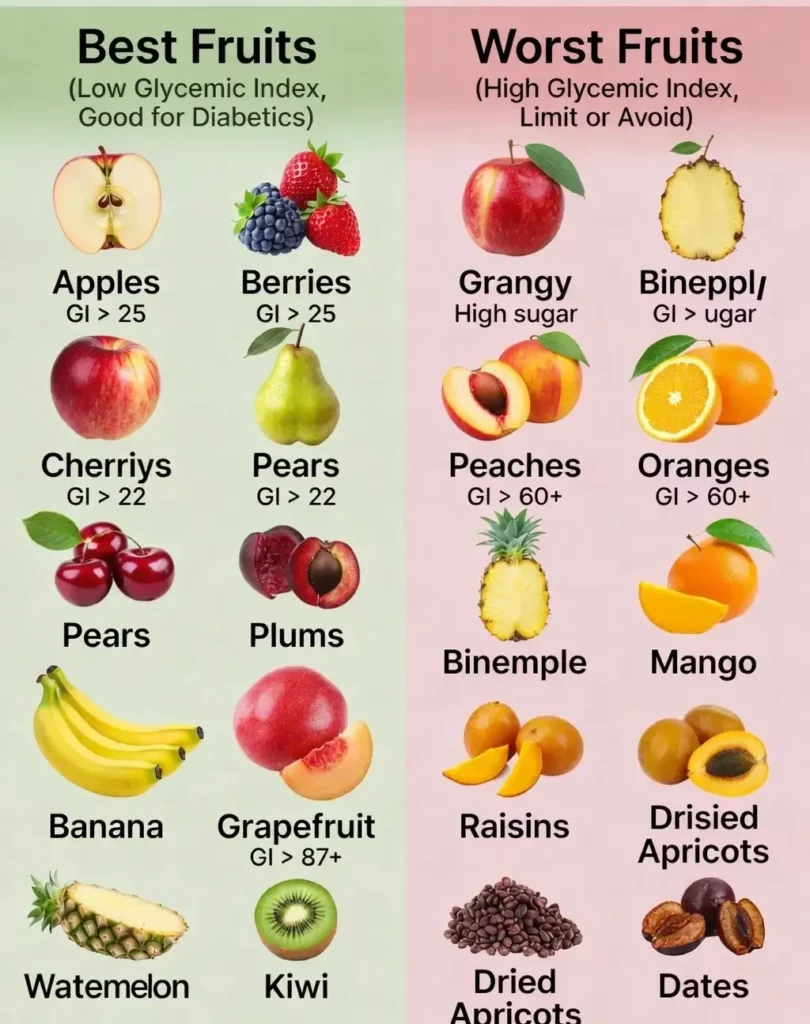
Worst Fruits for Diabetics
Avoid these or keep portions very small. Worst fruits for diabetics include:
- Canned Fruit in Syrup: The added sugar is dangerous.
- Dried Dates: Extremely high sugar concentration.
- Watermelon (in large amounts): High GI, low fiber.
- Fruit Juice: All the sugar, none of the fiber.
- Overripe Bananas: Starch turns to sugar as they brown.
How to Eat Cantaloupe Safely if You Have Diabetes
Success with fruit comes down to strategy. Don’t just eat a giant bowl of melon on an empty stomach. Follow these doctor-approved tips:
- The “Plus One” Rule: Never eat cantaloupe alone. Pair it with protein (cottage cheese) or fat (walnuts). This slows down digestion.
- Watch the Ripeness: A very soft, overripe cantaloupe has more developed sugars. Pick one that is firm.
- Use a Measuring Cup: “A few slices” can easily turn into two cups. Measure out one cup to stay honest.
- Avoid Juicing: When you juice a cantaloupe, you lose the fiber. Always eat the whole fruit.
Who Should Be More Cautious With Cantaloupe?
Not everyone with diabetes is the same. You should be extra careful if:
- Your A1c is currently above 8.0%.
- You are on “sliding scale” insulin.
- You frequently experience “dawn phenomenon” (high morning sugar).
- You have gastroparesis (slowed digestion).
If your blood sugar is already high, it is best to skip the fruit until your levels stabilize.
When to Talk to a Healthcare Professional
You should consult your doctor or a registered dietitian if you notice:
- Your blood sugar stays above 180 mg/dL after eating fruit.
- You feel shaky or dizzy after a fruit snack.
- You are unsure how to count fruit carbs into your insulin dose.
Every person’s journey with type 2 diabetes is personal. Use this guide as a starting point, but listen to your body first.
Frequently Asked Questions (FAQ)
Q: Can I eat cantaloupe every day?
A: Yes, if it fits within your daily carb limit. Most people can enjoy 1 cup daily without issues.
Q: Is cantaloupe better than watermelon for diabetes?
A: Generally, yes. Cantaloupe has slightly more fiber and a lower glycemic load than watermelon.
Q: Will cantaloupe help me lose weight?
A: It can! Since it is 90% water, it is very filling for only 50-60 calories per cup.
Q: Does cantaloupe interact with diabetes medications?
A: There are no direct interactions, but its potassium content means those on certain blood pressure meds (ACE inhibitors) should watch their intake.
Q: Is frozen cantaloupe okay?
A: Yes, as long as there is no added sugar in the packaging. It’s a great summer treat.
Conclusion
In the final analysis, managing type 2 diabetes is not about restriction; it is about making informed choices. We have spent a lot of time looking at the numbers today. We asked, is cantaloupe good for diabetics? We discovered that while its glycemic index is moderate, its low glycemic load makes it a safe, delicious option for almost everyone.
Therefore, you do not need to fear the produce aisle. You just need to respect the portion size. When you choose a cup of fresh cantaloupe over a processed snack, you are giving your body fiber, hydration, and vital antioxidants. These nutrients are essential for long-term health.
As a result of our deep dive, you now have the tools to enjoy fruit without the stress. Remember the “Plus One” rule. Always pair your melon with a bit of protein or healthy fat. This simple habit keeps your energy stable and your glucose in check. Because everyone’s body reacts differently, keep your testing kit handy and stay curious about your data.
Evidence-Based References:

SOURCES
Related articles


Diabetic-Friendly Weight Loss Meals: 1500-Calorie Plans, Easy Recipes & 7-Day Guide


Online Counseling for Chronic Illness: Therapists, Platforms & Coping Strategies

Therapy for Diabetes Depression: Treatments, Mental Health Workbooks & Best Support Resources (2026)