
Can Diabetics Eat Popcorn? A Doctor-Reviewed Guide for Type 2 Diabetes
Finding the right snack when you live with diabetes often feels like a balancing act. You want something crunchy and satisfying, but you also need to keep your blood sugar stable. I often hear patients ask, “Can diabetics eat popcorn?” during our nutritional consultations. It is a valid concern because many snacks are hidden carb…

Reviewed by
David T. Broome, MD, MS
Written by

Quick Overview
Finding the right snack when you live with diabetes often feels like a balancing act. You want something crunchy and satisfying, but you also need to keep your blood sugar stable. I often hear patients ask, “Can diabetics eat popcorn?” during our nutritional consultations.
It is a valid concern because many snacks are hidden carb bombs. However, the short answer is a resounding yes. Popcorn is a whole grain that offers fiber and volume. Therefore, it can actually be a healthy addition to your routine.
In my clinical experience, I have seen how choosing the right preparation makes all the difference. This guide will explore how you can enjoy this classic snack without risking a glucose spike.
TL;DR: Popcorn and Diabetes at a Glance
- Best Choice: Air-popped or homemade stovetop popcorn.
- Portion Size: Stick to 3 cups of popped corn (roughly 15g of carbs).
- What to Limit: Heavily buttered, salted, or caramel-coated varieties.
- Pro Tip: Pair your popcorn with a few almonds to slow glucose absorption.
Is Popcorn Good or Bad for Diabetics?
Most people think of popcorn as junk food. This is likely because we associate it with movie theaters. In its purest form, however, popcorn is a 100% unprocessed whole grain. Whole grains are essential for managing type 2 diabetes. They contain the entire grain kernel, including the bran and germ.
First of all, let’s look at the fiber content. Fiber is a diabetic’s best friend. It slows down the digestion of carbohydrates. As a result, glucose enters your bloodstream more slowly. This prevents the “spike and crash” cycle that many refined snacks cause.
Furthermore, we must consider the glycemic index (GI). The GI of plain air-popped popcorn is roughly 55. This puts it at the high end of the “low GI” category. While it contains carbs, the “glycemic load” is relatively low because the serving size is mostly air. Therefore, it is a much better choice than potato chips or pretzels.
Can Type 2 Diabetics Eat Popcorn?
If you have type 2 diabetes, you know that portion control is everything. Can diabetics eat popcorn safely while managing insulin resistance? Absolutely. In fact, popcorn provides a high “satiety” factor. This means it helps you feel full without consuming many calories.
Recently, I consulted with a patient who struggled with afternoon hunger. She felt deprived when she had to skip snacks. We introduced three cups of air-popped popcorn into her routine. Her post-snack glucose readings remained within her target range. This success was due to the fiber-to-carb ratio.
However, you must remember that everyone reacts differently. I always recommend testing your blood sugar two hours after trying a new snack. This helps you understand your unique “glucose footprint.” Some people may handle a larger portion, while others might need to stick to a smaller bowl.
How Much Popcorn Can Diabetics Eat?
Portion size is the most critical factor for blood sugar management. Even healthy foods can cause issues if you overeat them. Generally, one serving of carbohydrates for a diabetic is about 15 grams.
| Popcorn Type | Serving Size | Total Carbs | Net Carbs | Impact Level |
| Air-Popped | 3 Cups | 18g | 15g | Low |
| Light Microwave | 3 Cups | 21g | 18g | Moderate |
| Movie Theater | Large Tub | 100g+ | 85g+ | Very High |
| Kettle Corn | 1 Cup | 20g | 18g | High (Sugar) |
As shown in the table, three cups is a generous amount. It looks like a lot on your plate, which helps satisfy psychological hunger. If you want to know how much popcorn a diabetic can eat in one day, the answer depends on your total daily carb limit. Most of my patients find that one or two servings per day fit perfectly into their meal plans.
Can Diabetics Eat Popcorn Every Day?
You might wonder if eating this snack daily is a good idea. In the context of a balanced diet, daily consumption is usually fine. It provides a consistent source of whole-grain fiber. Also, it can replace less healthy habits like reaching for processed crackers.
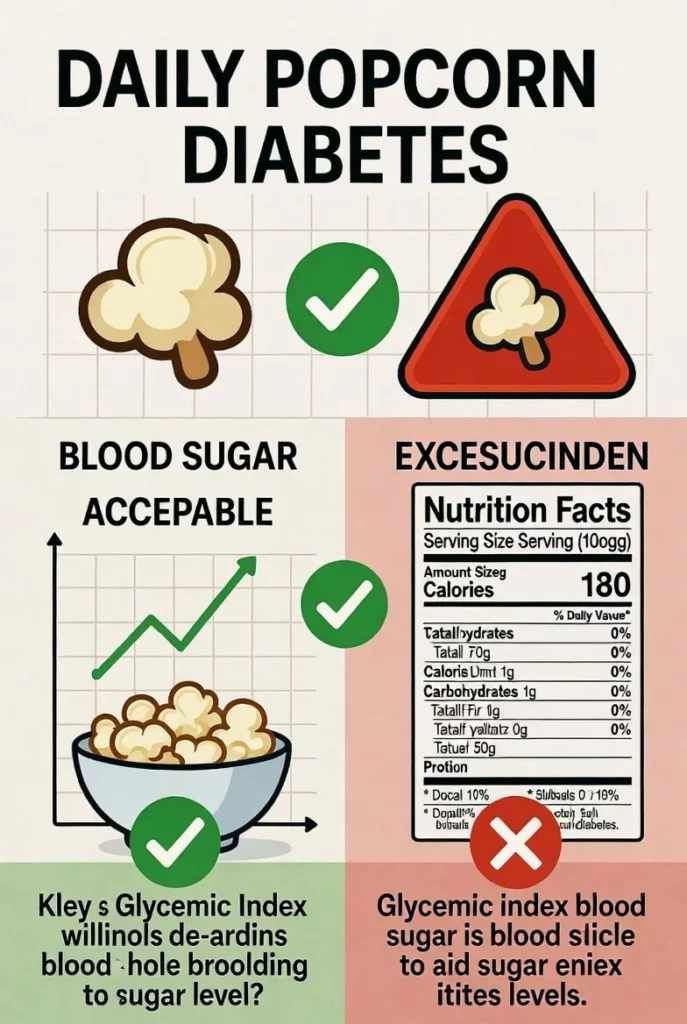
Nevertheless, variety is important for gut health. While popcorn is healthy, you should also include vegetables and nuts in your snack rotation. If you find yourself eating it every day, keep an eye on the sodium. Too much salt can raise blood pressure, which is a concern for many people with diabetes.
Can Diabetics Eat Popcorn at Night or Before Bed?
Snacking late at night can be tricky for glucose control. Many patients ask, “Can diabetics eat popcorn at night?” because they crave something salty while watching TV.
Eating popcorn before bed is generally safe in small portions. It is a complex carbohydrate, so it digests slower than a cookie. However, your insulin sensitivity usually drops in the evening. Therefore, you should be extra careful with your portion size.
I often suggest pairing evening popcorn with a small piece of string cheese. The protein and fat in the cheese further stabilize your blood sugar. This prevents the “Dawn Phenomenon,” where blood sugar rises early in the morning.
Can Diabetics Eat Popcorn with Butter, Salt, or Cheese?
We all know that plain popcorn can be a bit boring. So, can diabetics eat popcorn with butter? The answer is more about your heart health than just your blood sugar.
Glycemic Index of Popcorn With Butter
Pure fat, like butter, does not contain carbohydrates. Therefore, adding butter does not technically raise the glycemic index of the popcorn. In fact, fat can actually slow down the absorption of carbs. However, butter is high in saturated fat and calories.
If you have high cholesterol, you should limit buttered popcorn. Instead, try a light spray of olive oil or avocado oil. This provides healthy monounsaturated fats.
Similarly, cheese popcorn can be problematic. Most commercial cheese powders are high in sodium and artificial flavors. If you want a cheesy flavor, I recommend using nutritional yeast. It is a “superfood” that tastes like cheese but is low in sodium and high in B vitamins.
What Kind of Popcorn Can Diabetics Eat?
Choosing the right variety is the secret to success. Not all corn kernels are created equal. When you are looking at the shelves, keep these details in mind.
First, air-popped popcorn is the “gold standard.” It uses only heat to pop the kernels. This means there are no added fats or chemicals. You can buy a dedicated air-popper or use a simple paper bag in the microwave. It is the most cost-effective and healthiest option.

Second, homemade stovetop popcorn is a great alternative. You have total control over the ingredients. Use a high-smoke-point oil like avocado oil or refined coconut oil. Use only a small amount—about one tablespoon for half a cup of kernels. This adds a nice crunch without drenching the snack in grease.
Third, look for “light” or “low-fat” microwave options. Many brands now offer bags with minimal salt and no trans fats. However, always read the nutrition label. Look for “whole grain” as the first ingredient and check the sodium count.
Finally, you should be wary of prepackaged flavored popcorns. Options like caramel corn, kettle corn, or white cheddar varieties often contain hidden sugars. These can cause immediate glucose spikes. If you must have flavor, try adding cinnamon or smoked paprika at home.
Can Diabetics Eat Microwave or Homemade Popcorn?
There is a significant difference between microwave bags and homemade versions. Most microwave popcorn bags are lined with chemicals called PFAS. Some studies suggest these can interfere with metabolism.
Furthermore, microwave versions often use “hydrogenated” oils. These are trans fats that increase inflammation. If you have type 2 diabetes, you are already at a higher risk for heart disease. Therefore, you should avoid trans fats entirely.
Homemade popcorn is almost always better. It takes only five minutes to make on the stove. You save money and avoid unnecessary additives. Also, the taste of fresh-popped corn is far superior to anything from a bag.
How to Make Popcorn for Diabetics
Making a diabetes-friendly snack is simple. Follow these steps for a perfect bowl:
- Choose your heat: Use an air-popper or a heavy-bottomed pot on the stove.
- Use healthy fats: If using the stove, add one tablespoon of olive or avocado oil.
- Add kernels: Use half a cup of organic, non-GMO kernels.
- Cover and shake: Keep the lid on and shake the pot to prevent burning.
- Season wisely: While the corn is hot, mist it with a tiny bit of olive oil spray. Then, toss in herbs like rosemary or garlic powder.
Is SkinnyPop Popcorn Good for Diabetics?
Many of my patients ask about specific brands, and Skinny Pop is a frequent topic. Is Skinny Pop popcorn good for diabetics compared to other bagged snacks? In short, it is a much better alternative to traditional potato chips.
Skinnypop is popular because it uses very few ingredients. It contains popcorn, sunflower oil, and salt. Therefore, it lacks the artificial flavors and trans fats found in many microwave brands. For someone managing type 2 diabetes, this simplicity is a huge plus.
However, you must still watch your portions. A single-serve bag contains about 15 grams of carbohydrates. This fits perfectly into a standard diabetic meal plan. Just remember that “skinny” does not mean “carb-free.” If you eat the entire family-sized bag, your blood sugar will certainly rise. Consequently, I always suggest pre-portioning your snacks into small bowls.
Can Diabetics Eat Movie-Theater Popcorn?
A trip to the cinema often feels incomplete without a tub of popcorn. However, can diabetics eat movie popcorn without a massive glucose spike? This is one of the most challenging environments for blood sugar control.
First, movie theater portions are massive. A “small” popcorn often contains 7 to 10 cups. That is nearly 60 grams of carbohydrates. Furthermore, the “butter” used in theaters is usually a flavored soybean oil. This oil is very high in calories and can cause inflammation.
If you want to enjoy a movie, choose the smallest size available. Ask the staff to leave off the extra butter and salt. In fact, some theaters will pop a fresh batch without salt if you ask nicely. Most importantly, share your snack with a friend. This naturally limits your intake.
Can Prediabetics Eat Popcorn?
If you have been told you have prediabetes, your goal is prevention. You want to stop the progression to full type 2 diabetes. So, can prediabetics eat popcorn as part of a preventive diet?
Yes, and it is actually a smart choice. Replacing refined snacks like white bread or sugary crackers with popcorn can improve your insulin sensitivity. The fiber in whole grains helps your body process sugar more efficiently.
In my practice, I have seen prediabetic patients lose weight just by switching their snacks. Because popcorn is high-volume, it keeps you full longer. This prevents the overeating that often leads to weight gain and insulin resistance.
Is Popcorn Good for Diabetes and Cholesterol?
Many people with diabetes also struggle with high LDL cholesterol. This combination increases the risk of heart disease. Therefore, you might wonder: Is popcorn good for diabetes and cholesterol management?
Whole-grain fiber acts like a sponge in your digestive tract. It binds to cholesterol and pulls it out of your body. This can help lower your “bad” cholesterol levels over time.
However, this benefit only applies to plain or lightly oiled popcorn. If you soak your corn in butter or palm oil, you cancel out the heart-healthy benefits. Stick to heart-healthy fats like olive oil or avocado oil to get the best of both worlds.
What Is the Number One Snack to Lower Blood Sugar?
I often get asked, “What is the number one snack to lower blood sugar?” It is important to clarify a common misconception. No single food or snack will instantly “lower” high blood sugar like a medication would.
Instead, the goal of a diabetic snack is stability. You want foods that cause a very slow, shallow rise in glucose. In this regard, popcorn is an excellent candidate when paired with a protein.
For the best results, try “pairing” your popcorn. Eat it alongside a hard-boiled egg or a tablespoon of peanut butter. The protein and healthy fats further slow down the digestion of the corn’s carbohydrates. This creates a very stable blood sugar line on your glucose monitor.
What Kind of Chips Can Diabetics Eat?
If you are craving something crunchy, you might consider chips. So, what kind of chips can diabetics eat? Most traditional potato chips are high in refined carbs and unhealthy fats. They have a very high glycemic index.
Compared to chips, popcorn is almost always the winner. Popcorn has more fiber and fewer calories per cup. If you really want chips, look for “bean-based” chips or kale chips. These offer more nutrients and less impact on your glucose than corn or potato chips.
Can Diabetics Eat Honey?
Sometimes people like to sweeten their popcorn with a honey glaze. Can diabetics eat honey on their snacks? While honey is natural, it is still a sugar. It will raise your blood sugar much faster than the popcorn itself.
If you have a sweet tooth, try dusting your popcorn with cinnamon or a tiny bit of stevia. This provides sweetness without the glycemic load. If you must use honey, limit it to a very small drizzle and monitor your readings afterward.
Who Should Be More Cautious With Popcorn?
While popcorn is generally safe, it isn’t for everyone. Some people with advanced insulin resistance might find that even small amounts cause spikes.
Additionally, if you have digestive issues like diverticulitis, the hulls in popcorn can be irritating. Always listen to your body. If you notice your blood sugar stays high for hours after eating popcorn, you may need to reduce your portion further.
When to Talk to a Healthcare Professional
Managing diabetes is a journey that requires professional guidance. You should talk to your doctor if:
- Your blood sugar regularly spikes above 180 mg/dL after snacking.
- You are unsure how to adjust your insulin for carbohydrate intake.
- You experience frequent digestive upset after eating whole grains.
- You want a personalized meal plan tailored to your specific A1c goals.
I recently spoke with a patient who was terrified of all carbohydrates. We worked together to reintroduce healthy grains like popcorn. Seeing her enjoy a snack while keeping her A1c under 7.0 was incredibly rewarding.
Frequently Asked Questions
Can diabetics eat popcorn with butter?
Yes, but you should use it sparingly. Butter does not raise blood sugar, but it is high in saturated fat and calories. Too much can lead to weight gain and heart issues.
Can diabetics eat popcorn at night?
Absolutely. A small portion of popcorn at night can be a great complex carb. Just ensure you keep the portion to about 3 cups to avoid morning spikes.
Is popcorn a good snack for diabetics?
Yes, it is one of the best whole-grain snacks available. Its high fiber content and low calorie density make it an ideal choice for weight and glucose management.
Can type 2 diabetics eat popcorn every day?
Eating popcorn daily is fine as long as you stay within your daily carb budget. Ensure you vary your seasonings to keep it interesting and healthy.
What kind of popcorn can a diabetic eat?
The best choices are air-popped, homemade stovetop, or light microwave varieties. Avoid kettle corn, caramel corn, and heavy theater butter.
Conclusion: Finding the Sweet Spot with Savory Snacks
In the final analysis, managing type 2 diabetes does not mean you have to give up the foods you love. As we have explored, the answer to “can diabetics eat popcorn” is a very positive one.
This whole grain provides the crunch you crave and the fiber your body needs. It stands out as a superior choice compared to processed chips or sugary treats. Therefore, you can feel confident including it in your weekly meal plan.
Nevertheless, your success depends on the choices you make at the stove or the grocery store. Focus on air-popped or homemade varieties to keep calories and unhealthy fats low. Always keep your portions to around three cups to ensure your glucose levels stay within a safe range. Most importantly, remember to pair your snack with a protein source if you are eating it late at night.
Evidence-Based References:

SOURCES
Related articles


Diabetic-Friendly Weight Loss Meals: 1500-Calorie Plans, Easy Recipes & 7-Day Guide


Online Counseling for Chronic Illness: Therapists, Platforms & Coping Strategies

Therapy for Diabetes Depression: Treatments, Mental Health Workbooks & Best Support Resources (2026)