
What Is Type 2 Diabetes? A Doctor-Reviewed, Plain-English Guide
Have you recently received a diagnosis that feels overwhelming? Perhaps you are just curious about your health after a routine blood test. You might be asking yourself, what is type 2 diabetes exactly? Honestly, you are in the right place to find clear answers. This condition affects millions of Americans and even more people across…

Reviewed by
David T. Broome, MD, MS
Written by

Quick Overview
Have you recently received a diagnosis that feels overwhelming? Perhaps you are just curious about your health after a routine blood test. You might be asking yourself, what is type 2 diabetes exactly? Honestly, you are in the right place to find clear answers.
This condition affects millions of Americans and even more people across the globe. It can feel like a heavy label to carry. However, understanding the “why” behind your blood sugar levels is the first step toward feeling better. In my clinical practice, I often see how much relief comes from simple, honest education.
I recently interviewed a patient who felt “broken” after her diagnosis. We sat down and walked through the science together. By the end, she realized she wasn’t broken; her body just needed a different set of instructions. This guide will provide those instructions for you.
TL;DR Summary Box
- Type 2 Diabetes = Insulin resistance combined with high blood sugar levels.
- Commonality: This is the most common form of diabetes worldwide.
- Causes: It is often linked to a mix of genetics and lifestyle factors.
- Status: The condition is treatable and manageable, though not currently “curable” in the traditional sense.
What Is Type 2 Diabetes in Simple Terms?
Let’s break down what is type 2 diabetes in simple terms so it makes total sense. Think of your body as a series of locked rooms (your cells) that need energy. That energy comes from glucose, which is a type of sugar in your blood. To get into those rooms, you need a key. That key is a hormone called insulin.
In a healthy body, the pancreas releases insulin. It travels to the cells, unlocks the doors, and lets the sugar in. But what is type 2 diabetes simple definition in this analogy? It is essentially a broken lock. Your pancreas still makes the keys, but the locks on your cells have become rusty and “resistant.”
Consequently, the sugar cannot get into the rooms. It stays stuck in your hallway (your bloodstream). Because the cells aren’t getting energy, they signal for more keys. Your pancreas works overtime to keep up.
Eventually, it can’t keep pace. Therefore, your blood sugar levels stay high. This is what does diabetes type 2 mean at its most basic level.
What Is Type 2 Diabetes Mellitus?
When you see your medical records, you might see a longer name. So, what is type 2 diabetes mellitus? The word “mellitus” actually comes from the Latin word for “honey.” Historically, doctors noticed that people with this condition had sweet-smelling urine.
In modern medicine, we use this term to describe the whole metabolic disorder. If you are diagnosed with what is type 2 diabetes mellitus without complications, it means your sugar is high. However, it hasn’t caused damage to your eyes, kidneys, or nerves yet.
This is actually the best time to take action. It is a clinical “yellow light.” It warns you to slow down and make changes before the “red light” of complications appears. In simple terms, what is a type 2 diabetes diagnosis? It is a signal that your metabolic health needs a major tune-up.
What Causes Type 2 Diabetes?
Understanding what is the cause of type 2 diabetes is complex. It is rarely just one thing. Instead, it is a perfect storm of factors. First of all, let’s talk about insulin resistance. This is the primary driver.
The Genetic Component
Many people ask, what is type 2 diabetes caused by? Genetics play a massive role. If your parents had it, your risk is much higher. Your DNA determines how your body stores fat and how well your pancreas functions. You cannot change your genes, but you can change how they are “expressed.”
Lifestyle and Weight
Weight is a sensitive topic, but it is medically relevant. Excess fat, especially around the belly, releases inflammatory chemicals. These chemicals make your cells more resistant to insulin. Furthermore, physical inactivity makes your muscles “lazy” at picking up sugar.
The Role of the Liver
Your liver also acts as a sugar warehouse. In type 2 diabetes, the liver often gets confused. It starts pumping out extra sugar even when you haven’t eaten. This leads to high “fasting” blood sugar levels in the morning. Therefore, what causes type 2 diabetes is a combination of a tired pancreas, resistant cells, and a confused liver.
Type 2 Diabetes Risk Factors
Knowing what is type 2 diabetes risk factors can help you stay ahead of the game. Some factors you can control, while others you cannot.
- Family History: Having a first-degree relative with the condition.
- Ethnicity: Statistics show higher rates in African American, Hispanic, and Asian American populations.
- Age: Your risk increases as you cross the age of 45.
- Weight: Specifically, having a Body Mass Index (BMI) over 25.
- Gestational Diabetes: If you had high blood sugar during pregnancy, your future risk is higher.
- Prediabetes: Having blood sugar that is high, but not yet in the “diabetes” range.
If you have two or more of these, it is wise to get screened annually. Early detection makes management much easier.
What Are the Symptoms of Type 2 Diabetes?
Sometimes, the symptoms are so quiet you might miss them. This is why what is type 2 diabetes symptoms is often called a “silent” list. However, once you know what to look for, the signs become clear.
Common symptoms of type 2 diabetes include:
- Increased Thirst: You feel like you can’t drink enough water.
- Frequent Urination: You are waking up several times a night to go.
- Unexplained Fatigue: You feel exhausted even after a full night’s sleep.
- Blurry Vision: High sugar levels can cause the lenses in your eyes to swell.
- Slow-Healing Sores: Cuts or bruises take weeks to disappear.
Early Warning Signs
What are the first warning signs of type 2 diabetes? Often, it is “the crash.” You might eat a high-carb lunch and feel an intense need to nap an hour later. Or, you might notice dark patches of skin around your neck or armpits. This is called acanthosis nigricans. It is a visible sign of insulin resistance.
How Is Type 2 Diabetes Diagnosed?
You cannot diagnose this condition at home. You need a clinical blood test. If you are wondering how to diagnose type 2 diabetes, doctors typically use three main tests.

Blood Sugar & A1C Ranges
The most common test is the A1C. But what is type 2 diabetes A1C? It measures your average blood sugar over the last three months. It is like a “progress report” for your blood.
So, what qualifies you for type 2 diabetes? Look at the table below to see the ranges.
| Test Type | Normal | Prediabetes | Type 2 Diabetes |
| A1C Test | Below 5.7% | 5.7% to 6.4% | 6.5% or higher |
| Fasting Glucose | 99 mg/dL or lower | 100 to 125 mg/dL | 126 mg/dL or higher |
| Random Glucose | N/A | N/A | 200 mg/dL or higher |
What Is the Difference Between Type 1 and Type 2 Diabetes?
This is one of the most searched questions: what is the difference between type 1 and type 2 diabetes? While both involve high blood sugar, they are very different diseases.
Cause and Origin
Type 1 diabetes is an autoimmune disease. The body’s immune system attacks the pancreas. Consequently, the pancreas stops making insulin entirely. On the other hand, difference between type 1 & 2 diabetes lies in the “use” of insulin. In type 2, the body still makes insulin, but it can’t use it.
Side-by-Side Comparison
| Feature | Type 1 Diabetes | Type 2 Diabetes |
| Primary Cause | Autoimmune (Insulin deficiency) | Insulin Resistance |
| Typical Age | Childhood or Young Adult | Usually 45+ (But rising in youth) |
| Insulin Need | Always required for life | May be needed later in progression |
| Progression | Rapid (Weeks or months) | Gradual (Years) |
Which Is Worse—Type 1 or Type 2 Diabetes?
When people first learn about their diagnosis, they often ask, what is worse type 1 or type 2 diabetes? This is a natural question. However, from a medical perspective, one is not necessarily “worse” than the other. Both conditions require lifelong attention and care.
Type 1 diabetes usually appears suddenly. It requires multiple daily insulin injections to survive. In contrast, type 2 diabetes often develops slowly. This slow progression can be dangerous because high sugar can damage the body before you even feel a symptom.
Ultimately, the “severity” of diabetes depends on how well it is managed. A person with type 1 who manages their levels well can live a long, healthy life. Similarly, a person with type 2 can thrive with the right treatment plan. Therefore, rather than asking which is worse, we should focus on which tools you need to stay healthy.
How Is Type 2 Diabetes Treated?
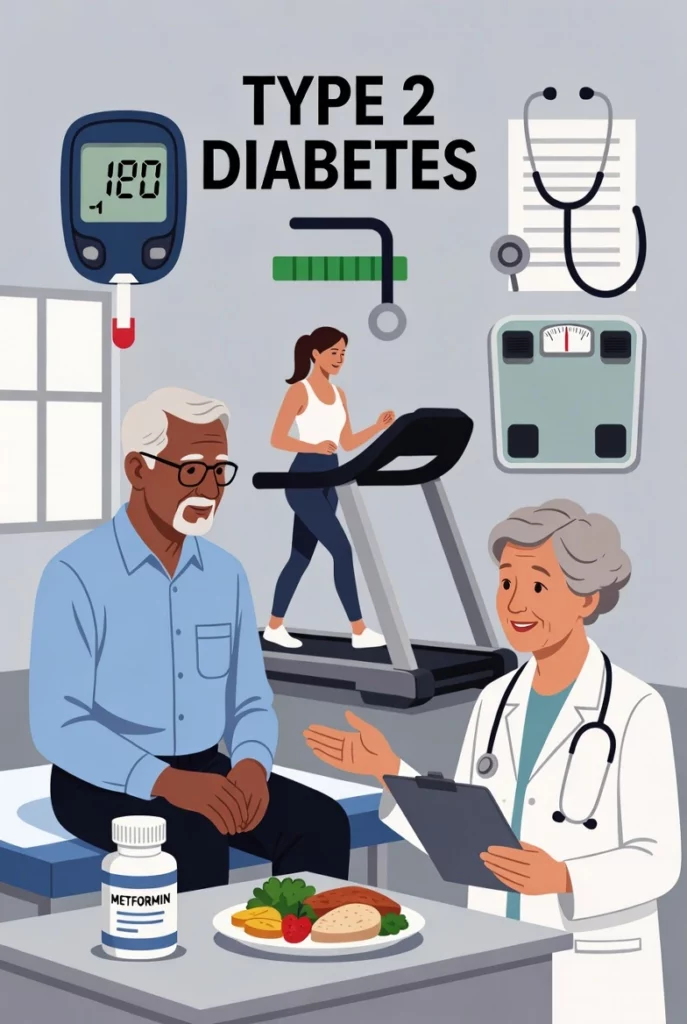
If you are wondering how is type 2 diabetes treated, the answer has evolved significantly in recent years. We no longer just focus on “avoiding sugar.” Modern treatment is holistic. It aims to protect your heart, kidneys, and nerves while keeping glucose stable.
Lifestyle as the Foundation
First of all, lifestyle changes are the “first line” of defense. During my time working with Dr. Lloyd, we observed that patients who focused on small, daily habits had the best psychological outcomes. They didn’t feel “deprived”; they felt empowered.
What is type 2 diabetes treatment in terms of food? It involves a balance of fiber, lean protein, and healthy fats. We focus on “carbohydrate quality” rather than just quantity. For example, swapping white rice for quinoa can make a massive difference in your post-meal readings.
The Role of Physical Activity
Exercise is essentially a natural medicine. When you move your muscles, they “sip” glucose from your blood without needing extra insulin. This helps lower your overall type 2 diabetes range over time. Even a simple 10-minute walk after dinner can significantly improve your morning numbers.
What Is Type 2 Diabetes Medication?
Many patients are hesitant about starting pills or injections. I often hear, “If I start meds, have I failed?” The answer is a loud no. Sometimes, your pancreas simply needs a little help.
So, what is type 2 diabetes medication and how do the different types work?
- Metformin: This is usually the first medication prescribed. It helps your liver stop making extra sugar. Additionally, it makes your cells more sensitive to insulin.
- GLP-1 Receptor Agonists: These are the “buzzworthy” medications like Ozempic or Mounjaro. They mimic a hormone that tells your pancreas to release insulin after you eat. Furthermore, they slow down your digestion, which helps you feel full longer.
- SGLT2 Inhibitors: These work through your kidneys. They literally help you “flush” excess sugar out of your system through your urine.
- Sulfonylureas: These are older medications that nudge your pancreas to produce more insulin.
Is Type 2 Diabetes Insulin Dependent?
You might wonder, is type 2 diabetes insulin dependent? Not always. Many people manage for decades without ever needing a needle. However, type 2 is a progressive condition. Over time, the pancreas can become “exhausted.” If that happens, taking insulin is not a failure; it is simply the most effective way to stay healthy.
Can Type 2 Diabetes Be Cured?
This is perhaps the most debated topic in the diabetes community. You may see headlines claiming a “secret cure.” But medically speaking, can diabetes 2 be cured? Currently, there is no permanent “cure” that allows you to return to your old habits without consequence.
However, we now talk about “remission.” Remission means your blood sugar levels are in the non-diabetes range without the use of medication. This is often achieved through significant weight loss or bariatric surgery.
While in remission, the “broken locks” of your cells are essentially fixed. But if the weight returns, the diabetes often returns too. Therefore, we prefer the term “remission” over “cure.” It emphasizes that the condition is managed, but the underlying genetic tendency is still there.
Is Type 2 Diabetes Dangerous?
I don’t like to use “scare tactics,” but we must be honest. Is type 2 diabetes dangerous? It can be if it is ignored. When sugar stays high for too long, it acts like “glass shards” in your blood vessels.
Over years, this can lead to:
- Heart Disease: Increased risk of heart attack or stroke.
- Neuropathy: Nerve damage, often starting as tingling in the feet.
- Retinopathy: Damage to the small blood vessels in the eyes.
- Kidney Disease: The kidneys have to work too hard to filter the sugar.
The good news is that these complications are largely preventable. By keeping your levels within a healthy type 2 diabetes range, you can keep your vessels smooth and healthy.
What Is Stage 2 Type 1 Diabetes?
There is often confusion when people see their lab results. Some see a reference to “stages.” You might ask, what is stage 2 type 1 diabetes? Is it just a worse version of type 2?
Actually, no. Stage 2 type 1 diabetes is part of a new way we classify the autoimmune version of the disease. In Stage 1, you have the antibodies (the immune system is attacking), but sugar is normal. In Stage 2, the sugar levels start to become abnormal, but there are no symptoms yet.
It is important to know this because it has nothing to do with type 2 diabetes. If your doctor mentions “Stage 2,” clarify whether they are talking about the progression of type 1 or a complication of type 2.
What Is Type 2 Diabetes According to the NHS?
For our readers in the United Kingdom, you may be following the National Health Service guidelines. So, what is type 2 diabetes nhs guidance? The NHS focuses heavily on the “Low-Calorie Diet” program for remission.
They also offer the DESMOND program (Diabetes Education and Self-Management for Ongoing and Newly Diagnosed). This is an excellent group session that helps you understand your labs and food choices. The NHS also emphasizes regular “foot checks” and “retinal screening” as part of their standard care package.
When to See a Doctor
If you have read this far, you might be wondering about your own health. You should schedule an appointment if:
- You have a strong family history of the condition.
- You are experiencing persistent thirst or fatigue.
- Your home glucose monitor (if you have one) shows a type 2 diabetes range consistently above 100 mg/dL while fasting.
- You have “prediabetes” and haven’t had a check-up in over six months.
Early intervention is the greatest gift you can give yourself. I once had a patient who waited two years to get checked because he was “afraid of the news.” Once he got diagnosed and started a simple plan, he felt 20 years younger. Fear of the unknown is often much worse than the reality of the treatment.
Frequently Asked Questions
Can I switch from Type 2 to Type 1?
No. They are different diseases. You cannot “develop” type 1 from having type 2. However, you can have “insulin-requiring type 2,” which people sometimes confuse with type 1.
How often should I check my blood sugar?
This depends on your treatment. If you are on insulin, you may check several times a day. If you are managing with diet and Metformin, your doctor might only suggest a few times a week.
Does eating too much sugar cause type 2 diabetes?
Not directly. While a high-sugar diet leads to weight gain (a risk factor), the cause is a complex mix of genetics and insulin resistance. You didn’t get this just from eating a few donuts.
Can I stop taking Metformin if my A1C improves?
Sometimes! Many patients are able to reduce or stop medications after significant lifestyle changes. However, never stop a medication without your doctor’s supervision.
Is type 2 diabetes a “death sentence”?
Absolutely not. With modern medicine and lifestyle tools, many people with type 2 diabetes live just as long—and sometimes healthier—than people without it.
Conclusion: Taking the First Step Toward Clarity
Navigating a new diagnosis feels like learning a foreign language. However, you now have the foundational tools to understand your body better. We have explored the “broken lock” of insulin resistance and the many ways modern medicine can help.
Remember, your health is a marathon, not a sprint. Small, daily choices create the biggest impact over time. Whether you are adjusting your diet or starting a new medication, every step matters.
Furthermore, do not let the data points on a screen define your worth. As Dr. Lloyd often reminds our patients, a diagnosis is simply information. It is a roadmap for your future, not a reflection of your past. You have the power to influence your glucose levels through movement, nutrition, and stress management. On the whole, the goal is not perfection. Instead, focus on progress and consistency.
Evidence-Based References:

SOURCES
Related articles


Diabetic-Friendly Weight Loss Meals: 1500-Calorie Plans, Easy Recipes & 7-Day Guide


Online Counseling for Chronic Illness: Therapists, Platforms & Coping Strategies

Therapy for Diabetes Depression: Treatments, Mental Health Workbooks & Best Support Resources (2026)