
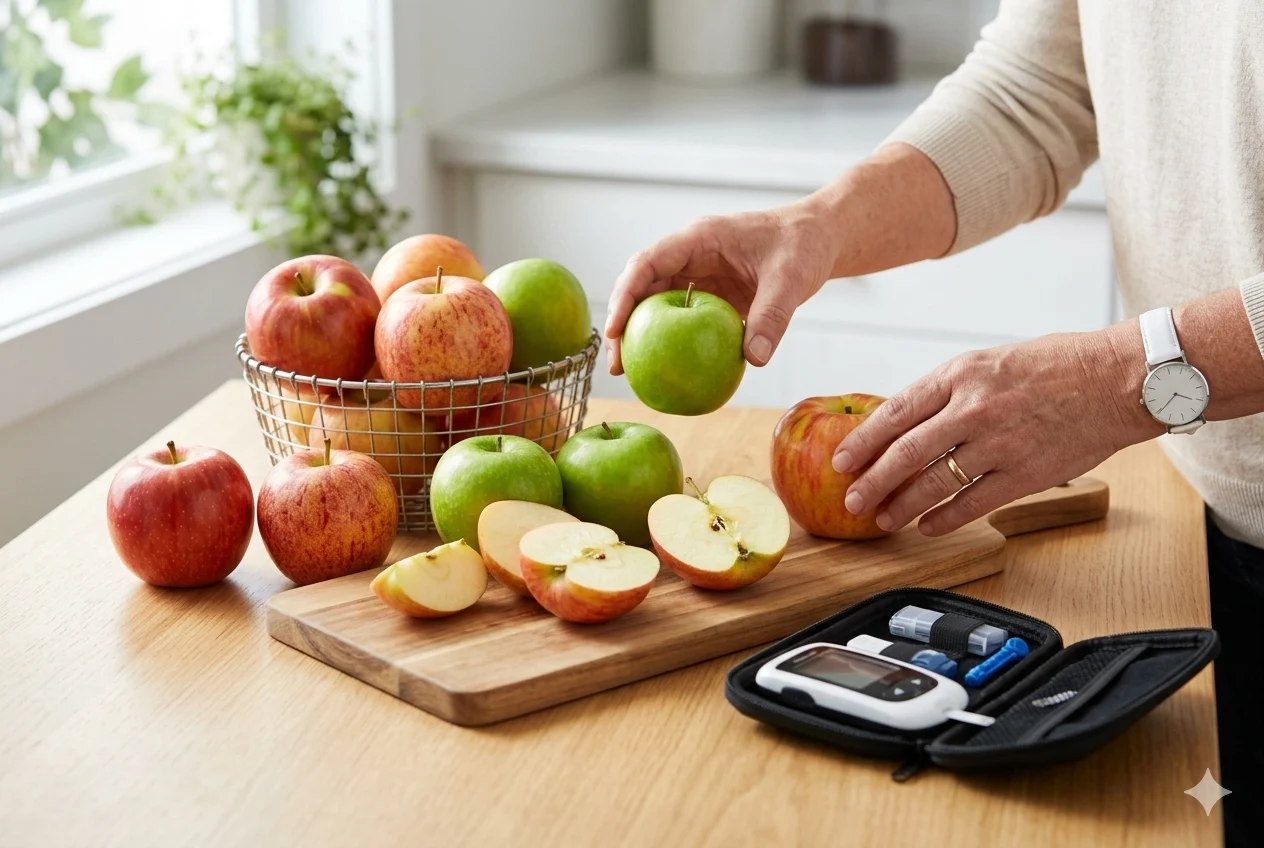
Hey there! If you are living with diabetes, you know that every bite feels like a math equation. You might wonder, “Are apples good for diabetics, or are they just a ball of sugar?” I get this question in my clinic almost every single day.
Many people feel afraid of fruit because it tastes sweet. However, as a doctor, I want to clear the air for you. Most noteworthy, the right fruit can actually be your best friend for blood sugar management.
First of all, let’s look at the facts. Apples are packed with fiber and vitamins. While they do contain natural sugar, they also provide a “buffer” that helps your body process it more slowly. In this guide, I will break down which varieties are best and how to eat them without a spike.
Consequently, you will feel much more confident at the grocery store. Are apples good for diabetics to eat? Let’s dive into the science and find out together.
Are apples good for diabetics?
Yes, apples can be a healthy fruit choice for people with diabetes when eaten in moderation. They are high in fiber, contain natural sugars, and have a low to moderate glycemic index (GI). This means they typically do not cause rapid blood sugar spikes when you consume the whole fruit.
Most clinical guidelines, including those from the American Diabetes Association (ADA), recommend fruit as part of a balanced diet. Because of their high water and fiber content, they keep you full longer. This is especially relevant for weight management in Type 2 diabetes.
Can you eat apples if you have diabetes? Absolutely. The key lies in the “whole fruit” aspect. While juice is a no-go, the crunch of a fresh apple provides the structural integrity your metabolism needs. Therefore, you don’t have to cross this delicious snack off your list.
Why Are Apples Good for Diabetics?
So, what makes the humble apple so special for your health? First, we have to talk about soluble fiber, specifically one called pectin. Pectin acts like a gel in your gut. It slows down the digestion of carbohydrates. As a result, sugar enters your bloodstream at a slow, steady crawl rather than a sprint.
Another reason involves powerful antioxidants like quercetin. Research suggests these plant compounds may improve insulin sensitivity over time. Furthermore, the Centers for Disease Control and Prevention (CDC) notes that fiber-rich diets help lower the risk of heart disease. Since diabetes and heart health go hand-in-hand, apples provide a double benefit.
Finally, apples are great for satiety support. They are “high-volume” foods. This means you get to eat a lot for very few calories. If you are trying to manage your weight, this is a huge win. Indeed, a medium apple is much more satisfying than a tiny piece of candy.
Are apples high in sugar?
Apples indeed contain sugar, mostly in the form of fructose. A medium-sized apple usually has about 19 grams of sugar and 25 grams of total carbohydrates. However, looking at sugar alone is a mistake. You must look at the “package” the sugar comes in.
The 4 to 5 grams of fiber in an apple “offsets” the sugar impact. This is why we look at the Glycemic Load (GL). The glycemic index (GI) of an apple is quite low. While a soda might dump sugar into your blood instantly, an apple releases it gradually.
Just remember to avoid the liquid version. Apple juice has the fiber removed. Without fiber, that natural sugar becomes a blood sugar nightmare. Therefore, always choose the fruit you have to bite and chew.
Do Apples Lower Blood Sugar?
To be clear, apples don’t “lower” glucose directly like a dose of insulin would. If your sugar is currently 300, eating an apple won’t bring it down to 100. Nevertheless, they play a vital role in long-term stabilization.
Because of the fiber we discussed, apples prevent the “rollercoaster” effect. When you avoid big spikes, your body stays in a safer range. Some studies even show that regular apple eaters have a lower risk of developing Type 2 diabetes in the first place.
The polyphenols in the skin may also protect your pancreas. This organ is responsible for making insulin. By protecting these cells, apples help your body manage its own sugar better. It is a long-game strategy for your health.
Are apples good for type 2 diabetics?
For those with Type 2 diabetes, the main issue is often insulin resistance. This is where your cells “ignore” the insulin your body makes. Can apples help here? Yes, they certainly can.
The World Health Organization (WHO) emphasizes whole plant foods for metabolic health. For my Type 2 patients, I suggest using apples as a replacement for processed snacks. Instead of reaching for crackers, grab a sliced apple.
Pairing is also a secret weapon. If you eat an apple with a little protein or fat, the blood sugar impact drops even further. I usually recommend a tablespoon of almond butter or a small piece of cheese. This combination creates a perfect metabolic balance.
Is an apple good for type 1 diabetes?
Managing type 1 diabetes is all about precision. You need to count your carbs to dose your insulin correctly. Is an apple good for type 1 diabetes? Yes, because apples are a very “predictable” carb source.
Unlike a greasy slice of pizza, a medium apple has a consistent amount of carbohydrates. This makes it easier to calculate your bolus. Most of my Type 1 patients find that apples don’t cause the “late-day” spikes that high-fat, high-carb foods do.
Just be sure to weigh your fruit if you want to be extra precise. A large “Honeycrisp” can actually have double the carbs of a small “Gala.” Knowing the size helps you stay in your target range.
Which Apples Are Best for Diabetics?
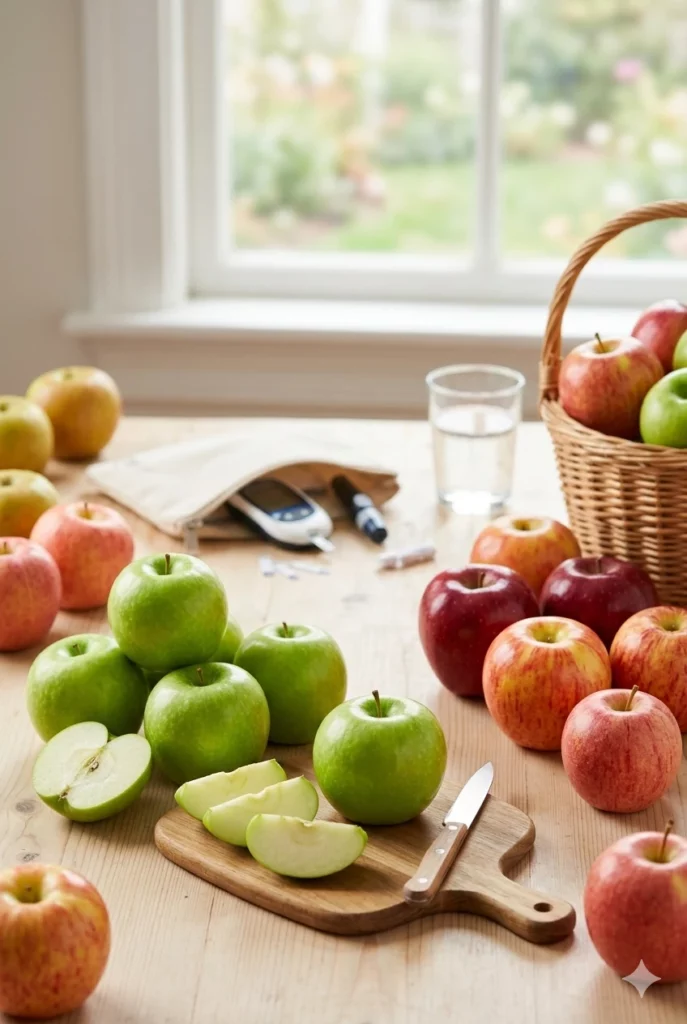
Not all apples are created equal in the eyes of a glucose monitor. While any whole apple is better than a cookie, some varieties have a slight edge. Usually, the more tart the apple, the lower the sugar content.
When you go to the store, look for smaller sizes. Often, the massive apples we see are bred specifically for high sugar content. Choosing a “lunchbox-sized” apple is an easy way to control your portions automatically.
Are Green Apples Good for Diabetics?
Green apples, like the Granny Smith, are often considered the gold standard for diabetics. Why? They generally contain slightly less sugar and more organic acids than red varieties.
This tartness is a sign of a lower glycemic impact. Furthermore, they are very high in fiber. If you enjoy a crisp, sour bite, the Granny Smith is your best friend. It provides a satisfying crunch without a major glucose hit.
Are Red Apples Good for Diabetics?
Red apples like Gala, Fuji, and Honeycrisp are incredibly popular because they are so sweet. Are Gala apples good for diabetics? Yes, but you need to be more mindful of the portion.
Fuji apples, for instance, are among the highest in natural sugar. If you choose a red apple, try to stick to a small or medium size. The nutritional difference isn’t massive, but every gram of sugar counts when you are fine-tuning your diet.
Worst Apples for Diabetics
There is no such thing as a “forbidden” apple variety. However, the “worst” apples are those that have been processed. I strongly advise my patients to stay away from the following:
- Apple Juice: Pure sugar water with no fiber.
- Dried Apples: The sugar is concentrated, making it easy to overeat.
- Canned Apple Pie Filling: Loaded with added syrups and thickeners.
- Caramel or candy apples: These are treats, not fruit servings.
Are Apples and Peanut Butter Good for Diabetics?
This is my favorite snack recommendation for my patients. Are apples and peanut butter good for diabetics? It is actually an “A+ ” snack. Here is why it works so well.
Peanut butter provides healthy fats and protein. When you eat fat and protein with a carbohydrate (the apple), it slows down gastric emptying. This means the food stays in your stomach longer.
As a result, the sugar from the apple enters the blood even more slowly than if you ate the apple alone. Plus, it tastes like a dessert! Just make sure your peanut butter has no added sugar or palm oil. “Just peanuts and salt” is the way to go.
Are apples better than other fruits for diabetes?
Apples are fantastic, but they aren’t the only option. It helps to compare them to see where they fit in your routine. Below is a quick comparison of common fruits and their typical impact.
Fruit Comparison Table
| Fruit | Serving Size | Carbs (g) | Fiber (g) | GI Category |
| Apple | 1 medium | 25g | 4.5 g | Low |
| Banana | 1 medium | 27g | 3g | Medium |
| Orange | 1 medium | 15g | 3g | Low |
| Pear | 1 medium | 27g | 6 g | Low |
| Blueberries | 1 cup | 21g | 3.5g | Low |
5 Best Fruits for Diabetics
If you want to keep your fruit bowl diabetes-friendly, focus on these five powerhouses. They offer the best balance of nutrition and blood sugar safety.
- Apples: High in pectin and great for heart health.
- Berries: Strawberries and raspberries are very low in sugar and high in antioxidants.
- Pears: They actually have even more fiber than apples.
- Citrus: Oranges and grapefruits provide vitamin C and soluble fiber.
- Kiwi: These are nutrient-dense and have a very low glycemic impact.
5 Worst Fruits for Diabetics
“Worst” is a strong word, but these fruits require extreme caution. They can send your numbers sky-high if you aren’t careful.
- Fruit Juice: This includes 100% unsweetened juice; it’s still too fast for your blood.
- Dried Mango or Dates: These are “sugar bombs” because the water is removed.
- Pineapple: High on the GI scale, especially in large amounts.
- Sweetened Canned Fruit: Usually swimming in “heavy syrup.”
- Overripe Bananas: As a banana browns, its starch turns into simple sugar.
How Many Apples Can a Diabetic Eat Per Day?

The golden rule in my clinic is one small to medium apple per serving. Most people with diabetes can safely enjoy 1 or 2 servings of fruit per day. However, this depends on your total carb budget.
If you have a large apple, consider eating half now and half later. Furthermore, always check your blood sugar two hours after eating. This “test and learn” method is the only way to know exactly how a specific apple variety affects your unique body.
Are apples good for diabetes and cardiovascular disease?
Many of my patients deal with both high blood sugar and high cholesterol. If that is you, apples are a “must-buy” item. The soluble fiber in apples binds to cholesterol in the digestive tract.
Instead of that cholesterol entering your blood, your body flushes it out. This lowers your LDL (the “bad” cholesterol). Since diabetes increases your risk for heart issues, eating an apple a day really might keep the cardiologist away!
Frequently Asked Questions
Are fruits good for diabetes?
Yes, fruits are excellent because they provide essential vitamins, minerals, and fiber. However, you must choose whole fruits over juices and watch your portion sizes. Stick to low-GI options like berries, apples, and citrus for the best results.
Can you eat apples if you have diabetes?
You certainly can! Apples are a fiber-rich, low-GI choice that fits into almost any diabetes meal plan. They help with satiety and provide antioxidants that support overall metabolic health. Just remember to eat the skin, as that is where the fiber lives.
Do apples lower blood sugar?
Apples do not lower blood sugar like medication, but they help prevent spikes. Their high fiber content slows down the absorption of sugar. Over time, replacing processed snacks with apples can lead to much better average glucose levels (A1c).
Which apples are best for diabetics?
Tart varieties like Granny Smith are generally the best because they have slightly lower sugar. However, any small or medium whole apple is a good choice. Focus more on the size of the apple than the specific color or name.
What is the best fruit for a diabetic to eat?
Berries (blueberries, strawberries, and raspberries) are often considered the top choice because they are very low in sugar. Apples and pears follow closely behind due to their high fiber content. The “best” fruit is the one you enjoy that keeps your numbers stable.
Conclusion
So, where does that leave us? Are apples good for diabetics? In the final analysis, they are a fantastic addition to your kitchen. They offer the crunch you crave without the massive sugar crash of processed snacks.
First of all, remember the power of fiber. Pectin is your best friend for slow glucose absorption. Furthermore, pairing your fruit with healthy fats like almond butter makes a huge difference for your stability.
Of course, every person’s body reacts a bit differently. Most noteworthy, you should keep track of your own glucose numbers after eating. Small changes in how you eat can lead to big wins for your A1c over time.
Finally, don’t let the fear of “fruit sugar” stop you from eating whole foods. Apples provide antioxidants and vitamins that pills simply cannot replace. Truly, nature’s “fast food” is often the best choice for a healthy heart and a happy pancreas.
Just a quick reminder to check with your clinical team before making big diet shifts. While I am a doctor, I am not your personal doctor. Stay healthy, stay informed, and keep crunching on those greens and reds!
Authoritative Medical References:
- American Diabetes Association (ADA) – Fruits and Diabetes Management
- Centers for Disease Control and Prevention (CDC) – Diabetes Meal Planning
- National Institutes of Health (PubMed) – Apple Consumption and Risk of Type 2 Diabetes
- Harvard T.H. Chan School of Public Health – The Nutrition Source: Apples
- Mayo Clinic – Diabetes Diet: Create Your Healthy-Eating Plan