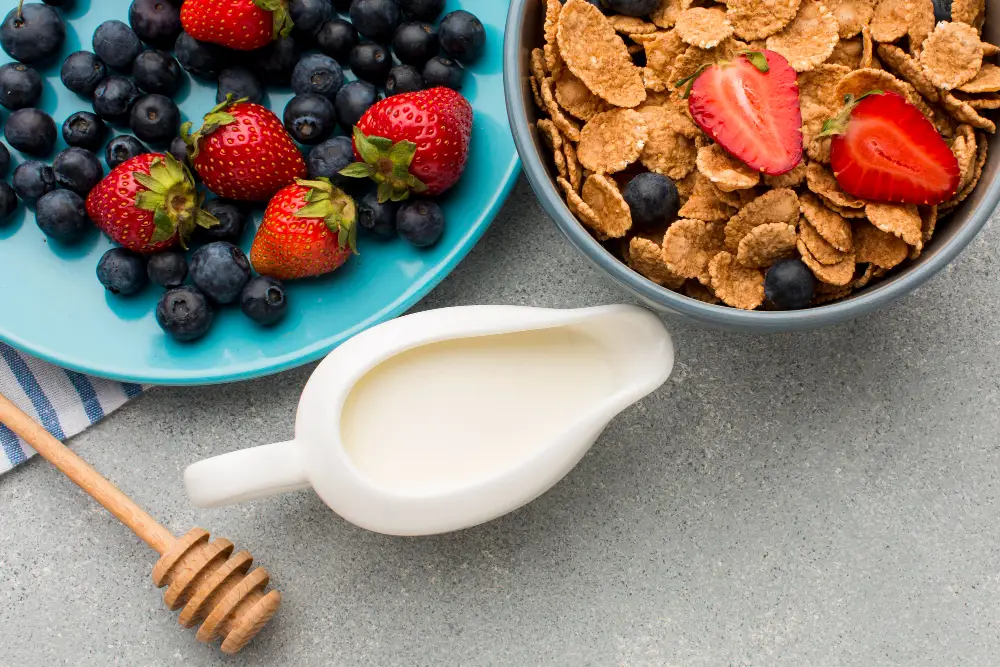
In my clinical practice, I often find that the breakfast table is the most emotionally charged place in a patient’s home. I recently spoke with a patient, “Mark,” who had been managing type 2 diabetes for three years. He told me that every morning felt like a “micro-betrayal.”
Mark loved the crunch of cold cereal, but his post-breakfast blood sugar readings were consistently demoralizing. He felt that his only options were “cardboard-tasting” flakes or skipping his favorite meal entirely. This sense of deprivation is a significant barrier to long-term health management.
The search for the best cereal for diabetics isn’t just about finding a “safe” food; it’s about reclaiming a sense of normalcy without triggering a glucose spike. By understanding the intersection of fiber, glycemic load, and hidden sugars, we can identify breakfast options that actually support metabolic health rather than sabotaging it.
What Is the Best Cereal for Diabetics?
The best cereal for diabetics is one that is low in added sugar (under 5g per serving), high in fiber (3–5g), and made from whole grains such as oats or bran. Ideally, a diabetic-friendly cereal should have a low glycemic index (GI), meaning it digests slowly and releases glucose gradually into the bloodstream.
When evaluating which cereal is best for diabetics, we must prioritize the “fiber-to-carb” ratio. Fiber is a carbohydrate that your body cannot digest, meaning it doesn’t raise blood sugar. In fact, fiber slows the absorption of other sugars in your meal.
According to the American Diabetes Association (ADA), focusing on whole-grain, minimally processed cereals is key. A “whole grain” includes the bran, germ, and endosperm, ensuring you get all the naturally occurring nutrients and fiber that are often stripped away in refined “frosted” varieties.
Top 10 Best Cereals for Diabetics (Ranked List)
Choosing the best cereal for diabetics to eat requires looking past the flashy marketing on the front of the box and diving straight into the nutrition label. Here is a ranked list of the top 10 cereals that provide the best balance of nutrition and blood sugar stability.
1. Steel-Cut Oats (The Gold Standard)
Unlike rolled or instant oats, steel-cut oats are the least processed. This preserves the grain’s structure, resulting in a much lower glycemic index. They provide an incredible source of beta-glucan, a soluble fiber known for heart and blood sugar benefits.
- Fiber: 5g
- Sugar: 0g
- Net Carbs: 23g (per 1/4 cup dry)
2. Plain Oatmeal (Rolled Oats)
Old-fashioned rolled oats are a fantastic staple. They are quick to cook but still retain high fiber levels. To keep them diabetic-friendly, you must avoid the pre-sweetened “instant” packets, which are often loaded with hidden sugars.
- Fiber: 4g
- Sugar: 1g
- Net Carbs: 23g
3. Unsweetened Bran Flakes
Bran is the outer shell of the wheat kernel and is almost entirely fiber. Unsweetened bran flakes are an excellent breakfast cereal for diabetics because they provide a satisfying crunch with a very low glycemic impact.
- Fiber: 7g
- Sugar: 0g
- Net Carbs: 18g
4. Shredded Wheat (100% Whole Grain)
Shredded Wheat is one of the cleanest cereals available. Most brands contain only one ingredient: whole-grain wheat. There are no added fats, salts, or sugars, making it a predictable choice for insulin management.
- Fiber: 6g
- Sugar: 0g
- Net Carbs: 34g (per 2 biscuits)
5. High-Fiber Wheat Biscuits
Common in the UK and Australia (like Weetabix or Weet-Bix), these biscuits are low in sugar and high in complex carbohydrates. They absorb milk quickly and provide long-lasting satiety.
- Fiber: 4g
- Sugar: 1.5g
- Net Carbs: 22g
6. Muesli (No Added Sugar)
Traditional muesli is a mixture of raw oats, nuts, seeds, and sometimes dried fruit. When choosing muesli, ensure there are no added sweeteners or honey. The nuts provide healthy fats and protein, which help flatten the glucose curve.
- Fiber: 6g
- Sugar: 5g (naturally occurring from fruit)
- Net Carbs: 25g
7. Low-Carb Almond or Nut-Based Cereal
Many newer “keto-friendly” brands use almond flour or coconut instead of grains. These are the best low-carb cereals for diabetics because they have almost no impact on blood sugar, though they are often higher in calories.
- Fiber: 5g
- Sugar: 0g
- Net Carbs: 3g
8. Chia Seed Cereal
Chia seeds expand in liquid to create a pudding-like texture. They are packed with Omega-3 fatty acids and fiber. This is an excellent choice for those who struggle with “morning hunger” because chia seeds are incredibly filling.
- Fiber: 10g
- Sugar: 0g
- Net Carbs: 2g
9. Unsweetened Granola
Most granolas are “sugar traps,” but unsweetened, grain-free granolas made of nuts and seeds are excellent. They provide a high-fat, high-protein breakfast that keeps blood sugar levels stable for hours.
- Fiber: 3g
- Sugar: 1g
- Net Carbs: 5g
10. Barley Flakes
Barley is an underrated grain for diabetics. It contains more fiber than oats and has a very low GI score. Barley flakes can be used exactly like oatmeal but offer a slightly nuttier flavor and chewier texture.
- Fiber: 6g
- Sugar: 0g
- Net Carbs: 28g
5 Healthiest Cereals for Diabetics (Quick Answer)
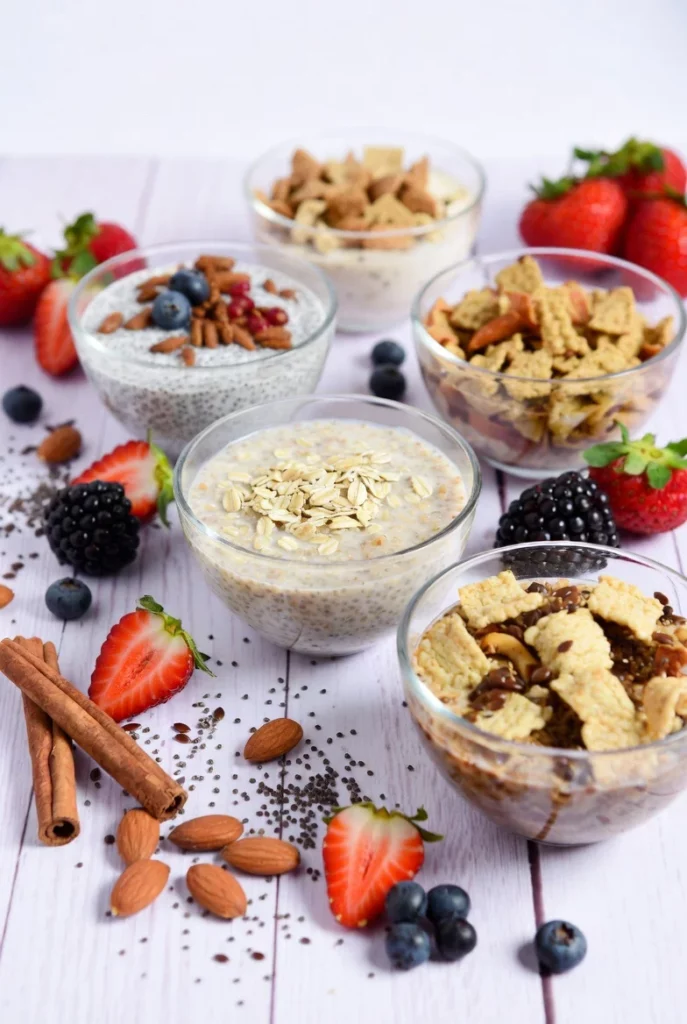
If you need a “cheat sheet” for the grocery store, here are the top 5 healthiest cereals that consistently perform well in clinical glucose monitoring:
- Steel-Cut Oats: Best for long-term satiety.
- Shredded Wheat: Best for zero-additive simplicity.
- Puffed Kamut or Rice: The best low-calorie volume.
- Wheat Bran: Best for maximum fiber.
- Almond-Based “Keto” Cereals: Best for strict carb counting.
Best Cereal for Diabetics Type 2
For individuals with Type 2 diabetes, the primary goal is managing insulin resistance. This means avoiding “naked carbs”—carbohydrates eaten without protein or fat. The best cereal for type 2 diabetics pairs easily.
When I worked with Mark, we didn’t just change his cereal; we changed his “bowl architecture.” Instead of a massive bowl of flakes with skim milk, he switched to a smaller portion of bran flakes topped with walnuts and unsweetened soy milk. The added protein and fat from the nuts significantly slowed his digestion.
Centers for Disease Control and Prevention (CDC) guidelines suggest that patients with Type 2 diabetes should aim for “consistency” in their carbohydrate intake. Choosing a high-fiber cold cereal for type 2 diabetics helps maintain that consistency, preventing the erratic highs and lows that lead to fatigue and cravings.
Best Cereal for Diabetics Type 1
For Type 1 diabetics, the challenge is different: it’s about “matching” insulin to the carbohydrate load. Cereals that have a predictable, slow-release carb profile are much easier to bolus for.
The best cereal for type 1 diabetics is often shredded wheat or plain oatmeal. Because these have no hidden sugars or complex processing, the carbohydrate count on the box is highly accurate. This precision allows for better insulin dosing and fewer “rebound” hypoglycemic episodes later in the morning.
Sugar-Free and Low-Carb Cereals for Diabetics
It is important to remember that the best sugar-free cereal for diabetics does not necessarily mean “carbohydrate-free.” Many cereals use sugar alcohols or artificial sweeteners to lower the sugar count while still using refined flours that spike blood sugar just as fast as white sugar.
When looking for a low-carb cereal for diabetics, focus on the “net carbs.” You calculate this by subtracting the fiber from the total carbohydrates. A cereal with 30g of carbs and 10g of fiber only has 20g of net carbs, which is much easier for your body to process.
Best Cereal for Cholesterol and Diabetes
Many of my patients don’t just deal with blood sugar; they also struggle with cardiovascular health. The best cereal for cholesterol and diabetes is one rich in soluble fiber, specifically beta-glucan. This type of fiber acts like a “sponge” in the digestive tract, soaking up cholesterol before it can enter the bloodstream.
Oat-based and barley-based cereals are the winners here. According to the World Health Organization (WHO), a diet rich in whole grains and fiber can significantly reduce the risk of cardiovascular disease. For someone with diabetes, reducing cholesterol is vital because high blood sugar can damage the lining of the arteries, making them more susceptible to plaque buildup.
If you are looking for omega-3 benefits alongside your fiber, consider adding a tablespoon of ground flaxseed or chia seeds to your cereal. This “power pairing” addresses both the inflammatory nature of diabetes and the vascular risks of high cholesterol in one simple bowl.
Best Cereal for Weight Loss With Diabetes
Weight management is a primary lever for improving insulin sensitivity. The best cereal for weight loss is defined by its “satiety index”—how full it makes you feel per calorie. High-protein, high-fiber cereals are the most effective at turning off hunger signals in the brain.
When I talk to patients about weight loss, I emphasize that “volume” matters. Puffed whole grains (like puffed kamut or brown rice) allow you to have a larger bowl for fewer calories. However, because these lack protein, you should always pair them with Greek yogurt or a high-protein milk alternative like unsweetened soy or pea milk.
The psychological benefit of a “full bowl” cannot be overstated. Using a smaller bowl to make a standard portion look larger is a classic behavioral trick I use to help patients feel satisfied without over-consuming carbohydrates.
Bran Flakes for Diabetics — Are They a Good Choice?
Bran flakes for diabetics are often viewed as the “ultimate” health food, but you must be a detective at the grocery store. Pure wheat bran is an incredible source of insoluble fiber, which supports gut health and slows sugar absorption. However, many commercial “bran flakes” add malt flavoring, honey, or sugar to counteract the bitter taste of the bran.
If you choose bran flakes, look for brands that have less than 5g of sugar per serving. A great strategy is to mix high-fiber, unsweetened bran with a small amount of a more flavorful (but still low-sugar) cereal. This gives you the “crunch” and taste you desire while keeping your glucose monitor happy.
Diabetic-Friendly Cereal Brands (US, UK, Australia)
Finding the best cereal for diabetics in the UK or Australia involves looking for local staples that prioritize whole grains over processing. Here is a breakdown of regional types that generally fit the “diabetic-friendly” criteria.
US Options
In the United States, look for “Sprouted Grain” cereals or “Keto-labeled” brands that use nut flours. Common reliable choices include unsweetened shredded wheat and generic “Toasted Oats” (the original, yellow-box variety).
UK Options
The UK has excellent diabetic-friendly cereal brands like high-fiber wheat biscuits (Weetabix) and unsweetened muesli. Porridge oats remain the gold standard for British breakfasts. Just be wary of “granola,” which is often marketed as healthy but contains high levels of syrups.
Australia Options
In Australia, Weet-Bix (the “No Added Sugar” variety) is a staple for a reason. Low-sugar, oat-based cereals from brands like Uncle Tobys (specifically the traditional oats) are excellent for long-lasting energy. Always look for the Health Star Rating, but verify the sugar content yourself.
Is Special K Good for Diabetics?
One of the most frequent questions I get is, “Is Special K cereal good for diabetics?” It has a “health halo” due to decades of weight-loss marketing. However, if you look at the label, wide varieties of Special K are relatively low in fiber and contain a significant amount of added sugar for a “diet” food.
The original Special K is made from processed rice and wheat, which can have a higher glycemic index than whole-grain alternatives. If you are a fan, I suggest treating it as a “base” and adding your own fiber—like wheat germ or berries—to help lower the overall glycemic response. It is not the “worst” choice, but it is certainly not the best for blood sugar.
Is Cheerios good for diabetics?
When patients ask, “Is Cheerios cereal good for diabetics?” I generally give them the green light, but with a caveat. The original Cheerios (in the yellow box) are made from whole-grain oats and have only 1 gram of sugar per serving. This makes them one of the most accessible and reliable cold cereals for type 2 diabetics.
However, avoid the flavored versions. “Honey Nut,” “Chocolate,” and “Apple Cinnamon” varieties can have ten times the sugar of the original. If you find the original too bland, add a sprinkle of cinnamon or a few drops of liquid stevia rather than buying the pre-sweetened versions.
Is Raisin Bran Good for Diabetics?
The answer to “Is Raisin Bran cereal good for diabetics?” is often a surprising “No.” While the bran flakes themselves are high in fiber, the raisins are often coated in sugar to keep them from sticking together. A single bowl can contain nearly 20 grams of sugar—much higher than the 5 g threshold we aim for.
If you love the flavor profile, buy plain bran flakes and add a few of your own fresh grapes or a very small amount of unsweetened raisins. This gives you control over the “sugar hits” and keeps your A1c in a safer range.
Worst Cereals for Diabetics to Avoid
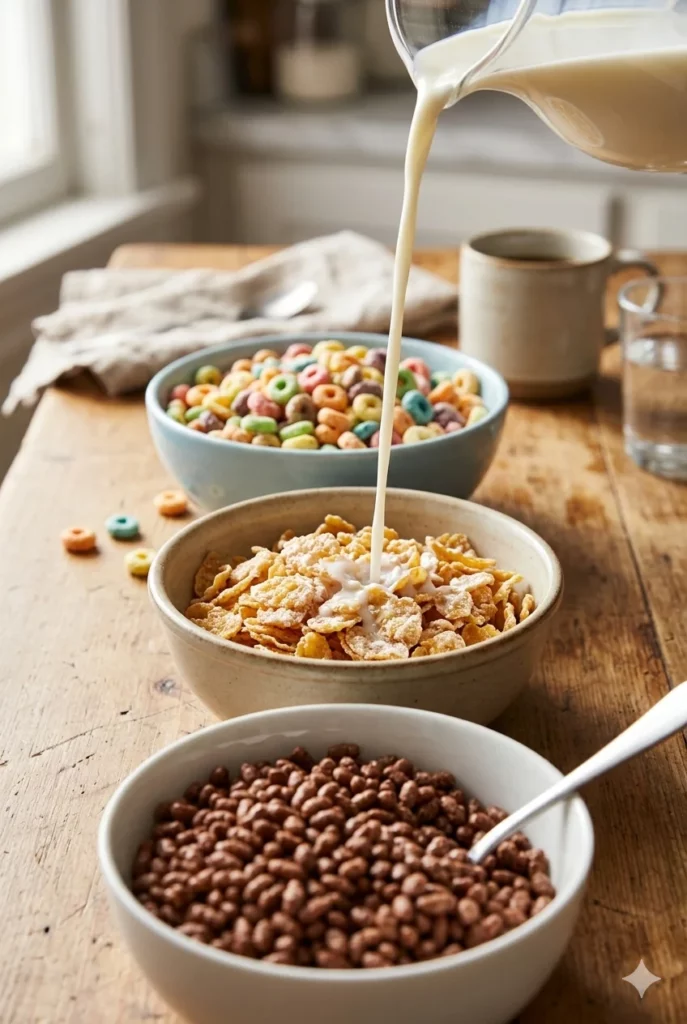
To help my patient Mark navigate the cereal aisle, we created a “Danger Zone” list. These are the top 10 cereals for diabetics to avoid because they act like pure candy once they hit your bloodstream.
- Frosted Flakes: Pure sugar coating on refined corn.
- Froot Loops Cereals: High in dyes and artificial sugars.
- Chocolate Rice Puffs: Almost zero fiber and high glycemic impact.
- Honey-Glazed Oats: “Honey” is still sugar to your pancreas.
- Sugary Granolas: Often contain more sugar than a donut.
- Marshmallow-Loaded Cereals: High glycemic load and zero satiety.
- Cinnamon-Crunch Cereals: Usually high in fats and refined sugars.
- Instant “Maple” Oatmeal: Pre-sweetened packets are glucose spikes in a bowl.
- Sweetened Corn Flakes: Refined corn is a high-GI starch.
- “Clusters” Cereals: Often held together by honey or corn syrup.
What Cereals Are OK for Diabetics? (Direct Answer Section)
If you are looking for a quick “yes” list, what cereals are ok for diabetics? Any cereal that meets these three criteria:
- First Ingredient: Must be a whole grain (whole wheat, whole oats, or barley).
- Sugar: Less than 5g per serving.
- Fiber: At least 3–5g per serving.
What type of cereal can type 2 diabetics eat? You can eat almost any whole-grain cereal as long as you use the “Pairing Strategy.” Add protein (nuts, seeds, or high-protein milk) to slow down the carb absorption.
Best Cold Cereal vs Hot Cereal for Diabetics
When comparing the best cold cereals for diabetics vs. hot options, hot cereal usually wins the nutritional battle. Cooking grains like oats or barley in water or milk softens the fiber, making it more effective at managing cholesterol and blood sugar.
Cold cereals are often more processed to achieve their “crunch.” This processing can increase the surface area of the starch, making it easier for your enzymes to break it down into sugar quickly. If you prefer cold cereal, look for “nugget” styles (like shredded wheat) rather than “flake” styles, as they tend to be less processed.
Frequently Asked Questions (FAQ)
What is the best cereal for diabetics?
The best choice is steel-cut oats or unsweetened shredded wheat. These options are minimally processed, high in fiber, and contain zero added sugars, providing a stable energy source that won’t cause a rapid rise in blood glucose.
Which cereal is best for diabetics?
Original Cheerios or plain bran flakes (with less than 5g of sugar) are excellent choices for those who prefer cold cereal. For hot cereal, traditional rolled oats provide the best balance of convenience and metabolic health.
What cereal is best for type 2 diabetics?
For type 2 diabetics, the focus should be on high-fiber options like wheat bran or barley flakes. These should always be paired with a protein source, such as nuts or Greek yogurt, to improve insulin sensitivity and satiety.
What are the top 5 healthiest cereals?
The top 5 are: 1. Steel-cut oats, 2. Shredded wheat, 3. Barley flakes, 4. Wheat bran, and 5. Sprouted grain cereals. These all offer high fiber-to-carb ratios and minimal processing.
What is the best low-carb cereal for diabetics?
Almond-based or grain-free “keto” cereals are the best for strictly low-carb diets. These typically use erythritol or monk fruit as sweeteners and have very low net carbohydrate counts, making them safe for those monitoring glucose closely.
Conclusion
Reclaiming your breakfast doesn’t have to be a battle. As I saw with Mark, finding the best cereal for diabetics is a process of education and experimentation. By moving away from “frosted” and “honey-dipped” labels and toward whole-grain, high-fiber staples, you can enjoy a satisfying meal that supports your long-term health.
Remember that the cereal is only half the story. The milk you choose and the toppings you add—like berries, seeds, or nuts—play a massive role in your post-meal blood sugar. Treat your breakfast as a strategic foundation for your day. When you start with a stable glucose level, you set yourself up for better focus, fewer cravings, and a more resilient mood.
Don’t let a diabetes diagnosis take away the joy of a morning bowl of cereal. With the right brands and a focus on fiber, you can crunch your way to a healthier A1c.
Authoritative Medical References:
- American Diabetes Association (ADA) – Breakfast & Carbs
- Centers for Disease Control and Prevention (CDC) – Diabetic Meal Planning
- Harvard T.H. Chan School of Public Health – Fiber and Whole Grains
- Mayo Clinic – Diabetes Diet: Create Your Healthy-Eating Plan
- World Health Organization (WHO) – Healthy Diet Fact Sheet