
Walking through the grocery store, you see jars of golden honey labeled “all-natural” and “pure.” You probably wonder, can diabetics eat honey without causing a massive blood sugar spike? It is a common question in my clinic.
Many people feel that because honey comes from nature, it must be safer than white table sugar. However, managing type 2 diabetes requires looking past labels to see how your body reacts.
I have interviewed many patients who felt frustrated by conflicting advice online. This guide aims to clear the confusion. We will explore the science of honey, its impact on your glucose, and how to enjoy it safely. Understanding these facts helps you make better dietary choices every single day. Let’s dive into the sweet details.
TL;DR: Honey and Diabetes Summary
- Honey = Added Sugar: It contains glucose and fructose.
- Blood Sugar Impact: It raises glucose levels quickly, including raw and Manuka varieties.
- Portion Control: Limit intake to ½–1 teaspoon occasionally.
- Not a “Health Food”: It is not significantly better than sugar for diabetes management.
- Better Alternatives: Stevia, monk fruit, or allulose are generally safer choices.
Can People With Diabetes Eat Honey?
Many people ask me, “Can diabetics eat honey as part of a balanced meal plan?” The short answer is yes, but with major caveats. You must view honey as a form of “free sugar.” Even though it is natural, your body still breaks it down into simple sugars.
Honey consists of about 40% fructose and 30% glucose. The rest are water, pollen, and trace minerals. While these minerals are nice, the sugar content is the main concern. Because it is a liquid, your body absorbs it quite fast. This can lead to a rapid rise in blood glucose levels.
In my clinical practice, I often see a “health halo” around honey. Patients assume “natural” means “safe for blood sugar.” Furthermore, honey is actually more calorie-dense than white sugar. One tablespoon of honey has 64 calories, while sugar has 49. Therefore, you must be very careful with portions.
Natural Sugar vs. Healthy Perception
We often associate “natural” with “good.” However, for a diabetic metabolism, sugar is sugar. Whether it comes from a bee or a beet, the insulin demand is similar. Can type 2 diabetics eat honey? They can, but they should treat it like a luxury, not a staple.
Is Honey Good for Type 2 Diabetics?
When evaluating if honey is good for type 2 diabetics, we look at the Glycemic Index (GI). The GI measures how fast a food raises blood sugar. Table sugar has a GI of about 65. Honey usually ranges from 45 to 64.
While honey has a slightly lower GI, the difference is often minimal. Some studies suggest honey might trigger a slightly better insulin response than sugar. However, these benefits are often overstated in marketing. Most clinical trials show that honey still raises A1C if consumed regularly.
Recently, I interviewed a patient who replaced all sugar with honey. She was surprised when her morning glucose numbers stayed high. We discovered she was using three tablespoons a day. For someone with type 2 diabetes, that is a significant carb load.
Why Benefits Are Often Overstated
- Trace Minerals: The amounts of iron and vitamin C are too small to impact health.
- Antioxidants: You can get more antioxidants from leafy greens without the sugar.
- Insulin Sensitivity: There is no strong evidence that honey improves long-term sensitivity.
Does Honey Raise Blood Sugar? (Including Raw Honey)
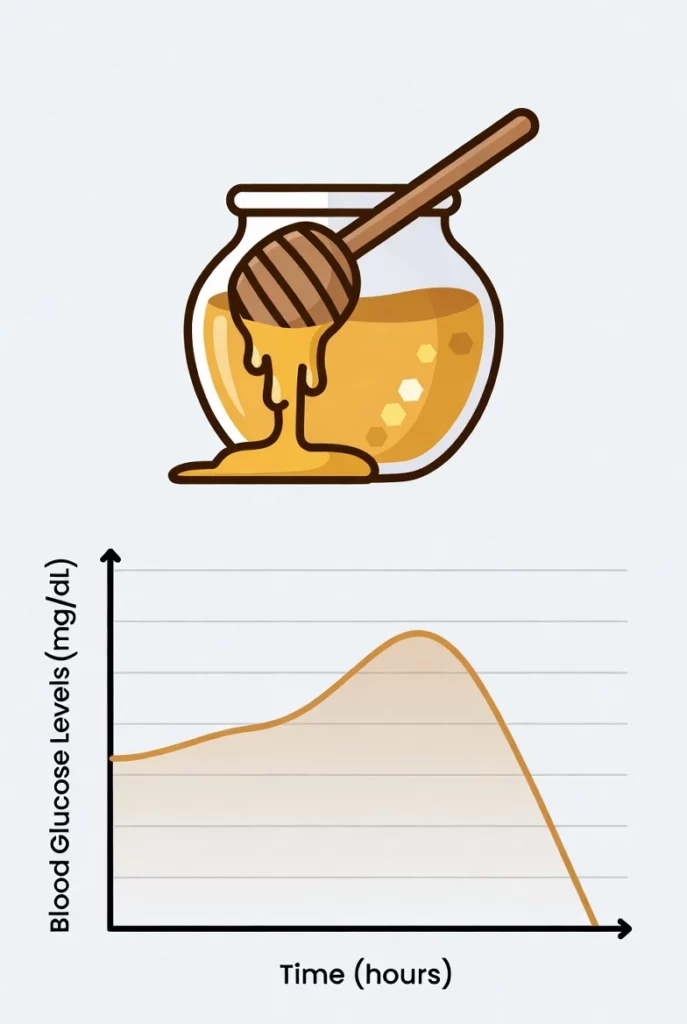
A frequent follow-up question is, does raw honey raise blood sugar differently than processed honey? Many believe raw honey is “diabetes-friendly.” Unfortunately, the metabolic impact is nearly identical. Raw honey is unfiltered and unheated.
It contains more enzymes and pollen. While this is great for seasonal allergies, it does not change the carbohydrate count. Can diabetics eat raw honey? Yes, but your CGM (continuous glucose monitor) will likely show a spike regardless.
Both types contain the same amount of fructose and glucose. Your liver must process the fructose, while the glucose enters the bloodstream. Consequently, both will require insulin to manage. If you have poorly controlled diabetes, even raw honey can be risky.
How Much Honey Can a Diabetic Eat Per Day?
If you choose to indulge, you need a plan. So, how much honey a day can a diabetic have? Most experts recommend no more than 5 to 10 grams. This equals about ½ to 1 teaspoon.
You should also consider the frequency. Can diabetics eat honey daily? Doing so makes it harder to maintain a flat glucose curve. It is better to save it for special occasions. I suggest using it as a flavor enhancer rather than a primary sweetener.
Practical Portion Guidance
- The 5-Gram Rule: Stick to one level teaspoon.
- Carb Counting: One teaspoon of honey has about 6 grams of carbs.
- Pairing: Never eat honey alone. Always pair it with fiber or protein to slow absorption.
What Is the Best Honey for Diabetics?
When patients ask, “What is the best honey for diabetics?” they are often looking for a specific brand. In reality, no honey is truly “safe” for unlimited use. The differences between varieties are mostly about flavor and price.
Some research suggests that Tupelo or Acacia honey may have more fructose. This gives them a slightly lower GI. However, excess fructose can still lead to fatty liver issues. Therefore, the “best” honey is simply the one you use the least.
Can Diabetics Eat Manuka Honey?
Manuka honey is famous for its antibacterial properties. People use it for wound healing and sore throats. Can diabetics eat manuka honey? You can, but it is still very high in sugar. Do not consume it daily for “wellness” if your glucose is high.
Honey vs. Maple Syrup vs. Sugar
Choosing between sweeteners can be confusing. Many ask, Can diabetics eat honey or maple syrup instead of sugar? Both are better than refined sugar in terms of nutrients. But for diabetes, they are very similar.
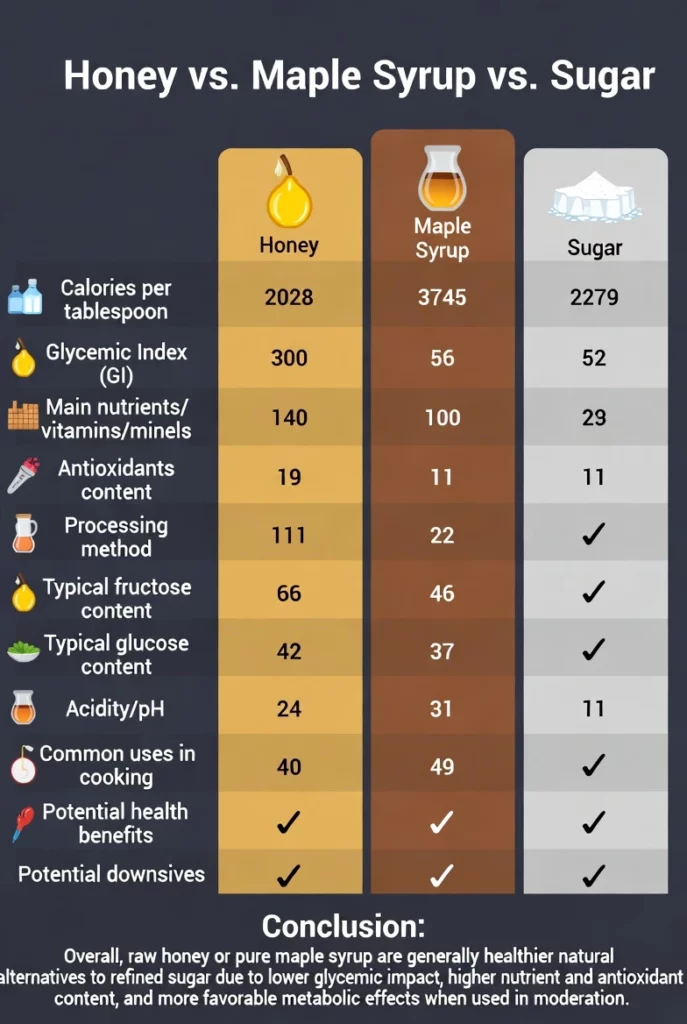
Comparison Table: Sweetener Breakdown
| Sweetener | Glycemic Index (Avg) | Calories (per tbsp) | Carb Count (per tbsp.) |
| White Sugar | 65 | 49 | 12 g |
| Honey | 58 | 64 | 17g |
| Maple Syrup | 54 | 52 | 13g |
| Stevia | 0 | 0 | 0g |
As you can see, honey is actually the most calorie-dense. Can diabetics eat maple syrup and honey? Only if they are very careful with the total daily carb count.
What Is the Best Sweetener for a Diabetic?
If honey is too risky, what is the best sweetener for a diabetic? For most, non-nutritive sweeteners are the gold standard. They provide sweetness without the glucose spike.
- Stevia: A plant-based sweetener with zero calories.
- Monk Fruit: Very popular because it has no bitter aftertaste.
- Allulose: A “rare sugar” that the body doesn’t fully metabolize.
These options are a great honey substitute for diabetics. They allow you to enjoy sweet tea or oatmeal without the crash.
Can you substitute honey for sugar in a diabetic diet?
Can you substitute honey for sugar in a diabetic diet? You can do it for flavor, but it is not a metabolic “hack.” You still need to monitor your blood sugar. In fact, you might need less honey because it tastes sweeter than sugar.
NHS Guidance – Can Diabetics Eat Honey?
It is helpful to look at international standards. Can diabetics eat honey? NHS (National Health Service) guidelines. The NHS classifies honey as a “free sugar.” These are sugars that we should cut down on to prevent weight gain.
The NHS can diabetics eat honey guidance is clear. They suggest people with diabetes should limit free sugars. This helps prevent tooth decay and manages weight. In the UK, the focus is often on the total “spoonfuls” of sugar per day. Both the US and the UK agree: honey is not a free pass.
Can Diabetics Eat Honey With Other Foods?
Context matters when eating sugar. Can diabetics eat honey and cinnamon together? Some believe cinnamon lowers the spike from honey. While cinnamon has some benefits, it cannot cancel out 17 grams of sugar.
We also see honey hidden in many processed foods. For example, can diabetics eat Honey Nut Cheerios? These cereals are often high in refined grains and added sugar. This combination is a “double whammy” for your glucose levels.
Honey-Sweetened Cereals
- Honey Nut Cheerios: High glycemic load; avoid if possible.
- Honey Bunches of Oats: Contains multiple types of sugar; use caution.
Honey-Flavored Snacks & Meats
- Honey Graham Crackers: Mostly refined flour and sugar.
- Honey Roasted Peanuts: Often have a thick sugar coating.
- Honey Baked Ham: The glaze can add significant sugar to a protein dish.
- Honey Mustard: Check labels; some brands are mostly corn syrup.
Can Honey Cause Diabetes?
A common fear is, can honey cause diabetes? No single food causes the disease. Type 2 diabetes is a complex mix of genetics and lifestyle. However, a diet high in any sugar leads to weight gain.
Excess weight is a major risk factor for insulin resistance. If you eat honey in large amounts daily, you may increase your risk. This is because of the high caloric density. Always focus on your total dietary pattern rather than one ingredient.
Can Prediabetics Eat Honey?
Can prediabetics eat honey? If you are prediabetic, you have a chance to reverse the trend. This is the best time to swap honey for whole fruits. Berries provide sweetness with fiber. Fiber slows down the sugar, protecting your pancreas.
In my experience, prediabetics who cut out liquid sugars see the fastest results. Saving honey for a rare treat can help keep your A1C in the safe zone.
Related Questions Diabetics Ask About Food
When we talk about honey, other questions usually follow. Patients often ask if they can eat other “sweet” things. Here is a quick breakdown:
- Can diabetics eat grapes? Yes, but they are high in sugar. Stick to a small handful.
- Can diabetics eat oranges? Yes, the whole fruit is better than the juice because of fiber.
- Can diabetics eat oatmeal? Yes, steel-cut oats are best for a slow glucose release.
- Can diabetics eat nuts? Absolutely. These are excellent “free-ish” foods due to healthy fats.
- Can diabetics eat ice cream? Only in very small portions, preferably after a high-fiber meal.
- Can diabetics eat dark chocolate? Yes, 70% cacao or higher is a great low-sugar treat.
Is There Anything Diabetics Can Eat Freely?
Is there anything diabetics can eat freely? Non-starchy vegetables are your best friend. This includes spinach, broccoli, cucumbers, and peppers. Most other foods require some level of carb counting or portion control.
When to Talk to a Healthcare Professional
Managing diet is hard work. You should consult your doctor or a registered dietitian if you notice:
- Frequent Spikes: If honey (even a tiny bit) sends your sugar over 180 mg/dL,
- A1C Concerns: If your 3-month average is not hitting your target goal.
- Medication Changes: If you use insulin, honey requires very precise dosing.
- Confusion: If you are unsure how to count carbs in natural sweeteners.
Always talk to a professional before making major changes to your supplement or diet regimen.
Frequently Asked Questions (FAQ)
Does honey spike insulin like sugar does?
Yes, honey contains glucose, which triggers an insulin response. While some studies suggest a slightly lower response than white sugar, it is still significant. You must account for it in your meal plan.
Can I use honey to treat low blood sugar (hypoglycemia)?
Yes, honey is an effective fast-acting carb. Because it is a liquid-like syrup, it enters the bloodstream quickly. One tablespoon can help raise blood sugar during a “crash.”
Is Manuka honey better for my A1C?
No, Manuka honey is not better for A1C management. It may have external healing benefits, but its sugar content is similar to standard honey. Treat it with the same caution as any other sweetener.
Should I choose honey over agave nectar?
Agave nectar is very high in fructose. While it has a lower GI, excess fructose can stress the liver. Honey is often a more “natural” choice, but both must be strictly limited.
Can honey help with diabetic complications?
There is no evidence that eating honey treats diabetes. Some medical-grade honey is used topically for diabetic foot ulcers, but this is a clinical treatment, not a dietary one.
Conclusion
In summary, the answer to “Can diabetics eat honey?” is a cautious yes, provided you approach it with a plan. As we have explored, honey is not a “magic” alternative to table sugar. It is a concentrated carbohydrate that requires careful portion control and frequent blood sugar monitoring.
While it offers a richer flavor and a few more antioxidants than white sugar, its impact on your glucose levels remains significant.
In my clinical experience, the most successful patients are those who treat honey as a rare garnish rather than a daily staple. If you find that even a small amount causes your numbers to spike, it may be time to pivot. Transitioning to fiber-rich fruits or doctor-approved sweeteners like stevia can satisfy your sweet tooth without compromising your A1C goals.