
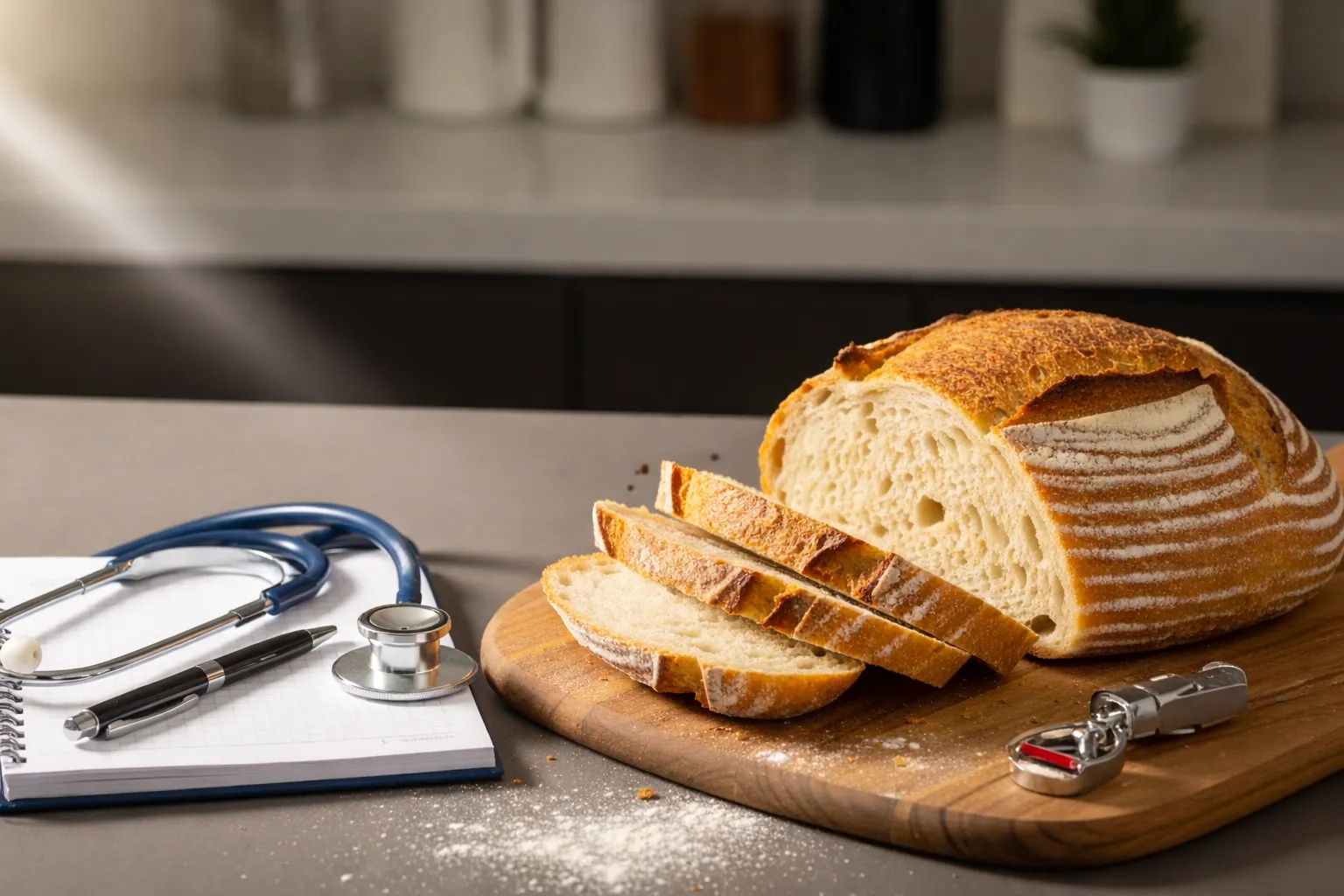
Do you miss enjoying a warm slice of bread because of diabetes? You are not alone. Many of my patients ask me, “Is sourdough bread good for diabetics?” Managing carbohydrates is a daily challenge for anyone with blood sugar concerns.
Traditional breads often spike blood sugar fast. However, sourdough is growing in popularity for very good reasons. Can diabetics eat sourdough bread safely? Yes, but you need to know the facts first.
Is sourdough bread healthy compared to a standard white loaf? Absolutely. The unique fermentation process changes how your body digests it. In this guide, we will explore why sourdough might be a better choice. But remember, portion sizes and the type of flour still matter immensely. Let’s dive into the science together.
Can Diabetics Eat Sourdough Bread?
So, can diabetics eat sourdough bread without worry? First of all, all bread contains carbohydrates. Carbs break down into sugar in your blood. As a result, managing your carb intake is essential for diabetes care.
But sourdough is very different from regular bread. Wild yeast and bacteria ferment the dough slowly. This process fundamentally changes the bread’s structure. Therefore, is sourdough bread good for diabetics to eat? Most patients can enjoy it safely.
You just need to watch your portions. In my clinical practice, I usually recommend starting with one thin slice. See how your body reacts before adding more to your diet.
Can Diabetics Eat Sourdough Bread Every Day?
You might wonder if you can enjoy it daily. Yes, but portion control is everything. Furthermore, you should never eat carb-heavy foods alone. Always pair your bread with healthy proteins or fats.
For example, add avocado, turkey, or eggs to your slice. This slows down digestion even more. Additionally, always monitor your blood glucose levels. Check your sugar two hours after eating. Consequently, you will learn exactly how your body responds.
Why Is Sourdough Bread Good for Diabetics?
Why is sourdough bread good for diabetics from a medical perspective? Is sourdough beneficial for diabetics in real clinical practice? I consistently see better glucose readings when patients switch to genuine sourdough.
Is sourdough bread healthy? Yes, and strong clinical science backs this up. The secret lies in the long fermentation process. Let’s look at the specific scientific reasons behind this benefit.
1. Lower Glycemic Index
First of all, authentic sourdough has a lower glycemic index (GI). Regular commercial bread digests very quickly. Therefore, it spikes your blood sugar almost immediately. In contrast, fermentation slows down glucose release. As a result, sourdough provides a much steadier energy curve.
2. Organic Acids Improve Glucose Response
During fermentation, good bacteria produce lactic acid. Lactic acid is incredibly helpful for your metabolism. It actually slows down how fast your stomach empties. Furthermore, it interacts with starches in the flour. This interaction significantly reduces the overall blood sugar spike.
3. Better Nutrient Absorption
Whole grains naturally contain compounds called phytates. Phytates block your body from absorbing essential minerals. Fortunately, the sourdough process reduces these phytates significantly. Because of this, you absorb much more zinc, iron, and magnesium.
4. Improved Gut Tolerance
Many patients ask me, can sourdough reduce bloating? Yes, it often does. Fermentation breaks down FODMAPs. These are specific carbohydrates that cause gas and digestive distress. Consequently, sourdough is much gentler on your sensitive digestive system.
Does Sourdough Bread Raise Blood Sugar?
Let’s be clear about one thing. Does sourdough bread raise blood sugar? Yes, it absolutely does. Does sourdough bread increase blood sugar as much as white bread? Usually, no.
All bread contains carbohydrates. Therefore, all bread will impact your glucose levels eventually. However, how does sourdough bread affect blood sugar levels in diabetics? It generally causes a much slower, gentler spike. But your individual response depends on several variables.
Factors That Affect Blood Sugar Response
- Flour type: Whole wheat flour is much better than refined white flour.
- Fiber: High fiber content slows down sugar absorption.
- Fermentation time: A longer fermentation time means a lower glycemic impact.
- Portion size: Eating too much will always spike your sugar.
- Meal composition: Eating bread with fat and protein stabilizes glucose.
Does Sourdough Bread Have a Lot of Sugar?
Does sourdough bread have a lot of sugar hidden inside? No, authentic sourdough does not. Is sourdough bread good for you in this regard? Yes.
Traditional bread relies on complex starch, not added sugar. Furthermore, the wild yeast actually consumes naturally occurring sugars during fermentation. Therefore, the final baked loaf is quite low in sugar.
Which Sourdough Bread Is Best for Diabetics?
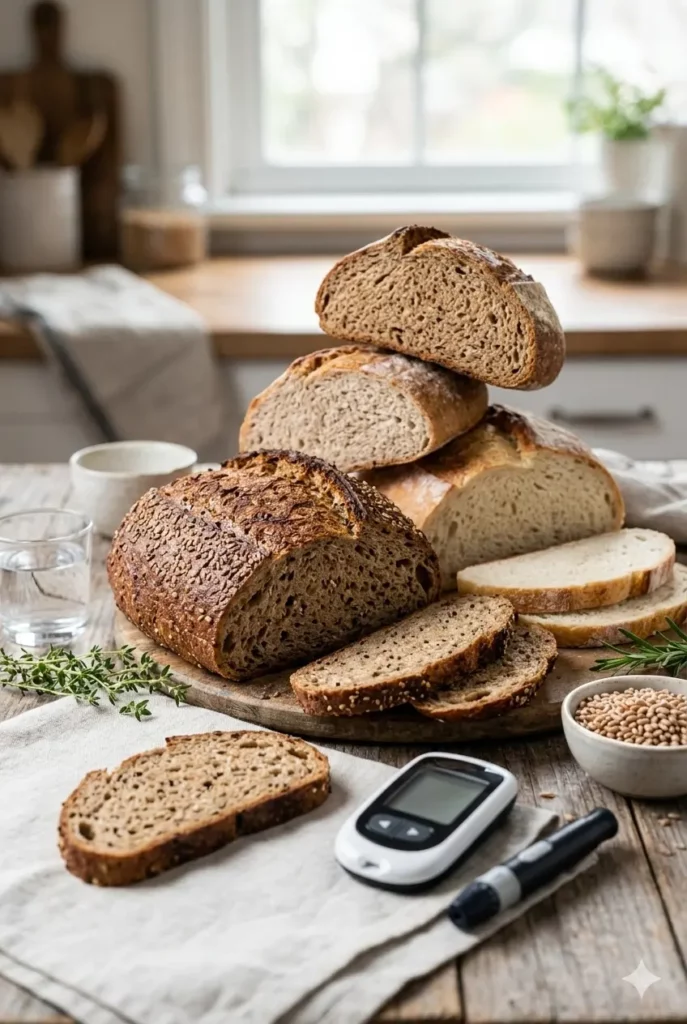
You have many options at the local bakery. So, which sourdough bread is good for diabetics? Not all loaves are created equal.
Whole-grain sourdough bread is a fantastic choice. Multigrain sourdough bread is also a great option. Rye sourdough bread is another top contender for blood sugar control. Here is a quick table to help you choose wisely.
| Type | Glycemic Impact | Recommendation |
| Whole-grain sourdough | Lower GI | Best choice |
| Rye sourdough | Moderate-low | Very good |
| Multigrain sourdough | Moderate | Good if whole grains |
| White sourdough | Higher GI | Limit |
Is White Sourdough Bread Good for Diabetics?
Is white sourdough bread good for diabetics in any situation? Generally, I advise my patients to avoid it. Manufacturers heavily process white flour. Consequently, it lacks essential fiber and nutrients.
Furthermore, it creates a much higher glycemic response. Your body digests white flour very quickly. Therefore, it spikes your blood sugar almost like regular white bread. You should choose better alternatives instead.
Is Whole Wheat Sourdough Bread Good for Diabetics?
So, is whole wheat sourdough bread good for diabetics? Yes, it is a truly excellent choice. Whole-grain sourdough bread retains the healthy bran and germ. Therefore, it provides abundant dietary fiber.
Fiber is absolutely crucial for blood sugar management. It naturally slows down carbohydrate digestion. As a result, you get significantly improved glycemic control. Additionally, it offers great satiety benefits, keeping you full longer.
Is Rye Bread Good for Diabetics?
You might also wonder, is rye bread good for diabetics? Or specifically, is rye sourdough bread good for diabetics? Yes, it is one of my top clinical recommendations.
Rye naturally has a very low glycemic index. Furthermore, it contains high amounts of soluble fiber. In my medical practice, I see rye significantly improve insulin response. Consequently, it keeps glucose levels incredibly stable after meals.
Best Bread for Diabetics (Doctor-Recommended Options)
What is the absolute best bread for diabetics? As a doctor, I get this specific question daily. Which bread is best for a diabetic patient ultimately depends on the ingredients. Let’s explore the top doctor-recommended options in detail.
First of all, whole-grain sourdough is a stellar choice. The wild yeast fermentation works perfectly with the high fiber content. Consequently, it digests very slowly. You get a steady release of energy without dangerous sugar spikes.
Secondly, rye sourdough stands out for blood sugar control. Rye flour acts very differently in your stomach than wheat. It forms a gel-like substance due to its soluble fiber. Therefore, it delays gastric emptying significantly, protecting your blood sugar.
Sprouted grain bread is another amazing alternative. Sprouting the grains before baking fundamentally changes their starch profile. Furthermore, sprouting actually increases the available protein and vitamins. As a result, it has a wonderfully low glycemic index.
Next, consider 100% whole wheat bread. You must check the nutrition label carefully, however. True whole wheat contains absolutely no refined white flour. Therefore, it delivers maximum fiber to protect your daily blood sugar.
Finally, low-carb bread has become very popular recently. Bakers make these loaves using almond flour, coconut flour, or added seeds. Consequently, they contain very few net carbs. They are highly effective for strict daily glucose management.
| Bread Type | Why It Works | Doctor’s Advice |
| Whole Grain Sourdough | High fiber, fermented | Check glucose at 2 hours |
| Rye Sourdough | Gel-forming fiber | Best for stable energy |
| Sprouted Grain | Lower starch content | Keep the loaf in the freezer |
| 100% Whole Wheat | Dense nutrients | Avoid added syrups |
| Low-Carb Loaves | Nut/seed-based | Great for strict keto |
Is Sourdough Bread Good for Diabetics and Cholesterol?
Many diabetic patients also battle high cholesterol. Thus, is sourdough bread good for diabetics and cholesterol? Yes, especially if you actively choose whole-grain varieties.
Whole grains naturally improve your LDL cholesterol levels. Furthermore, the high fiber content heavily supports your overall heart health. Lowering cardiovascular risk is strictly essential in diabetes care. Therefore, fibrous sourdough is a very smart, heart-healthy addition.
How to Make Sourdough Bread for Diabetics
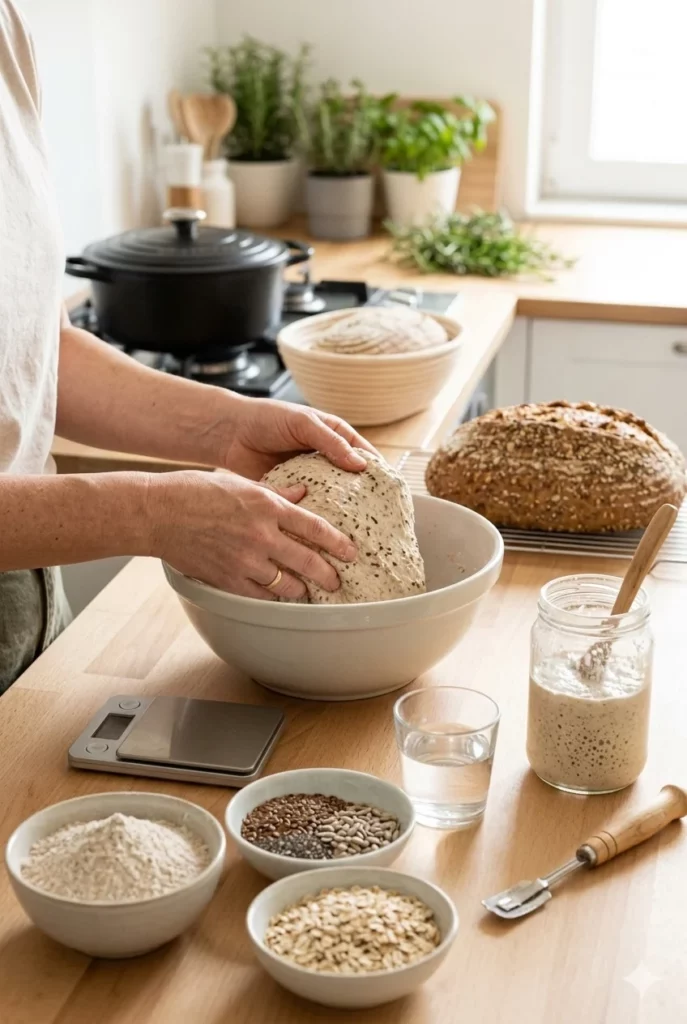
Do you want total control over your ingredients? Learning how to make sourdough bread for diabetics is incredibly rewarding. First of all, always use whole grain or rye flour.
Next, allow for a much longer fermentation time. A 24-hour ferment consumes more starches naturally. Additionally, try adding healthy seeds like chia or flax. Finally, strictly reduce or eliminate any refined white flour from your recipe.
Is Sourdough Bread Good for Type 2 Diabetics?
What about type 2 diabetes specifically? Is sourdough bread good for type 2 diabetics? Yes, it can fit perfectly into your daily meal plan.
Type 2 diabetes requires careful daily glucose management. Therefore, glycemic index relevance is huge here. Sourdough’s lower GI helps prevent sudden insulin demands. However, meal timing and your portion size remain extremely important.
Pros and Cons of Sourdough Bread for Diabetics
Let’s weigh the medical facts carefully. There are clear pros and cons to consider.
Pros:
- It has a significantly lower glycemic index.
- The fermentation makes it much easier to digest.
- You experience greatly improved nutrient absorption.
Cons:
- It remains a high-carbohydrate food.
- Strict portion control is always needed.
- White flour varieties will still spike your sugar.
Tips for Eating Bread Safely with Diabetes
How can you enjoy bread safely without the worry? First of all, always eat bread with protein or healthy fats. This simple trick slows down digestion remarkably.
Secondly, always choose high-fiber varieties like rye or seeded loaves. Furthermore, you must continuously monitor your personal blood glucose. Finally, strictly avoid ultra-refined bread with sneaky added sugars.
Frequently Asked Questions
Is sourdough bread good for diabetics in the UK?
Yes, but UK bread standards differ slightly from those in the US. You must still look for true wholemeal or rye flour types. Always check the supermarket label for hidden sugars.
Can diabetics eat sourdough bread every day?
Yes, you can eat it daily with proper moderation. However, you must pair it with protein every time. Furthermore, you must carefully monitor your slice portions.
Is multigrain sourdough bread good for diabetics?
It is usually a really great choice. But this depends heavily on the specific whole grains used. Strictly avoid brands that just use colored white flour.
Does sourdough bread increase blood sugar?
Yes, all dietary carbohydrates increase blood sugar eventually. However, authentic sourdough rises much more slowly than regular white bread.
Is sourdough bread healthy for prediabetes?
Yes, it is very healthy for you. The slow digestion actively helps prevent the rapid insulin spikes. Consequently, it stops prediabetes from worsening quickly.
Conclusion
In conclusion, is sourdough bread good for diabetics? Yes, sourdough can definitely be much better than standard bread. The natural fermentation process offers real metabolic benefits.
However, whole-grain and rye versions are always your best bet. Furthermore, your exact portion size matters more than anything else. Ultimately, you must monitor your own blood glucose response carefully.
Authoritative Medical References:
- Harvard Health Publishing: Do Fermented Foods Live Up to the Hype?
- National Institutes of Health (PubMed): Effect of Different Fermentation Conditions on Glycemic Index
- National Institutes of Health (PMC): Exploring the Nutritional Impact of Sourdough Fermentation
- National Institutes of Health (PubMed): Bread Making with Sourdough and Intact Cereal Grains – Effect on Glycaemic Index
- National Institutes of Health (PubMed): Use of Sourdough Lactobacilli and Oat Fibre to Decrease the Glycaemic Index