

I frequently hear a very common question in my medical practice. Patients sit in my exam room and ask, “Doc, exactly what is insulin, and why does it matter so much?” Many people feel confused about this vital hormone. Consequently, millions of Americans struggle with their metabolic health every single day.
Therefore, understanding your body’s chemistry remains the most critical step toward living a long, vibrant life. In this comprehensive guide, we will break down the exact insulin function and explore why it holds the key to your energy.
First of all, I want you to think of your body as a high-performance engine. Similarly, this hormone acts as the essential key that starts the engine. So, what is insulin resistance, and how do you stop it? Let us dive deep into the science, simplify the medical jargon, and give you clear answers.
TL;DR Summary Box
First of all, It is a vital messenger hormone manufactured entirely by your pancreas. Specifically, its primary insulin function is to unlock your body’s cells so they can absorb circulating blood sugar and use it for energy. Furthermore, you must understand exactly what insulin resistance is.
When you constantly consume highly processed foods, your pancreas pumps out massive amounts of this hormone. Consequently, your cells become overwhelmed and simply stop listening to the chemical signal. As a result, toxic levels of sugar and hormones build up in your bloodstream.
Therefore, this dangerous combination directly leads to stubborn weight gain, prediabetes, and eventually type 2 diabetes. Ultimately, you can absolutely reverse this process and heal your metabolism. By walking daily, lifting weights, and eating real, whole foods, you actively force your cells to become sensitive again. Take charge of your lifestyle today to protect your long-term health!
What Exactly Does Insulin Do?
Many newly diagnosed patients naturally ask me, “What exactly does insulin do in my body?” Basically, it acts as a chemical messenger. When you eat a meal, your digestive system breaks down carbohydrates into simple sugars called glucose.
As a result, this glucose enters your bloodstream rapidly. However, glucose cannot just float around in your blood forever. Your cells desperately need this sugar for energy. Yet, the cells remain locked shut.
Therefore, It effectively unlocks your cell doors. The hormone binds to specific receptors on the outside of your cells. Consequently, this action opens the cell, allowing the sugar to rush inside and fuel your entire body.
5 Main Functions of Insulin
When medical students ask me about the 5 functions of insulin, I always emphasize its role as a master regulator. It does much more than just handle sugar.
- Helps cells absorb glucose: It directly moves sugar from your blood into your muscle and fat cells.
- Lowers blood sugar: By moving glucose out of the bloodstream, it prevents toxic sugar buildup.
- Stores excess energy: It tells your liver to store extra glucose as glycogen for later use.
- Regulates fat metabolism: It actively prevents your body from breaking down stored fat.
- Supports protein synthesis: It helps your muscles absorb amino acids to build new tissue.
10 Functions of Insulin in the Body
Furthermore, if you want to understand the complete 10 functions of insulin, we must look deeper into your metabolism. In addition to the five listed above, this hormone performs several other critical jobs. Specifically, it controls how your brain regulates appetite and hunger signals.
Also, it manages potassium uptake in your cells, which keeps your heart beating regularly. Furthermore, it influences your vascular health by relaxing your blood vessels. Additionally, it helps your kidneys retain necessary sodium. Finally, it strongly promotes cellular growth and repair throughout your entire body. Thus, you can clearly see why this hormone is absolutely indispensable.
Where Is Insulin Produced?
People constantly search online asking, “Where is insulin produced?” or “Where is insulin made?” The answer lies deep inside your abdomen. You have a small, leaf-shaped organ called the pancreas sitting right behind your stomach. Inside this organ, you have tiny clusters of specialized cells called the islets of Langerhans.
Specifically, the beta cells within these clusters manufacture the hormone. So, how is insulin produced? First, your beta cells constantly monitor your blood. When they detect rising sugar levels, they quickly spring into action. Consequently, they manufacture and release the exact amount of hormone needed to handle the sugar load.
What Is Insulin Made Of?
If you enjoy science, you might wonder, “What is insulin made of?” Alternatively, people ask, “What is insulin made from?” Simply put, it is a peptide hormone. This means it consists entirely of proteins. Specifically, what is insulin made of? It contains 51 distinct amino acids linked together in two separate chains.
Your body meticulously constructs these chains like tiny building blocks. First of all, your pancreas creates a larger precursor protein called proinsulin. Afterward, enzymes neatly snip this protein into the final, active hormone right before releasing it into your blood.
What Is a Normal Insulin Level?
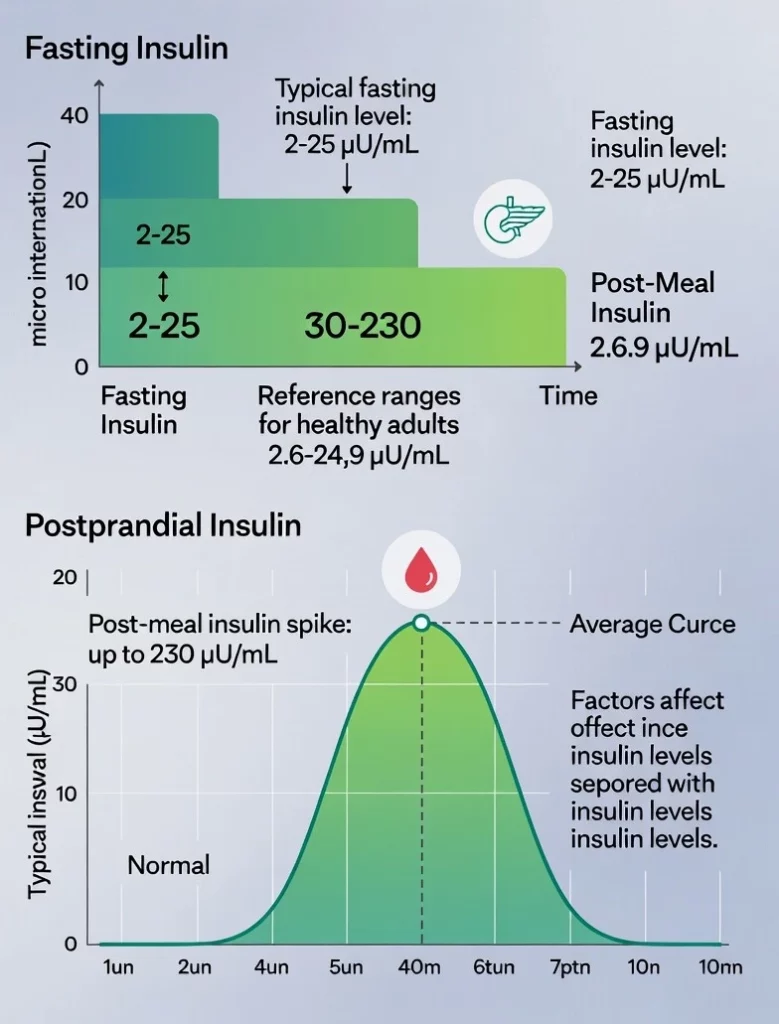
Just last month, I treated a patient named Mark who felt completely exhausted after meals. I ordered some lab tests. He nervously asked, “Doc, what is a normal insulin level?”
Checking fasting insulin provides massive clues about your health. Specifically, what is a normal fasting insulin level? While labs vary slightly, optimal functional levels usually fall under 5 to 10 mIU/L.
Below is a simple reference guide:
| Lab Result Status | Fasting Insulin Level |
| Optimal | Under 5 mIU/L |
| Normal / Average | 5 – 15 mIU/L |
| Early Insulin Resistance | 16 – 24 mIU/L |
| Severe Insulin Resistance | Over 25 mIU/L |
What Is Insulin Resistance?
This brings us to the most crucial topic. Patients constantly ask me, “What is insulin resistance?” Furthermore, they want to know, “what is insulin resistance mean for my future?” Imagine you constantly blast loud music in your house. Eventually, your ears adjust, and you stop noticing the noise.
Your cells do the exact same thing. When you constantly eat highly processed, sugary foods, your pancreas pumps out massive amounts of hormones. Eventually, your cells simply stop listening to the signal. They become deaf to the chemical messenger. Therefore, your pancreas must work even harder to force the cell doors open.
What Happens If Insulin Is High?
Because your cells ignore the signal, your pancreas just produces more and more. You might wonder, what happens if insulin is high for a long time? Medical professionals call this state hyperinsulinemia.
Consequently, your body stays trapped in a permanent fat-storage mode. You will find losing weight almost completely impossible. Furthermore, this chronic high state aggressively inflames your blood vessels, leading directly to heart disease.
Insulin Resistance and PCOS
Many women in my clinic suffer from unexplained weight gain and irregular cycles. They often search for “what is insulin resistance pcos.” PCOS stands for Polycystic Ovary Syndrome.
There is a massive hormonal link here. High circulating insulin heavily stimulates the ovaries. As a result, the ovaries produce far too much testosterone. This imbalance halts normal ovulation and causes severe, distressing symptoms for millions of women.
What Is Insulin Therapy?
I recently treated a 55-year-old patient named John who felt completely overwhelmed by his new diagnosis. He sat in my office and asked, “Doc, what is insulin therapy exactly?” I explained that his pancreas simply could not keep up with his body’s demands anymore.
Therefore, he needed outside help. So, what is insulin medication? It is a life-saving biological replacement for the exact hormone your body currently lacks. First of all, scientists design these medications to perfectly mimic your natural biology.
Furthermore, patients often ask, “What is an insulin injection?” Because your stomach acids destroy the hormone if you swallow it, you cannot take it as a pill. Consequently, you must inject it directly into the fatty tissue under your skin using a tiny, painless needle.
Types of Insulin
Patients frequently get confused by the different prescription names. To simplify things, you must understand how fast each type works. First, what is basal insulin? It provides a slow, steady background dose that keeps your blood sugar stable all day long.
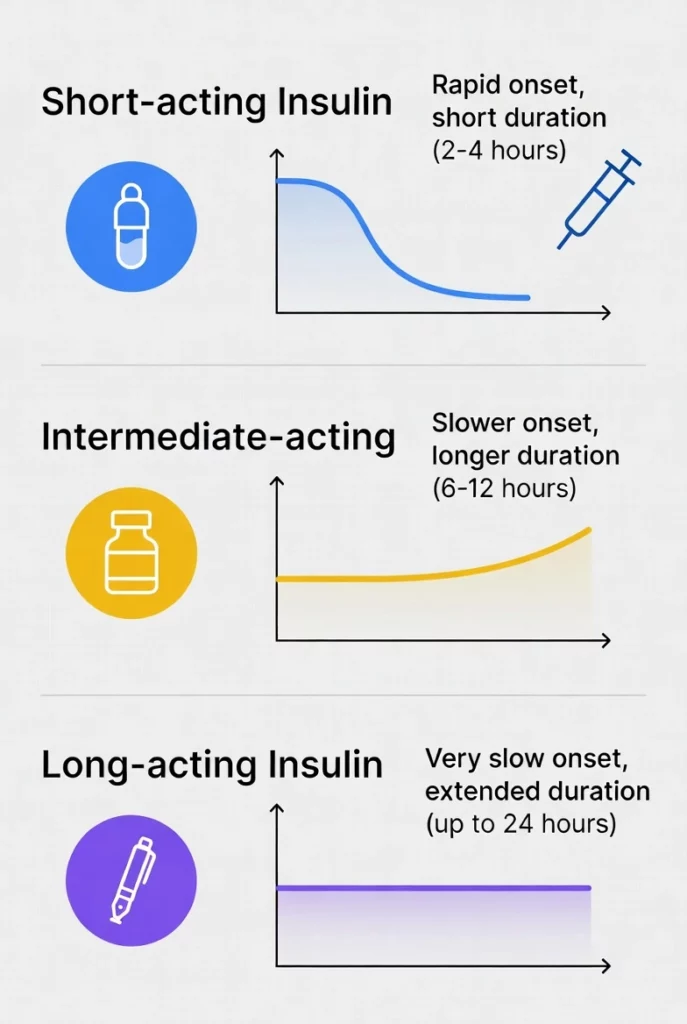
Conversely, you might ask, what is NPH insulin? It works as an intermediate-acting option that peaks a few hours after injection. Moreover, what is insulin aspart? This specific medication acts incredibly fast, so you take it right before you eat a meal.
Next, what is insulin degludec? It acts ultra-long, sometimes working beautifully for up to 42 hours. Finally, what is insulin glargine YFGN? It is a newer, highly effective biosimilar long-acting option that controls your overnight fasting levels perfectly.
| Type of Medication | How Fast Does It Start Working | How Long Does It Last? |
| Rapid-Acting (Aspart) | 10 to 15 minutes | 2 to 4 hours |
| Intermediate-Acting (NPH) | 1 to 3 hours | 12 to 18 hours |
| Long-Acting (Glargine) | 1 to 2 hours | Up to 24 hours |
| Ultra Long-Acting (Degludec) | 30 to 90 minutes | Up to 42 hours |
What Is an Insulin Pump?
Many of my type 1 diabetic patients eventually ask, “What is an insulin pump?” Basically, it is a small, computerized device that you wear quietly outside your body.
First of all, it delivers a continuous, tiny drip of the rapid-acting hormone directly into your skin. Consequently, it mimics a healthy, functioning pancreas much better than multiple daily shots. Furthermore, it gives you incredible freedom and flexibility with your daily meals.
What Is Insulin Shock?
Sometimes, managing high blood sugar & low blood sugar becomes a delicate balancing act. Patients frantically ask me, “What is insulin shock?” This dangerous medical emergency happens when you accidentally take far too much medication.
As a result, your blood sugar plummets dangerously low, causing severe hypoglycemia. Therefore, your brain suddenly starves for energy. Consequently, you might feel extremely dizzy, become confused, start sweating heavily, or even pass out completely.
Does insulin lower blood sugar?
People often search for simple answers online, asking, “Does insulin lower blood sugar?” Yes, it absolutely does. However, it does not magically destroy the sugar in your veins.
Instead, it actively moves the glucose out of your blood and transports it directly into your cells. Therefore, it physically shifts the energy to where your muscles and brain actually need it most.
What Food Gives You Insulin?
Many newly diagnosed patients naturally wonder, “What food gives you insulin?” Honestly, no food on earth actually contains this specific human hormone. However, certain foods aggressively trigger your pancreas to release massive amounts of it.
For instance, eating simple carbohydrates, sugary sodas, and highly processed snacks forces an immediate hormone spike. Conversely, eating healthy fats and lean proteins keeps your hormone levels incredibly stable.
What Is Diabetes?
Ultimately, all of these concepts lead to one central question: “What is diabetes?” Basically, it is a chronic metabolic disease where your entire insulin system completely breaks down.
First, in type 1 diabetes, your body produces absolutely zero hormone due to an autoimmune attack. Conversely, in type 2 diabetes, your body becomes deeply resistant to the hormone it still produces. Consequently, toxic amounts of sugar build up in your blood, heavily damaging your organs over time.
what is prediabetes?
Many people feel perfectly healthy and don’t realize their blood sugar may be creeping higher than normal. This stage is often silent, showing few obvious signs, yet it signals that changes are needed to prevent serious health issues. So, what is prediabetes?
Prediabetes is a condition where blood sugar levels are higher than normal but not yet high enough to be classified as type 2 diabetes. Recognizing it early is crucial because lifestyle changes, like a balanced diet (Or Ketogenic Diet if doctor prescribes) regular exercise, can reverse it. Understanding this condition helps people take control of their health before it progresses further.
What Is the Fastest Way to Improve Insulin Resistance?
Finally, patients practically beg me to tell them, “What is the fastest way to cure insulin resistance?” First of all, you must dramatically reduce your intake of refined carbohydrates and added sugars.
Second, you must start lifting weights and walking vigorously every single day. Because active muscle tissue aggressively burns sugar, exercise physically forces your cell doors open. Therefore, consistent lifestyle changes remain your absolute most powerful medicine.
Frequently Asked Questions
What is insulin?
It is a crucial metabolic hormone created by your pancreas. Specifically, it unlocks your cells so they can absorb sugar from your bloodstream and use it for daily energy.
What does insulin do?
First of all, it lowers your blood sugar by moving glucose into your tissues. Furthermore, it tells your liver to store extra energy and stops your body from breaking down fat unnecessarily.
What is insulin resistance?
This condition occurs when your cells stubbornly stop responding to the hormone’s signal. Consequently, your pancreas must pump out massive amounts of it just to keep your blood sugar normal.
Where is insulin produced?
Your body manufactures it deep inside the pancreas. Specifically, special clusters called beta cells produce and release this hormone directly into your bloodstream.
Does insulin lower blood sugar?
Yes, it acts as the primary tool your body uses to lower circulating glucose. Forcefully transporting sugar out of the blood and into the cells, it prevents dangerous vascular damage.
Conclusion
Ultimately, truly understanding what insulin is gives you incredible power over your own body. First of all, this vital hormone acts as the master key to your daily energy. Furthermore, it completely dictates how well your metabolism functions over your lifetime.
Therefore, you must treat your pancreas and your cellular health with the utmost care. In contrast, ignoring your diet and lifestyle inevitably leads to serious medical problems. If you constantly wonder what insulin resistance is, you must closely examine your daily habits.
Consequently, eating highly processed foods and living a deeply sedentary life will eventually lock your cell doors shut. As a result, your blood sugar will spike dangerously high. However, you absolutely hold the power to reverse this destructive process.
For example, simply walking for twenty minutes after meals and prioritizing lean protein can dramatically improve your cell sensitivity. In addition, getting quality sleep naturally lowers your stress hormones. Thus, small, consistent daily choices create massive long-term healing.