
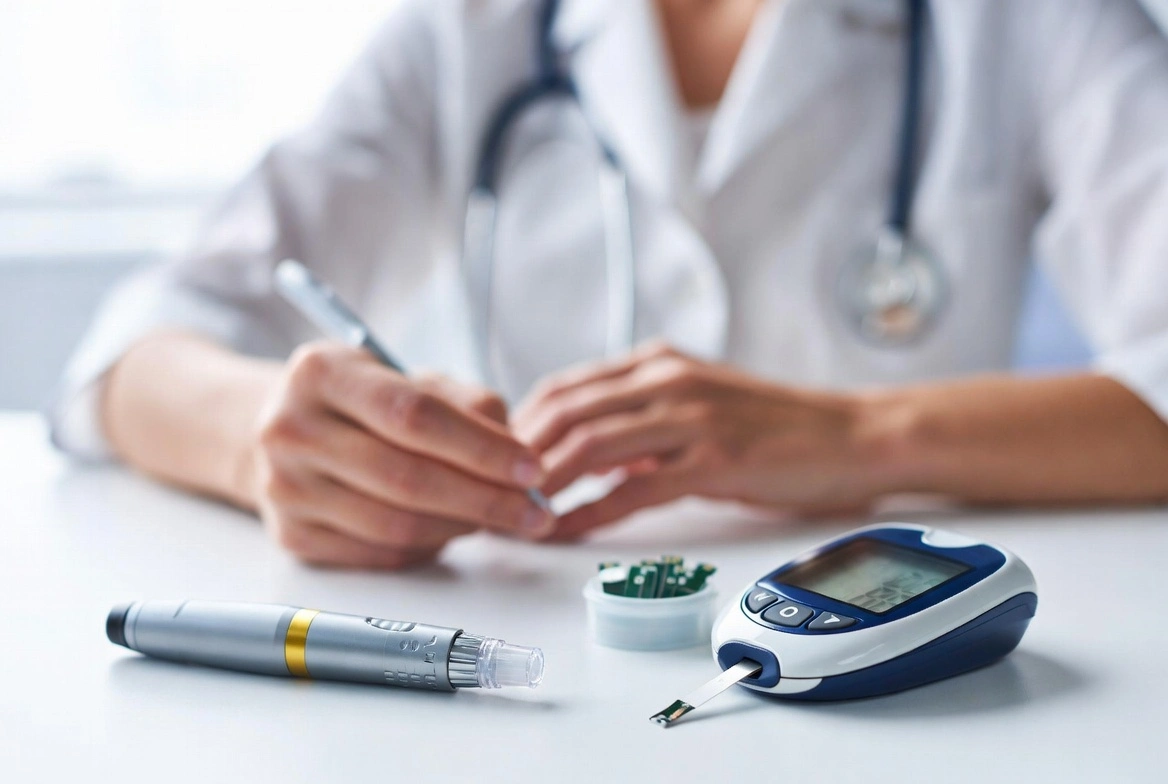
Have you ever felt like you can’t drink enough water, no matter how much you try? Or noticed your vision becoming slightly blurry for no clear reason? Many people brush these symptoms off as stress, aging, or simply the weather. But sometimes, these small changes are your body’s way of signaling that something isn’t right.
As a doctor, I often meet patients who didn’t realize their symptoms were connected to high blood sugar until much later. Complaints like constant thirst, fatigue, or trouble concentrating are frequently overlooked in the early stages. Yet these subtle signs can be the body’s early warning system for diabetes.
Understanding what the 10 warning signs of diabetes are can make a life-saving difference. The earlier you recognize them, the sooner you can seek testing and treatment. Let’s take a closer look at the early symptoms of diabetes you should never ignore.
TL;DR Summary Box
- Most Common: Thirst and frequent bathroom trips.
- Sneaky Signs: Vision changes and slow-healing sores are two sneaky signs of diabetes.
- Emergency Sign: Sudden weight loss or fruity breath.
- Action Step: Get a simple A1C blood test.
The 10 Warning Signs of Diabetes Everyone Should Know
When your blood sugar stays high, your body struggles to function. Consequently, it starts sending out distress signals. You might not notice them all at once. Some appear only after months of high glucose. Understanding what are the 10 warning signs of diabetes is the first step toward health.
Frequent Urination (Polyuria)
First of all, notice how often you hit the bathroom. When glucose levels are high, your kidneys work overtime. They try to filter and absorb the excess sugar. If they can’t keep up, the sugar goes into your urine. This process pulls fluids from your tissues. Therefore, you end up urinating much more than usual. This is especially true at night. Doctors call this nocturia.
Excessive Thirst (Polydipsia)
Because you are urinating more, you become very dehydrated. You might feel like your mouth is a desert. No amount of water seems to help. This is a classic “cause and effect” cycle. High sugar causes urination. Urination causes thirst. Many people don’t realize what are 10 warning signs of diabetes often start right here.
Extreme Hunger (Polyphagia)
Your body needs insulin to move sugar into your cells. Without enough insulin, your cells starve for energy. Even if you eat, you feel hungry. Your muscles and organs are literally lacking fuel. Consequently, you feel a constant urge to eat. This is one of the most common symptoms of diabetes. A healthy breakfast for diabetics helps prevent hunger and keeps blood sugar stable.
Unexplained Weight Loss
This sign is particularly noteworthy in type 1 diabetes. When your body can’t get energy from sugar, it burns fat. It also starts burning muscle. You might lose ten pounds in a few weeks without trying. While weight loss sounds good to some, this version is dangerous. It means your metabolism is in crisis.
Extreme Fatigue
Do you feel exhausted after a full night’s sleep? Fatigue is a major red flag. If sugar stays in your blood, your cells don’t get energy. This leads to a profound sense of lethargy. Furthermore, the dehydration from frequent urination adds to the exhaustion. You might feel like you are walking through mud all day.
Blurred Vision
High blood sugar can change the shape of your eye lens. Specifically, the lens may swell. This makes it hard to focus. Everything starts to look fuzzy or out of focus. Luckily, this is often reversible. Once your sugar levels stabilize, your vision usually returns to normal. However, ignoring it can lead to permanent damage.
Slow-Healing Cuts and Wounds
Have you noticed a scrape that won’t go away? High glucose levels affect your blood flow. It also impairs your body’s natural healing process. Furthermore, it weakens your immune system. This makes it harder for your body to repair tissue. A small blister on your foot could become a serious ulcer.
Frequent Infections
Bacteria and yeast thrive in sugary environments. Therefore, people with high blood sugar get more infections. You might notice frequent vaginal yeast infections. Some people deal with recurring skin infections or “jock itch.” Urinary tract infections (UTIs) are also very common.
Tingling or Numbness in Hands and Feet
This is a sign of nerve damage, or neuropathy. Too much sugar in the blood damages small nerves. You might feel “pins and needles.” Some patients describe it as a burning sensation. If left untreated, this can lead to a total loss of feeling. This is why foot care is vital for diabetics.
Dark Skin Patches (Acanthosis Nigricans)
Look for dark, velvety patches of skin. These usually appear in the folds of the neck or armpits. It is a sign of insulin resistance. Your body is making insulin, but it isn’t working right. This is one of the 10 sneaky signs of diabetes people often overlook.
Early Signs of Type 2 Diabetes
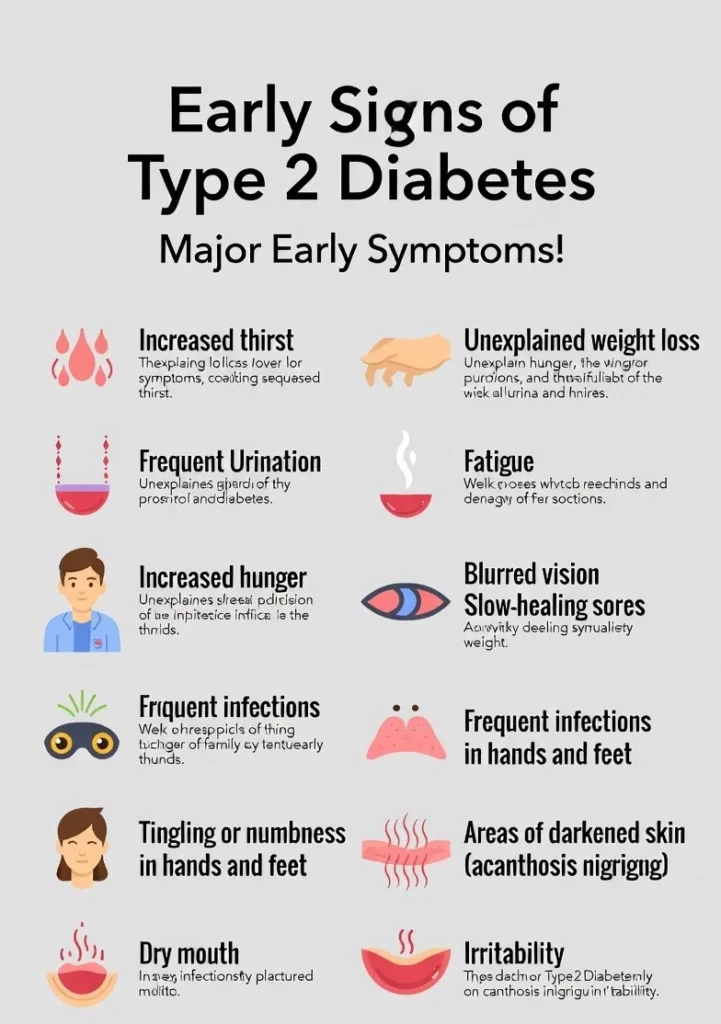
Type 2 diabetes is the most common form. It usually develops over several years. Many people have it and don’t even know it. This is because the symptoms are often very mild at first. You might just feel a little more tired than usual.
The main issue in type 2 is insulin resistance. Your body’s cells stop responding to insulin. As a result, the pancreas makes more and more. Eventually, it can’t keep up. The sugar then stays in your blood.
You might notice skin changes or slow healing before you ever feel thirsty. Because type 2 develops slowly, it is often called a “silent killer.” You could have it for five years without a single “emergency” symptom. This is why regular screening is so important for adults over 35. If you have a family history, start even earlier.
Early Signs of Type 1 Diabetes
Type 1 diabetes is different. It is an autoimmune condition. Your immune system attacks the insulin-producing cells in your pancreas. Therefore, you produce little to no insulin. The onset is usually very fast. It can happen in a matter of weeks or even days. When people ask, “what are 10 warning signs of diabetes type 1,” the answer usually involves “sudden” changes.
Weight loss is often the biggest clue. A child or young adult might suddenly look very thin. They may also develop extreme thirst overnight. Another major sign is fruity-smelling breath. This happens because the body is burning fat for fuel. This creates chemicals called ketones. If ketones build up, it leads to a medical emergency called DKA.
Diabetic ketoacidosis (DKA) requires immediate hospital care. Because it hits so fast, type 1 is often diagnosed in the ER. Symptoms like stomach pain, vomiting, and confusion are common. If you see these in a child, do not wait. Seek medical help immediately. In the early stage of diabetes can managed naturally.
Early Signs of Diabetes in Women
Women face unique challenges with blood sugar. For example, recurrent yeast infections are a huge red flag. High glucose levels in the vaginal area encourage yeast growth. If you have three or more infections a year, check your sugar.
Furthermore, PCOS (Polycystic Ovary Syndrome) is linked to diabetes. Women with PCOS often have insulin resistance. This means they are at a much higher risk for type 2 diabetes. They might notice dark skin patches or irregular periods. Sexual dysfunction can also occur.
High sugar levels can cause vaginal dryness. It can also lead to a lower sex drive. Many women feel embarrassed to discuss this. However, it is a key medical indicator. Knowing what are 10 warning signs of diabetes in females helps you take charge of your hormonal health.
Early Signs of Diabetes in Men
Men often show symptoms differently than women. One of the most common early signs is erectile dysfunction (ED). High blood sugar damages the blood vessels and nerves needed for an erection. In fact, ED can be the very first sign of diabetes in men. Additionally, men may notice a loss of muscle mass. If the body can’t use sugar, it breaks down muscle tissue.
You might feel weaker during your workouts. You may also notice your arms and legs getting thinner. Finally, men are prone to genital yeast infections. While people think of these as “female” problems, they happen to men too. Redness, itching, or discharge can all be signs. If you see this, ask your doctor about your glucose levels.
Warning Signs of Diabetes in Children
It is scary when a child gets sick. For parents, knowing what are 10 warning signs of diabetes in kids is essential. The most common sign is bedwetting. If a potty-trained child starts having accidents, pay attention. This is often caused by the kidneys trying to flush out sugar. Children also get “hangry” more easily. They may have extreme hunger but continue to lose weight.
You might notice they are less active than usual. They might want to nap all the time. Heavy breathing can also be a sign of type 1 in kids. If their breath smells like fruit or nail polish remover, it’s an emergency. Call your pediatrician or go to the ER right away. Early diagnosis prevents long-term damage.
What Is the Red Flag of Diabetes?
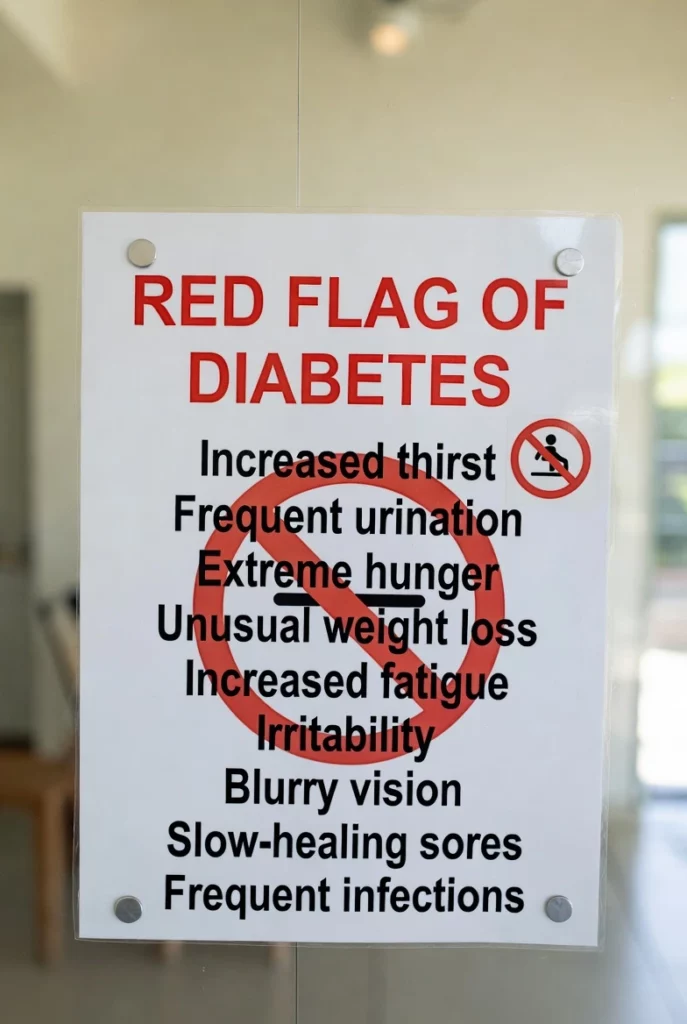
If you had to pick just one “red flag,” it would be the combination of thirst and urination. Doctors often call this the “classic triad.” If you are drinking gallons of water and still feel thirsty, that is a red flag. Another major red flag is sudden, blurry vision.
If you wake up and can’t read the clock, something is wrong. This isn’t just “tired eyes.” It is a metabolic shift. Finally, any sore on your foot that doesn’t heal is a major warning. Diabetic foot ulcers are a leading cause of amputation. Never ignore a foot wound. It is a sign that your circulation and nerves are already struggling.
What Are 5 Signs Your Blood Sugar Is Too High?
Sometimes sugar spikes quickly after a meal. This is called hyperglycemia. You might feel the effects within an hour. Here are 5 signs to watch for:
- Sudden Headache: High sugar levels affect blood flow to the brain.
- Increased Fatigue: You feel like you need a nap immediately.
- Blurry Vision: Your eyes struggle to focus on the screen.
- Dry Mouth: No matter how much you swallow, your throat feels parched.
- Frequent Urge: You find yourself running to the bathroom every 30 minutes.
If you have a glucose monitor, check your levels. Anything over 180 mg/dL after eating is usually considered high. If it stays high, call your healthcare provider.
12 Signs of Uncontrolled Diabetes
If diabetes isn’t managed, it damages the whole body. Uncontrolled sugar leads to “complications.” These signs are more severe than the early warnings.
- Nerve Pain: Burning or stabbing pain in the legs.
- Kidney Issues: Swelling in the ankles or feet.
- Heart Problems: Shortness of breath or chest pain.
- Gum Disease: Bleeding gums or loose teeth.
- Gastroparesis: Feeling full after only a few bites of food.
- Hearing Loss: Difficulty following conversations.
- Depression: Chronic high sugar affects brain chemistry.
- Bone Pain: Increased risk of fractures.
- Itchy Skin: Often caused by poor circulation or dry skin.
- Frequent Flu: A weakened immune system means you get sick often.
- Dizziness: From dehydration or blood pressure shifts.
- Slow Recovery: Taking weeks to get over a simple cold.
How Do You Feel When Diabetes Starts?
Most people describe the start of diabetes as a “fog.” You feel physically and mentally drained. Has interviewed many patients about this. They often mention “brain fog.” They find it hard to concentrate at work. You might also feel irritable. When blood sugar swings up and down, your mood follows.
You might get “shaky” if you haven’t eaten. This is often reactive hypoglycemia. Essentially, you feel like your body is running on the wrong type of fuel. You are tired, thirsty, and just “off.” If you feel this way for more than a week, see a doctor.
What Three Drinks Should Diabetics Avoid?
If you suspect you have diabetes, your diet matters now. Specifically, your drinks can spike sugar instantly. Avoid these three:
- Regular Soda: One can has about 10 teaspoons of sugar. It hits your bloodstream like a lightning bolt.
- Sweetened Coffee Drinks: Lattes and frappes are often sugar bombs. They can have more sugar than a dessert does.
- Fruit Juice: Even “100% juice” lacks fiber. It causes a rapid rise in glucose levels.
Instead, stick to water, unsweetened tea, or black coffee. These won’t worsen your symptoms while you wait for your doctor’s appointment.
Complete List of Diabetes Symptoms
| Symptom Category | Signs to Watch For |
| Urinary | Frequent trips, nighttime bathroom runs, bedwetting. |
| Physical | Thirst, hunger, weight loss, extreme fatigue. |
| Neurological | Blurry vision, tingling in feet, headaches, irritability. |
| Integumentary | Slow healing, dark neck patches, and itchy skin. |
| Immune | Frequent yeast infections, UTIs, and skin boils. |
When to See a Doctor
You should never “wait and see” with diabetes. If you have two or more of the 10 warning signs, call your clinic. A simple blood test can give you answers. This is usually a fasting glucose test or an A1C test. An A1C test measures your average sugar over three months.
It is the gold standard for diagnosis. Furthermore, catching it early can prevent heart disease and nerve damage. In some cases, you can even reverse type 2 diabetes through diet and exercise. This is called “remission.” But you can only do this if you catch it early. Don’t let the “silent” symptoms win.
Frequently Asked Questions
Can you have diabetes with no symptoms?
Yes, especially in type 2. Many people have no obvious signs for years. This is why regular checkups are vital for everyone.
Is 100 mg/dL a high blood sugar level?
A fasting level of 100 to 125 mg/dL is considered prediabetes. It means your sugar is higher than normal but not yet in the diabetic range.
Why do diabetics get thirsty?
The body uses water to flush out excess sugar through the urine. This process dehydrates you, which triggers the thirst center in your brain.
Can stress cause temporary diabetes symptoms?
Stress can raise your blood sugar temporarily. However, it usually won’t cause the “10 warning signs” unless you already have underlying insulin issues.
How long can you have diabetes without knowing?
Some people live with type 2 diabetes for 10 years before being diagnosed. During that time, the high sugar content can still damage your organs.
Conclusion: Taking Action on the Warning Signs
In the final analysis, knowing what are 10 warning signs of diabetes is about more than just checking a list. It is about advocating for your long-term health. As we have seen, symptoms like extreme thirst, fatigue, and blurry vision are not just minor inconveniences. They are physiological signals that your metabolic system is under significant stress.
Because diabetes can be a “silent” condition, paying attention to these cues is often the only way to catch the disease before it causes permanent damage to your heart, kidneys, and nerves. If you recognize these symptoms in yourself or a loved one, please do not panic. Modern medicine has made incredible strides in managing both type 1 and type 2 diabetes.
Many people lead full, active lives after a diagnosis. In fact, catching the condition in the prediabetes stage often allows for lifestyle changes that can prevent the full onset of the disease entirely.