
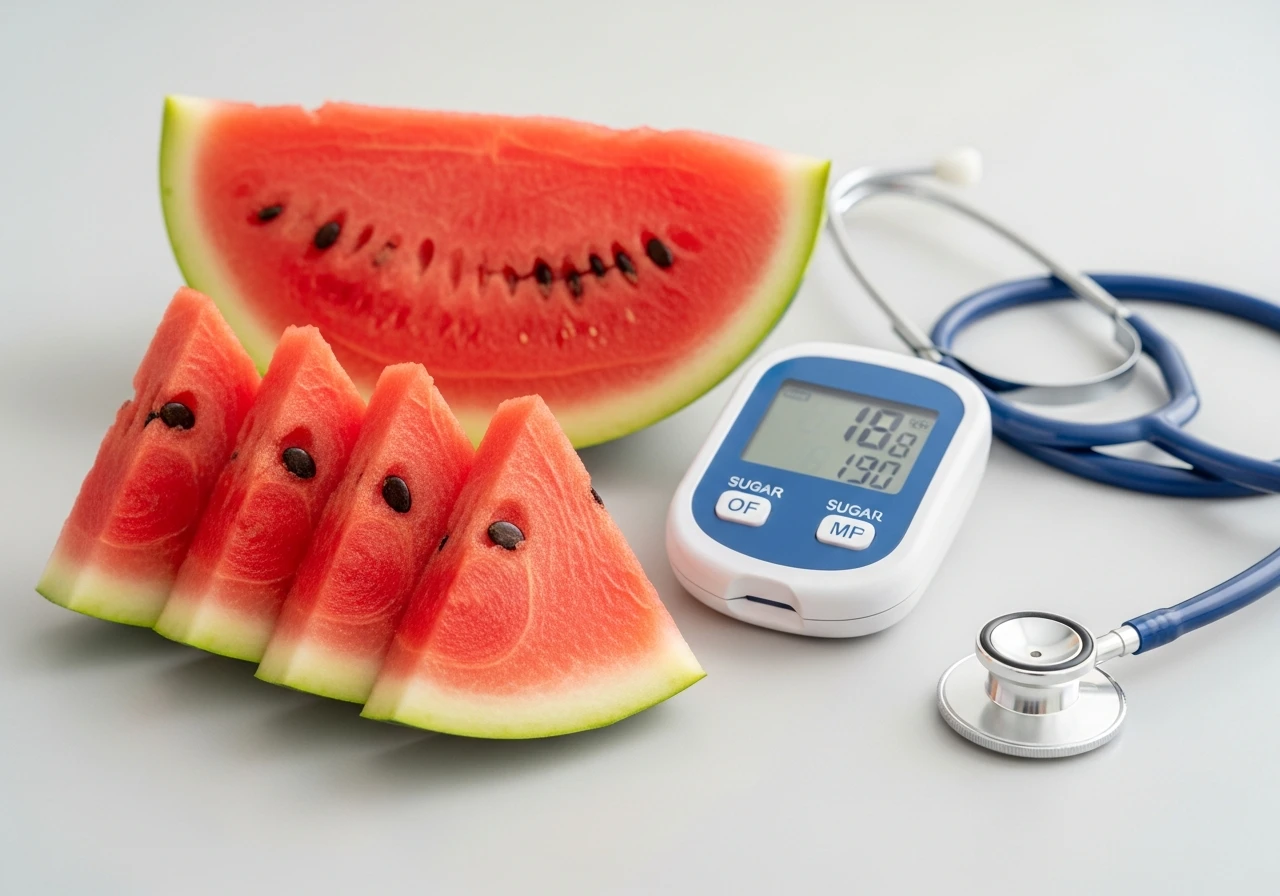
In clinical practice, a common question from patients managing blood sugar is, “Can diabetics eat watermelon?” Because watermelon is naturally sweet and often feels like a sugary treat, many people with diabetes worry about how it might affect their glucose levels.
However, understanding the key difference between the glycemic index (GI) and glycemic load (GL) reveals a more balanced and nuanced picture.
Portion control is the most important factor in enjoying this refreshing fruit safely. When eaten in moderate portions and paired with the right macronutrients, watermelon can fit into a balanced diet for people managing both Type 1 and Type 2 diabetes.
Can diabetics eat watermelon?
Yes, people with diabetes can eat watermelon in moderation. Although watermelon has a high glycemic index, its glycemic load is relatively low because it contains mostly water. Small portions can usually fit into a balanced diabetes meal plan.
Is Watermelon Good for Diabetes?
When evaluating if diabetics can eat fruit like watermelon safely, we must look at its complete nutritional profile. Watermelon is completely fat-free, extremely low in sodium, and remarkably low in total calories.
Furthermore, it is packed with essential micronutrients, particularly vitamins A and C, which actively support immune function and eye health. The fruit is also rich in lycopene, a powerful antioxidant that helps reduce systemic inflammation and protects cardiovascular health.
Because watermelon is composed of over 90% water, it offers incredible hydration benefits without adding heavy caloric bulk to your diet. Dietary guidance consistent with the Centers for Disease Control and Prevention (CDC) encourages eating whole, hydrating fruits over processed snacks.
Therefore, if you are asking, “Is watermelon good for diabetes?” the answer is yes, provided it is consumed thoughtfully within a carbohydrate-controlled diet framework.
Does Watermelon Have a High Glycemic Index?
A major point of confusion for many patients is the question, “Does watermelon have a high glycemic index?” The glycemic index measures how quickly a food raises your blood sugar on a scale of 0 to 100.
Watermelon does indeed have a high GI score of approximately 72. At first glance, this high number makes many people worry about watermelon, diabetes, and blood sugar management.
However, the glycemic index alone is highly misleading because it does not account for the actual amount of carbohydrates in a normal serving. This is where the concept of glycemic load (GL) becomes essential for diabetics.
Because the fruit is mostly water, an average portion contains very few actual carbohydrates, resulting in a remarkably low glycemic load of about 5 per cup. A low GL means the actual impact on your blood sugar is minimal if portions are strictly controlled.
Will Watermelon Spike Blood Sugar?
Whether or not the fruit, watermelon, will spike blood sugar depends entirely on how you consume it. Portion size is the single largest factor determining your post-meal glucose response.
Eating a massive bowl of watermelon on an empty stomach will likely cause a rapid spike. However, your meal composition matters immensely; combining the fruit with a handful of almonds or a slice of cheese slows down digestion.
The protein and fat act as a buffer, smoothing out the absorption of the natural fruit sugars. Finally, individual glucose responses vary, so it is always wise to test your blood sugar after trying a new portion size.
How Much Watermelon Can Diabetics Eat?
Understanding exactly how much watermelon diabetics can eat is the most important step for safe consumption. Medical dietitians generally recommend keeping fruit carbohydrate servings to about 15 grams per snack or meal.
A standard 1-cup serving of diced watermelon contains roughly 11 grams of carbohydrates and 9 grams of natural sugar. This fits perfectly within the standard carbohydrate allowance for a well-managed diabetic snack.
If you are wondering how much watermelon you can eat with diabetes, the chart below outlines general clinical guidelines for safe portions. Always remember to pair your serving with a healthy fat or protein source, such as Greek yogurt or walnuts, to blunt any potential glucose peaks.
| Portion Size | Carbohydrate Content | Blood Sugar Recommendation |
| ½ cup, diced | Low (~5.5g carbs) | Very Safe—Minimal impact |
| 1 cup, diced | Moderate (~11g carbs) | Usually OK—standard serving |
| 2+ cups, diced | High (22g+ carbs) | May spike glucose—Avoid |
Can Diabetics Eat Watermelon Every Day?
Many fruit lovers want to know, can diabetics eat watermelon every day during the hot summer months? Yes, you can technically incorporate this fruit into your daily routine if you practice strict portion control.
Standard diabetic meal plans easily allow for two to three servings of whole fruit daily, so whether a diabetic can eat watermelon daily simply depends on what else they eat. If you consume a cup of watermelon, you must account for those 11 grams of carbohydrates in your daily total.
If you choose to eat it daily, continuous blood glucose monitoring is vital to ensure your body is tolerating the routine without hidden spikes.
Can Diabetics Eat Watermelon at Night?
Late-night snacking is a common challenge, leading to the question: Can diabetics eat watermelon at night? While not strictly forbidden, eating any simple carbohydrates right before bed can cause unpredictable overnight glucose fluctuations.
Your nighttime glucose changes are heavily influenced by your evening activity levels and your baseline insulin sensitivity. Because you are inactive while sleeping, your body may struggle to process the sudden influx of fructose.
If a diabetic eating watermelon at night is a priority for you, keep the portion to half a cup and aggressively pair it with a protein-heavy snack like cottage cheese.
Watermelon and Type 2 Diabetes

When discussing watermelon and type 2 diabetes, the primary medical concern is underlying insulin resistance. Because the cells do not respond properly to insulin, sudden influxes of simple carbohydrates can linger dangerously in the bloodstream.
However, complete avoidance of natural fruit is rarely the clinical answer. Strict carbohydrate awareness allows you to safely enjoy the fruit’s nutritional and hydration benefits.
If you are wondering, can type 2 diabetics eat watermelon? The answer relies entirely on your personal dedication to strict portion control and macronutrient pairing.
Is Watermelon Good for Type 1 Diabetes?
Type 1 diabetes requires a distinctly different management approach focused heavily on precise insulin dosing. Is watermelon good for type 1 diabetes? Yes, it can be an excellent, refreshing option.
Because Type 1 management revolves around accurate carb counting, the predictable 11 grams of carbs per cup make mealtime math relatively straightforward.
Patients must simply ensure their rapid-acting insulin adjustments accurately match their intended portion size before eating.
Can Prediabetics Eat Watermelon?
Prediabetes is a critical warning stage where blood sugar levels are elevated but not high enough for a Type 2 diagnosis. Many patients ask their doctors, “Can pre-diabetics eat watermelon without pushing themselves into full diabetes?”
Because prediabetes is characterized by worsening insulin sensitivity, your pancreas has to work much harder to process dietary sugars. However, completely depriving yourself of fresh, hydrating fruits is an outdated and unnecessary clinical approach.
If you have prediabetes, you can safely enjoy a 1-cup serving of watermelon. The key is strict portion moderation and ensuring you remain physically active to help your muscles absorb the glucose.
Can Watermelon Cause Diabetes?
There is a persistent dietary myth that eating sweet fruits will directly damage your pancreas and cause metabolic disease. Patients frequently ask, can watermelon cause diabetes if they eat too much of it over the summer?
The medical answer is a resounding no; fruit does not cause diabetes. Type 2 diabetes is a complex metabolic condition driven by genetics, overall diet quality, lack of physical activity, and chronic obesity.
Public health information from the World Health Organization strongly emphasizes that eating fresh, whole fruit actively protects against chronic diseases. Your overall lifestyle matters far more than an occasional bowl of fresh melon.
Can Diabetics Eat Watermelon Seeds?
Most people spit out the black seeds, but they are actually dense little nutritional powerhouses. If you are wondering if diabetics can eat watermelon seeds, the answer is yes, and they might actually be beneficial.
These seeds contain surprising amounts of plant-based protein, healthy fats, and essential minerals like magnesium. Because they provide a dose of fat and protein, digesting the seeds may slightly slow down the overall glucose absorption from the fruit.
If you prefer seedless varieties, that is perfectly fine, but accidentally or intentionally swallowing the seeds poses no risk to your blood sugar.
Can Diabetics Eat Watermelon With Other Fruits?
Mixing different fruits into a large summer salad is delicious, but it rapidly multiplies your total carbohydrate intake. You must be highly strategic about which fruits you combine to avoid overwhelming your insulin response.
Watermelon and Cantaloupe Combinations
If you are asking, “Can diabetics eat watermelon and cantaloupe together?” you must account for the cantaloupe glycemic index, which is roughly 65. Because both melons are mostly water, a mixed 1-cup serving remains relatively safe.
However, many patients wonder, can diabetics eat cantaloupe and watermelon in large quantities? No. If you exceed one cup total, you risk a glucose spike, but asking can diabetics eat cantaloupe alone yields the same portion guidelines.
Watermelon and Pineapple Pairings
Pineapple is notoriously high in natural sugars and dense in carbohydrates compared to melons. When questioning whether diabetics can eat watermelon and pineapple, extreme caution is required regarding the pineapple sugar content.
A mixture of these two fruits will have a significantly higher glycemic load than melon alone. If you combine them, keep the pineapple chunks to an absolute minimum and pair the bowl with cottage cheese.
Watermelon and Grapes Considerations
Grapes are tiny, concentrated sugar bombs that lack the high water volume of melons. When patients ask, “Can diabetics eat watermelon and grapes?” dietitians warn about the extreme carb density of grapes.
While the answer to “Can diabetics eat grapes?” is yes, combining them with another high-GI fruit like watermelon requires strict counting. Just ten grapes contain about 9 grams of carbohydrates, so portioning is vital.
Other Fruits Diabetics Often Ask About

As I analyze large volumes of patient queries, certain fruits constantly emerge in blood sugar discussions. Understanding how these specific fruits affect your body helps build a much safer, more confident dietary routine.
Banana Consumption for Diabetics
Many patients fear bananas, frequently asking, “Can diabetics eat bananas?” Yes, but the ripeness matters immensely; a slightly green banana has a much lower glycemic index than a fully brown, overripe one.
Cherries and Blood Sugar
When summer arrives, the question “Can diabetics eat cherries?” is incredibly common. Cherries actually have a remarkably low glycemic index (around 22) and are packed with inflammation-fighting antioxidants, making them an excellent choice.
Honeydew Melon Portions
Similar to cantaloupe, people often wonder, can diabetics eat honeydew melon? Honeydew has a moderate glycemic index and fits perfectly into a diabetic diet when limited to a standard 1-cup serving.
Which Fruit Is Best for Diabetes?
If you are looking for the absolute safest options, you might wonder which fruit is best for diabetes management. Medical dietitians consistently rank certain fruits at the top of their recommended lists due to their massive fiber content.
If you are unsure if diabetics can eat fruit safely, start with fresh berries (strawberries, blueberries, and raspberries), which have the lowest sugar and highest fiber.
Crisp apples and firm pears, eaten with their skin on, provide excellent slow-digesting pectin fiber. Finally, citrus fruits like oranges and tart kiwis offer massive doses of vitamin C with very minimal blood sugar impact.
What Fruits Should Diabetics Avoid?
While whole fruits are universally healthy, certain processed fruit products act exactly like liquid candy in your bloodstream. Knowing which fruits to avoid with diabetes is just as important as knowing what is safe.
You should strictly avoid all commercial fruit juices, as the fiber has been completely stripped away, leaving only rapidly absorbing fructose. Dried fruits like raisins and dried cranberries are incredibly carbohydrate-dense and will spike your sugar almost instantly.
Furthermore, you must avoid any canned fruit packaged in heavy or light syrup, as this adds massive amounts of unnecessary refined sugar. Even overly ripe, heavily bruised bananas should be avoided, as their starches have fully converted to simple sugars.
Tips for Eating Fruit Safely With Diabetes
Eating fruit does not have to be a stressful, math-heavy burden if you follow a few clinical ground rules. Always stick to fresh, whole fruits rather than blended smoothies or juices to preserve the essential dietary fiber.
Always combine your fruit serving with a healthy protein or fat, such as a handful of almonds, a boiled egg, or plain Greek yogurt. This simple macronutrient pairing physically slows down your stomach’s emptying rate, creating a gentle glucose curve instead of a sharp spike.
Watch your portion size diligently, measuring out your one-cup serving rather than eating directly from a large bowl. Finally, always monitor your blood sugar response two hours after eating to learn exactly how your unique body handles different fruits.
Frequently Asked Questions
Can you eat watermelon without sugar?
Watermelon naturally contains fructose, a type of natural fruit sugar. You cannot remove this natural sugar, but because the fruit is mostly water, the actual sugar content per serving is clinically low and safe.
Can you eat watermelon if you have high blood sugar?
If your blood sugar is currently spiking or running unusually high, it is best to avoid all fruit until your levels stabilize. Drink plenty of water and wait for your glucose to return to your target range before consuming carbohydrates.
Can diabetics eat cantaloupe?
Yes, cantaloupe is perfectly safe for diabetics when consumed in moderation. Just like watermelon, a standard serving is one cup of diced fruit, providing about 12 grams of carbohydrates.
Can diabetics eat watermelon and cantaloupe?
Yes, you can mix them, provided you maintain strict portion control. Ensure the combined total of both fruits does not exceed the standard 1-cup serving limit to prevent glucose spikes.
Conclusion
Ultimately, the refreshing crunch of watermelon can absolutely fit into a healthy, well-managed diabetes diet. Because of its remarkably low glycemic load and high water content, it will not wreck your blood sugar if you eat it responsibly.
Portion size is the most crucial factor; stick to one cup of diced fruit per sitting. To further protect your glucose levels, always pair your melon with a source of protein or healthy fiber.
Finally, everybody is unique, so use your glucose monitor to see exactly how your system responds. Enjoy your fruit, stay hydrated, and keep your portions in check.
References for Further Reading:
- American Diabetes Association (ADA) – Nutrition Guidelines
- National Institute of Diabetes and Digestive and Kidney Diseases (NIDDK) – Diabetes Diet & Eating
- Harvard T.H. Chan School of Public Health – Carbohydrates and Blood Sugar
- Centers for Disease Control and Prevention (CDC) – Healthy Eating with Diabetes
- Diabetes Care (Peer-Reviewed Journal by the ADA)