

Hearing “you have diabetes” can be overwhelming, whether you’re a newly diagnosed adult or a parent of a child with the condition. Type 1 diabetes is an autoimmune disease where the body attacks the insulin-producing cells in the pancreas, making it unable to regulate blood sugar effectively.
Common symptoms include frequent urination, extreme thirst, fatigue, unexplained weight loss, and blurred vision. Causes are primarily autoimmune, often triggered by genetic and environmental factors, unlike type 2 diabetes, which usually develops from insulin resistance and lifestyle factors.
Treatment focuses on insulin therapy, blood sugar monitoring, and lifestyle adjustments. While type 1 diabetes requires lifelong management, understanding it—and how it differs from type 2—can help you or your loved one take control and still live a full, thriving life.
TL;DR Summary Box
- Core Issue: The pancreas stops making insulin entirely.
- Main Cause: An autoimmune reaction, not lifestyle or diet.
- Key Symptoms: Extreme thirst, frequent urination, and sudden weight loss.
- Treatment: Mandatory insulin via injections or a pump.
- Cure: Currently, there is no cure, but technology makes management easier.
What Is Type 1 Diabetes in Simple Terms?
To understand what type 1 diabetes means, think of your body as a car. Every car needs fuel to move. In your body, that fuel is sugar, also called glucose. However, sugar cannot enter your cells on its own. It needs a “key” to open the cell door. That key is a hormone called insulin. In a healthy body, the pancreas makes this insulin regularly. This keeps your energy levels stable.
In type 1 diabetes, the body loses its ability to make these keys. The “factory” in the pancreas shuts down. Because there is no insulin, the sugar stays stuck in your blood. Consequently, your cells starve for energy while your blood sugar levels skyrocket. It is a biological lockout.
What Is Type 1 Diabetes Mellitus?
Doctors often use the full name, Type 1 Diabetes Mellitus. But what is type 1 diabetes mellitus’ meaning in a clinical sense? The word “mellitus” actually comes from the Latin word for honey. Historically, physicians noticed that the urine of people with high blood sugar tasted sweet. Today, it refers to the group of metabolic diseases that cause high glucose.
This condition is type 1 diabetes, also known as “insulin-dependent diabetes.” In the past, people called it “juvenile diabetes.” However, we now know that adults can develop it too. Therefore, the name “Type 1” is the most accurate medical term we use today.
What Causes Type 1 Diabetes?
Many patients ask me, “What is type 1 diabetes caused by?” It is important to know that you did not cause this. It is not about eating too much sugar. It is not about lack of exercise. For reasons we are still studying, the immune system gets confused. It starts to see the insulin-producing cells in the pancreas as “invaders.”
It attacks and destroys these beta cells. Once these cells are gone, they do not grow back. Scientists believe a mix of factors triggers this attack. This usually involves a specific genetic makeup combined with something in the environment.
Is type 1 diabetes genetic?
So, is type 1 diabetes genetic? Yes, to an extent. If a parent or sibling has it, your risk is slightly higher. However, most people diagnosed have no family history. Genes provide the “blueprint” for the risk. But genes alone are rarely enough to cause the disease. This is why researchers look at other factors like viruses or climate.
Are You Born With Type 1 Diabetes?
A common question is, “Were you born with type 1 diabetes?” The answer is no. You are born with the predisposition for it. The actual autoimmune attack can happen at any time. Some babies are diagnosed very early. Others do not show symptoms until they are 40 or 50 years old. This is why what causes diabetes type 1 remains such a huge area of modern research.
What Are the Symptoms of Type 1 Diabetes?
Recognizing the symptoms of type 1 diabetes early can save lives. When blood sugar rises, the body tries to flush it out. This leads to the “classic three” symptoms.
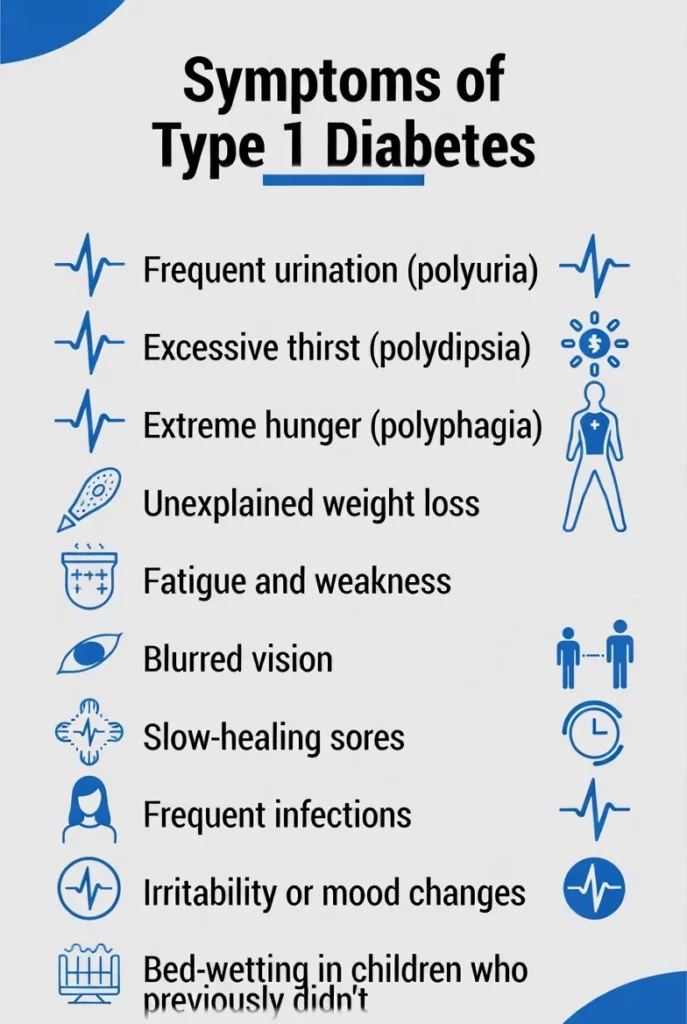
First, there is extreme thirst. You might feel like you can never drink enough water. Second, this leads to frequent urination. Children might start wetting the bed again. Third, there is extreme hunger. Even though you are eating, you are losing weight. This happens because your body is burning fat for fuel instead of sugar. Other type 1 diabetes symptoms include the following:
- Extreme fatigue or weakness.
- Blurred vision.
- Cuts that heal slowly.
- Irritability or mood changes.
- Fruity-smelling breath (a sign of ketones).
What Age Is Type 1 Diabetes Diagnosed?
When looking at what age is type 1 diabetes diagnosed, there are two main peaks. The first peak happens in young children between ages 4 and 7. The second peak occurs in children between 10 and 14 years old. However, what is type 1 diabetes in children is only part of the story. About half of all new cases occur in adults. This is sometimes called LADA (Latent Autoimmune Diabetes in Adults).
Adults are often misdiagnosed with Type 2 at first. If you are thin and active but have high blood sugar, ask for more tests. It might be Type 1 regardless of your age.
How Is Type 1 Diabetes Diagnosed?
If a doctor suspects diabetes, they will order several tests. The most common test is the A1C. This shows your average blood sugar over the last three months. A level of 6.5% or higher usually indicates diabetes.
They may also use a fasting plasma glucose test. To find out how is type 1 diabetes diagnosed specifically versus type 2, doctors look for autoantibodies. These are proteins that prove your immune system is attacking your pancreas. This confirms it is an autoimmune issue.
What Is the Treatment for Type 1 Diabetes? (A Deep Dive)
When we discuss what type 1 diabetes treatment is, we are talking about life management. Because the body makes no insulin, we must provide it manually. This is a 24/7 job. I tell my patients that they are now their own pancreas. It sounds daunting, but modern technology makes it much easier. There are three main pillars to the treatment for type 1 diabetes.
Insulin Therapy
Everyone with this condition needs insulin. You can take it via multiple daily injections (MDI). Most people use a fast-acting insulin before meals. They also use a long-acting insulin to keep levels steady overnight. Alternatively, many use an insulin pump. This is a small device worn on the body. It delivers a steady stream of insulin through a tiny tube. It mimics a real pancreas more closely than injections do.
Blood Sugar Monitoring
You must know your numbers to stay safe. In the past, this meant finger sticks 10 times a day. Now, we have Continuous Glucose Monitors (CGMs). A CGM is a sensor worn on the arm or belly. It checks your sugar every few minutes. It sends the data to your phone or pump. This allows you to see trends before they become dangerous.
Nutrition and Lifestyle
Diet is a huge part of type 1 diabetes treatment. You must learn “carb counting.” Since carbohydrates turn into sugar, you must match your insulin dose to the carbs you eat. Exercise is also vital. Physical activity helps your body use insulin more efficiently. However, you must be careful, as exercise can cause blood sugar to drop quickly. This requires careful planning and snacking.
Stages of Type 1 Diabetes
Most people think diabetes starts the day of diagnosis. In reality, it starts months or years earlier. Understanding the stages of type 1 diabetes helps doctors find the disease sooner. This is especially relevant for family members of those already diagnosed. Researchers now divide the progression into three distinct stages. This classification is what type 1 diabetes development is in a medical context.
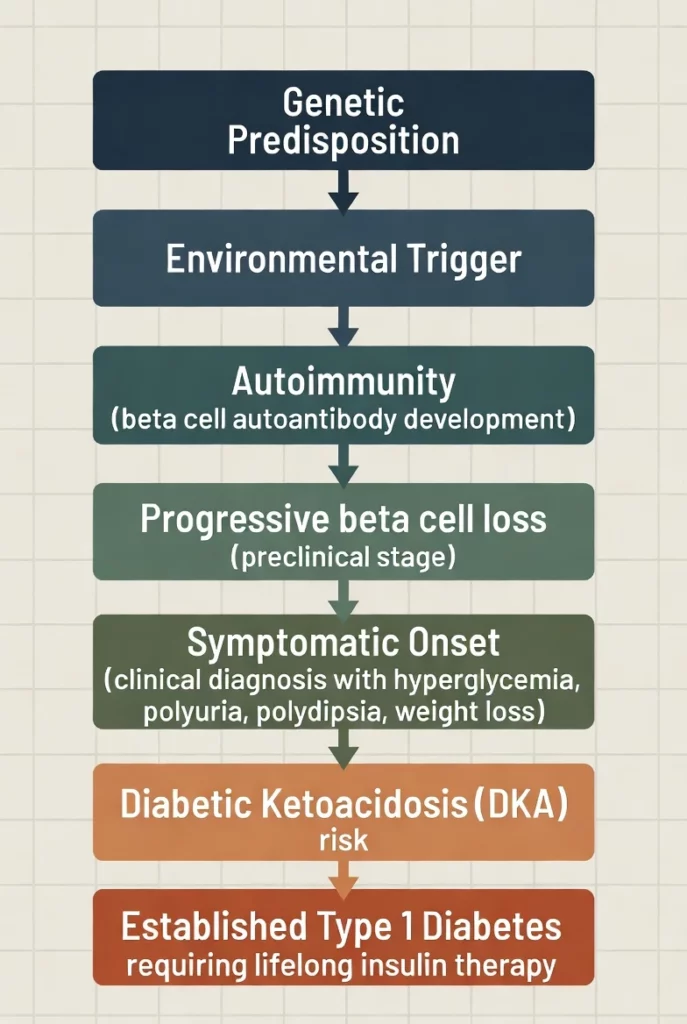
Stage 1: The Beginning of Autoimmunity
In Stage 1, the body has started to produce autoantibodies. Two or more of these markers are present in the blood. At this point, blood sugar levels are still normal. The person feels fine and has no symptoms. However, the “clock has started.” Statistics show that almost everyone in Stage 1 will eventually develop the disease. Screening programs like Trial Net focus heavily on this stage.
Stage 2: Dysglycemia Starts
In what is stage 2 type 1 diabetes, the attack has progressed. The pancreas is struggling to keep up. Blood sugar levels start to become abnormal.
They might be higher than usual after a meal. Yet, the person still does not have outward symptoms like thirst or weight loss. This stage is a critical window for clinical trials that try to slow the attack.
Stage 3: Clinical Diagnosis
What is stage 3 type 1 diabetes? This is the stage most people recognize. This is when symptoms finally appear. The pancreas has lost about 80% to 90% of its insulin-producing cells.
Blood sugar is now high enough to be dangerous. At this point, the person needs external insulin immediately. Diagnosis usually happens here because the body can no longer compensate.
Why Is Type 1 Diabetes So Serious?
You might wonder, “Why is type 1 diabetes so serious?” If left untreated, high blood sugar acts like poison to the organs. It damages small blood vessels over time. The most immediate danger is diabetic ketoacidosis (DKA). This happens when the body has no insulin and starts burning fat too fast. This creates “ketones,” which make the blood acidic. It is a life-threatening emergency.
In the long term, poor control can lead to the following:
- Kidney disease (nephropathy).
- Nerve damage (neuropathy), especially in the feet.
- Eye damage (retinopathy).
- Increased risk of heart disease.
What Is the Difference Between Type 1 and Type 2 Diabetes?
Understanding what is type 1 diabetes vs. type 2 is crucial. They share a name, but they are very different diseases. Type 1 is an “autoimmune” problem. Type 2 is a “metabolic” problem.
In Type 2, the body still makes insulin, but the cells ignore it. This is called insulin resistance. Lifestyle factors like weight and diet play a large role in Type 2. In Type 1, lifestyle has nothing to do with the cause.
| Feature | Type 1 Diabetes | Type 2 Diabetes |
| Cause | Autoimmune attack on pancreas | Insulin resistance & low production |
| Onset | Usually sudden/rapid | Gradual over years |
| Age | Often children & young adults | Mostly adults (but increasing in kids) |
| Insulin | Required for life | May be needed eventually |
| Prevention | Not currently preventable | Can often be prevented or reversed |
What Is Worse: Type 1 or Type 2 Diabetes?
When asking what is worse, type 1 or type 2 diabetes, there is no simple answer. Type 1 is often considered “harder” because it requires constant math and injections. However, Type 2 can be just as dangerous if ignored. Both require serious attention to avoid complications. The “worse” one is simply the one that isn’t being managed properly.
When to See a Doctor
If you or your child shows any symptoms, do not wait. What is type 1 diabetes screening? It usually involves a simple finger prick at the clinic. If you notice extreme thirst or sudden weight loss, seek help immediately. Early diagnosis prevents DKA. It allows you to start treatment before your body becomes dangerously acidic. A quick visit to your pediatrician or GP can make all the difference.
Frequently Asked Questions
What is diabetes type 1 caused by?
It is caused by an autoimmune reaction. The immune system mistakenly attacks the insulin-producing cells in the pancreas. Genetic factors and environmental triggers like viruses likely play a role.
Can type 1 diabetes be cured?
There is no cure yet. However, researchers are making great progress in stem cell therapy and islet cell transplants. Currently, technology like “artificial pancreas” systems is the closest thing to a functional cure.
At what age is type 1 diabetes diagnosed?
It is most commonly diagnosed in children and teenagers. However, it can happen at any age. Many adults in their 30s, 40s, and 50s are now being diagnosed with late-onset type 1.
What is the difference between type 1 and type 2 diabetes?
Type 1 diabetes is an autoimmune disease destroying insulin-producing cells, while type 2 diabetes involves insulin resistance and gradual insulin deficiency.
Is type 1 diabetes genetic?
Yes, genetics play a part. Certain genes make you more likely to develop it. However, many people with these genes never get the disease. Environmental factors are needed to “trigger” the condition.
Conclusion: Taking Control of Your Health
In the final analysis, understanding what is type 1 diabetes is the most powerful tool you have. While the diagnosis is life-changing, it is not life-ending. With the right technology and a supportive medical team, you can do anything. From professional athletes to world leaders, many people live full lives with this condition. I have seen patients like David grow up to be healthy, active adults.
They didn’t let their diagnosis slow them down. Always stay curious and keep learning about new treatments. Your management today protects your health for tomorrow. If you feel overwhelmed, reach out to a support group or your doctor. You are not alone in this journey.