
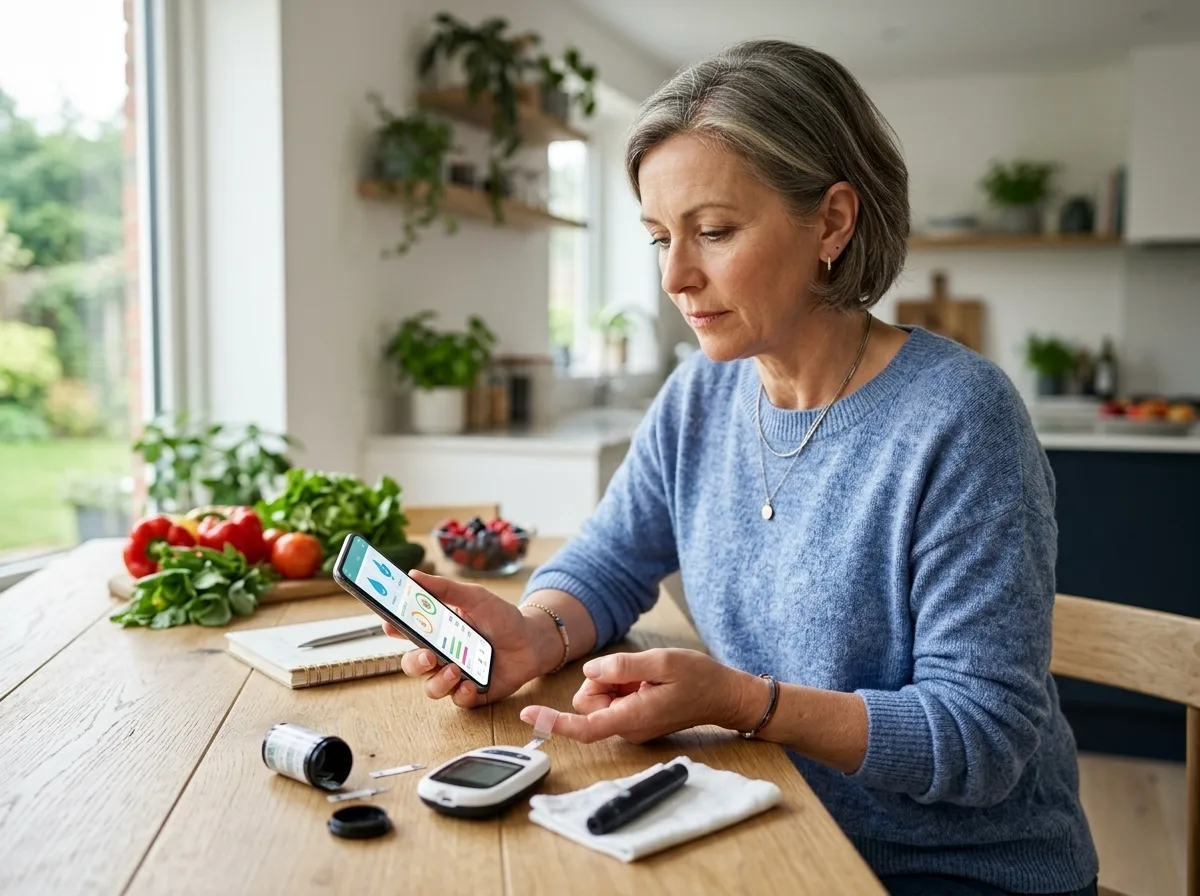
If you’re wondering how to check blood sugar at home naturally without relying on needles or expensive devices, you’re not alone. Many people feel discouraged by daily finger pricks, which can make consistent monitoring feel stressful and inconvenient. Cost concerns around test strips and a preference for a more “natural” approach to health are also very common.
However, it’s important to understand the biological realities of glucose monitoring to ensure your safety. While natural methods and symptom awareness can offer helpful insights, accurate measurement still plays a key role in effectively managing blood sugar levels.
TL;DR Summary
You cannot accurately measure blood sugar without a medical device. There is no biological way to get a precise numerical reading through symptoms alone.
However, you can successfully estimate trends using physical symptoms, meal timing, and lifestyle signals. Ultimately, the most reliable home method remains a standard glucometer.
What Does “Checking Blood Sugar Naturally” Mean?
Checking blood sugar naturally refers to the practice of monitoring your body’s physiological responses without invasive tools. It involves paying close attention to physical cues that suggest your glucose is either spiking or crashing.
This method heavily relies on interpreting body signals, habit tracking, and understanding meal timing. For example, noticing how you feel exactly one hour after eating a heavy carbohydrate meal can provide metabolic clues.
It is vital to clarify a major medical misconception here. There is currently no needle-free method that is clinically accurate outside of advanced continuous glucose monitors (CGMs). Relying solely on how you feel is an estimation, never a definitive medical diagnosis.
Can You Check Blood Sugar Without a Meter or Needle?
Short Answer: No — not with medical accuracy. If you are searching for glucose checking without drawing blood, you will not find a natural method that provides a precise number.
You cannot check sugar level without needles and expect to know if your glucose is exactly 105 mg/dL or 140 mg/dL. The technology to measure sugar levels without blood accurately, using just natural bodily observations, simply does not exist.
However, you absolutely can recognize severe symptoms and track daily metabolic patterns. By learning your body’s unique warning signs, you can estimate glucose levels without drawing blood and know when it is time to seek proper testing.
5 Signs Your Blood Sugar Is Too High (Hyperglycemia Symptoms)
When your bloodstream has an excess of glucose, your body attempts to flush it out, leading to very specific physical reactions. Recognizing these early can prevent severe metabolic complications.
If you are wondering, “What are 5 signs your blood sugar is too high?” Look for these primary indicators:
Hyperglycemia Symptoms List
- Frequent urination: Your kidneys work overtime to expel excess sugar through your urine.
- Excessive thirst: Because you are losing so much fluid through urination, severe dehydration sets in rapidly.
- Blurred vision: High glucose causes fluid to be pulled from the lenses of your eyes, affecting focus.
- Fatigue: Your body is unable to properly process glucose for energy, leaving you feeling constantly drained.
- Headaches: Dehydration and altered blood flow from high sugar levels frequently trigger persistent headaches.
Signs of Low Blood Sugar (Hypoglycemia Without a Meter)
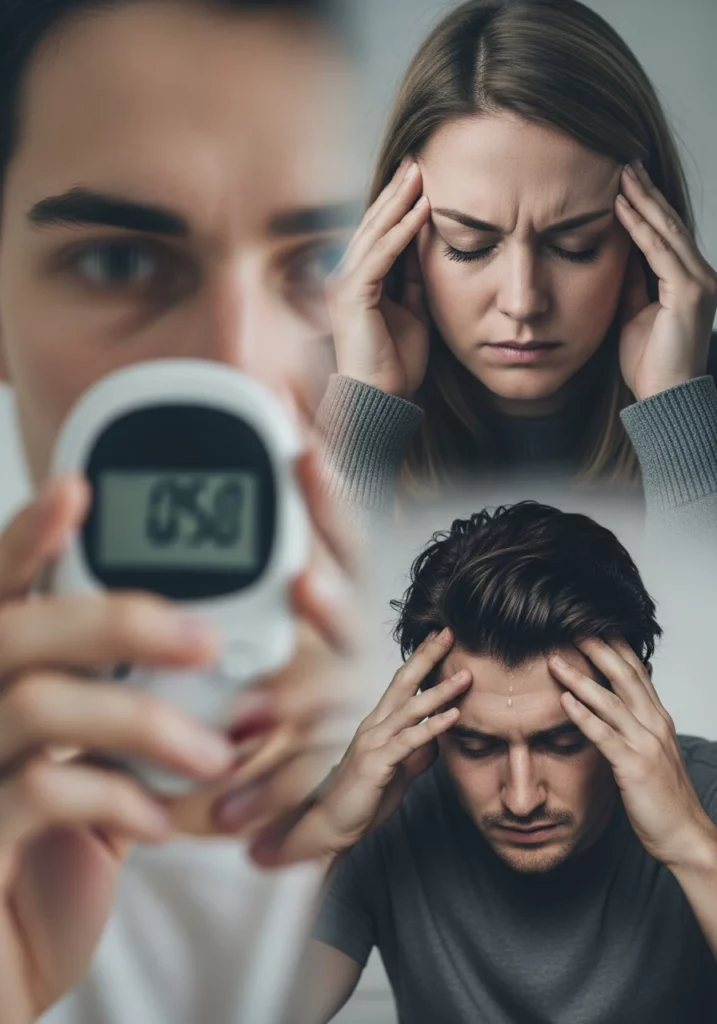
Hypoglycemia (low blood sugar) is often much more immediately dangerous than high blood sugar. It requires rapid identification and intervention to prevent fainting or seizures.
If you want to know how to check low blood sugar at home naturally, you must memorize the body’s acute distress signals. These occur when your brain is literally starving for fuel.
Hypoglycemia Indicators
- Shaking: Uncontrollable tremors in the hands or legs as the nervous system panics.
- Sweating: Sudden, cold, and clammy sweats that appear without physical exertion.
- Confusion: Difficulty formulating sentences, brain fog, or extreme irritability.
- Rapid heartbeat: Your heart pumps faster to deliver whatever remaining glucose is available to vital organs.
- Dizziness: A sudden wave of lightheadedness, often accompanied by a feeling of impending fainting.
How to Check Blood Sugar at Home Naturally (Step-by-Step Guide)
Understanding how to check blood sugar at home naturally requires great observational skills. Because this is the core of natural monitoring, you need a highly structured approach to track your metabolic responses accurately.
This is not about guessing; it is about systematic biological tracking. Dr. Sarah Jenkins, a board-certified endocrinologist, frequently advises patients that natural monitoring is about “connecting the dots between your plate and your physical performance.”
By turning your attention inward, you can identify which foods trigger massive insulin responses and which leave your energy levels stable. Here is a comprehensive guide to tracking your natural glucose indicators.
Tracking Daily Symptoms
The most effective natural method is contrasting how you feel in the morning versus post-meal. Fasting in the morning should leave you feeling relatively stable and clear-headed.
If you wake up with a severe headache or extreme dry mouth, it may indicate overnight hyperglycemia. Conversely, if you feel heavy, sluggish, or bloated exactly an hour after lunch, you are likely experiencing a post-meal glucose spike.
Monitoring Energy Levels
Your energy levels are a direct reflection of how efficiently your body is utilizing glucose. Consistent, stable energy implies that your cells are properly absorbing sugar from your bloodstream.
Sudden, aggressive energy crashes—especially in the mid-afternoon—are a massive red flag. This sudden drop usually means your body overproduced insulin to handle a large carbohydrate load, resulting in a rapid glucose plummet.
Observing Hunger Patterns
Insulin and glucose severely impact your hunger hormones, specifically leptin and ghrelin. When your blood sugar is balanced, you should feel satisfied for several hours after a balanced meal.
If you experience frequent, intense hunger just an hour or two after eating, your blood sugar is likely spiking and crashing. This phenomenon, often called a “blood sugar rollercoaster,” leaves your cells starving despite having just consumed calories.
Checking Urine Frequency
As mentioned earlier, your kidneys are your body’s natural filtration system for excess glucose. Monitoring how often you need to use the restroom is a highly effective, natural proxy for checking sugar levels.
If you suddenly find yourself waking up three times a night to urinate, or making hourly trips to the bathroom during the day, pay attention. This is your body physically attempting to dilute and expel dangerous levels of blood sugar.
Using a Food and Symptom Journal
Memory is notoriously unreliable when it comes to tracking health metrics. To monitor your blood sugar naturally, you must keep a meticulous daily food and symptom journal.
Write down exactly what you ate, the time you ate it, and precisely how you felt two hours later. Over a few weeks, this journal will clearly identify your unique food triggers, showing you exactly which meals cause natural glucose spikes.
How to Check Blood Sugar at Home With a Finger (Gold Standard Method)
While natural tracking provides valuable clues, it cannot replace exact data. If you truly want to know how to measure blood sugar levels at home accurately, you must use a traditional medical device.
The standard glucometer remains the undisputed gold standard for at-home testing. It directly measures the concentration of glucose in your capillary blood, providing a precise numerical reading in seconds.
Learning how to check blood sugar at home with finger pricks can initially seem intimidating. However, modern devices are remarkably user-friendly, practically painless, and require only a microscopic drop of blood.
Using a Glucometer
To ensure highly accurate readings and prevent painful infections, you must follow a strict, clinical protocol. Contaminated fingers can easily skew your results, leading to dangerous medical miscalculations.
- Wash hands: Always wash your hands vigorously with warm water and soap. Avoid using alcohol wipes if possible, as alcohol can dry the skin and sometimes alter the strip’s reading.
- Insert test strip: Turn on your device by inserting a fresh, unexpired test strip into the meter. Wait for the digital prompt indicating the machine is ready for a sample.
- Prick finger: Use your spring-loaded lancing device to prick the side of your fingertip. The sides contain fewer nerve endings than the sensitive pads, making the process virtually painless.
- Apply blood: Gently squeeze the base of your finger to produce a small, round drop of blood. Touch the tip of the test strip directly to the blood drop until it is absorbed.
- Read result: Within five to ten seconds, your precise glucose level will appear on the digital screen. Always record this number in your health log immediately.
Can You Check Blood Sugar With Your Phone or App?
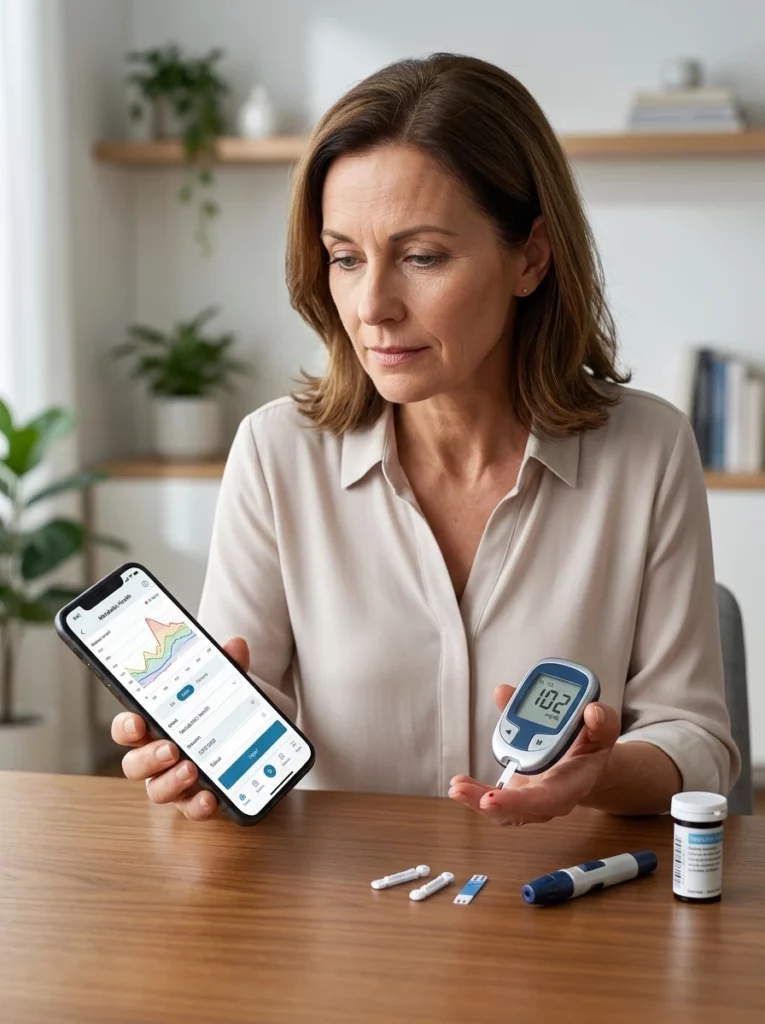
With the rapid rise of mobile health technology, millions of people search for ways to check their blood sugar with phone applications. The internet is full of deceptive advertisements promising instant readings through smartphone cameras.
Reality Check
It is critical to establish a firm medical reality: standard mobile apps absolutely cannot measure your blood glucose directly. A smartphone camera or fingerprint scanner does not have the biological capability to analyze blood chemistry.
Any app claiming to offer a how-to-check-blood-sugar-at-home-naturally app solution by simply scanning your skin is actively misleading you. Relying on these fraudulent apps for medical dosing can be fatal.
What Apps Can Do
While they cannot measure glucose, medical apps are incredibly powerful tools for metabolic management. They allow you to meticulously track your daily food intake, carbohydrate counts, and physical symptoms.
By manually inputting your glucometer readings into an app, the software can chart beautiful, easy-to-read graphs. This helps you and your doctor identify long-term metabolic trends that you might otherwise miss.
Emerging Technology: Glucose Monitoring Without Needles
The medical technology sector is aggressively racing to develop completely non-invasive glucose monitoring. While we are not there yet, the current landscape offers massive improvements over traditional finger pricks.
Continuous Glucose Monitors (CGMs)
Continuous Glucose Monitors (CGMs) have entirely revolutionized diabetes care. These devices consist of a small, water-resistant sensor that you wear on the back of your arm or your abdomen for up to 14 days.
The sensor continuously measures the glucose levels in your interstitial fluid (the fluid just beneath your skin). It then transmits this data directly to your smartphone or a dedicated digital receiver every few minutes.
While heavily marketed as painless, it is important to clarify that CGMs are not strictly “needle-free.” They utilize a microscopic, flexible filament needle to properly insert the sensor under the skin, though you do not feel it during daily wear.
Best Time to Check Blood Sugar (For Accuracy)
Timing is absolutely everything when it comes to capturing useful metabolic data. Checking your sugar randomly throughout the day without context provides little clinical value to your physician.
To truly understand your body’s insulin response, you must test during highly specific biological windows. If you want to know the best time to check blood sugar for type 2 diabetes patients, look at the table below.
Key Times for Testing
| Time | Why It Matters |
| Fasting (morning) | Provide your baseline glucose before any food alters the reading. |
| Before meals | Establishes your pre-meal control level to gauge mealtime insulin needs. |
| 1–2 hours after meals | Critically detects post-meal spikes to evaluate carbohydrate tolerance. |
| Before bed | Ensures your levels are safe to prevent overnight hypoglycemia. |
How Often Should You Check Blood Sugar?
The frequency of your testing should be strictly dictated by your clinical diagnosis and your doctor’s specific orders. Over-testing can cause severe health anxiety, while under-testing can lead to dangerous complications.
Many newly diagnosed patients frequently ask, “How often should I check my blood sugar as a prediabetes patient?” Others wonder, should I test my blood sugar if I’m not diabetic but have a family history?
Based on Condition
- Prediabetes: Testing 1 to 2 times a week, particularly fasting in the morning, is usually sufficient to track progress.
- Type 2 diabetes: Usually requires daily testing, often both fasting and post-meal, especially if you are actively taking insulin or sulfonylureas.
- Non-diabetic: Testing is rarely required unless you are experiencing severe physical symptoms of hypoglycemia or actively monitoring diet experiments.
What Is the 15-Minute Rule for Diabetes?
Quick Explanation
The 15-minute rule is an internationally recognized clinical guideline used to safely treat low blood sugar without accidentally causing a massive rebound spike. When your glucose drops below 70 mg/dL, take the following steps:
- Consume exactly 15 grams of fast-acting carbohydrates (like 4 ounces of juice or 3 glucose tablets).
- Wait strictly for 15 minutes without eating anything else.
- Recheck your blood sugar with a meter; if it is still below 70 mg/dL, repeat the process.
Which Nuts Should Diabetics Avoid?
Diet plays an incredibly massive role in naturally controlling blood sugar. While nuts are generally fantastic sources of healthy fats and protein, not all varieties are metabolically equal.
Avoid or Limit
Diabetics should strictly avoid honey-roasted nuts, candied pecans, and heavily processed trail mixes. The thick sugar coatings completely negate the natural health benefits and trigger immediate glucose spikes.
Additionally, heavily salted, commercially roasted nuts can severely impact blood pressure. Hypertension is a major comorbid risk factor for individuals struggling with chronic metabolic syndrome and diabetes.
Better Options
Instead, focus on raw or dry-roasted varieties that provide stable, slow-burning energy. Almonds are excellent for their high fiber content, which naturally blunts insulin responses.
Walnuts are incredibly rich in anti-inflammatory omega-3 fatty acids, protecting cardiovascular health. Pistachios, when eaten in moderation, provide a satisfying crunch with a remarkably low glycemic impact.
Blood Sugar Levels Without a Meter: What You Should Know
It is natural to want to avoid medical devices, but there is a harsh reality to metabolic disease. You cannot confirm a diabetes or prediabetes diagnosis without formal clinical testing.
Relying purely on how you feel is incredibly dangerous because the human body is highly adaptable. Over time, your body can become numb to the warning signs of elevated glucose.
The Risk of Silent Hyperglycemia
This numbness leads to “silent hyperglycemia,” where your blood sugar remains dangerously high, but you feel completely normal. Without a meter to expose this silent threat, severe organ damage occurs unnoticed.
By the time you finally feel the physical symptoms of vision loss or neuropathy, irreversible nerve and kidney damage have already occurred. This is why natural monitoring must always be paired with clinical diagnostics.
When to Use a Glucometer Instead of Natural Methods
While listening to your body is an excellent wellness habit, there are specific medical scenarios where natural methods are entirely insufficient. In these cases, precision data is a matter of life and death.
You must strictly use a glucometer if:
- You have a confirmed clinical diagnosis of Type 1 or Type 2 diabetes.
- You frequently feel the severe physical symptoms of hypoglycemia (shaking, sweating, confusion).
- You are currently prescribed active medications like insulin or oral hypoglycemics.
Safety Tips (YMYL Health Warning)
Because blood sugar management drastically impacts your vital organs, this falls under “Your Money or Your Life” (YMYL) health guidelines. Never play guessing games with your metabolic stability.
Never rely only on physical symptoms to dictate medical decisions or alter your prescribed medication dosages. Ignoring actual data in favor of “feelings” frequently leads to emergency room visits.
Untreated high or low blood sugar can be immediately dangerous, potentially resulting in diabetic ketoacidosis (DKA) or a hypoglycemic coma. Always confirm your body’s natural signals with proper, FDA-approved testing devices.
Frequently Asked Questions
How can you tell if your blood sugar is high at home?
You can estimate high blood sugar by monitoring for extreme thirst, frequent urination, sudden fatigue, and blurred vision. However, symptoms and patterns are only clues; you must confirm them with clinical testing.
Can I measure blood sugar without blood?
Not accurately yet. While researchers are aggressively developing non-invasive optical sensors, no currently available, FDA-approved device measures precise glucose levels without at least a microscopic drop of blood or interstitial fluid.
Is there a way to check sugar without a meter?
There is no biological way to get a specific numerical reading without a medical meter. Relying on your physical symptoms and meal timing provides only a rough estimation, not a formal medical diagnosis.
What is the best natural way to monitor blood sugar?
The best natural method involves meticulous symptom tracking, maintaining a detailed food journal, and acute diet awareness. Observing how your energy fluctuates exactly one hour after meals is the strongest natural indicator of glucose tolerance.
Expert Conclusion
In my medical experience, encouraging patients to tune into their bodies is always the first step toward lasting metabolic health. Natural monitoring is incredibly helpful for building daily awareness and identifying obvious dietary triggers.
However, I consistently remind my patients that physical feelings are never a substitute for empirical medical testing. The absolute best approach to longevity is combining your natural bodily awareness with the precise data of a modern glucometer.
If you frequently notice the distressing symptoms of severe high or low glucose, do not attempt to just push through it naturally. Please consider checking your blood sugar with a highly accurate glucometer or actively consulting a healthcare professional today.
Medical Disclaimer
This content is strictly for educational and informational purposes only and does not constitute professional medical advice, diagnosis, or treatment. Always seek the direct advice of your physician or qualified health provider with any questions you may have regarding a metabolic medical condition.