
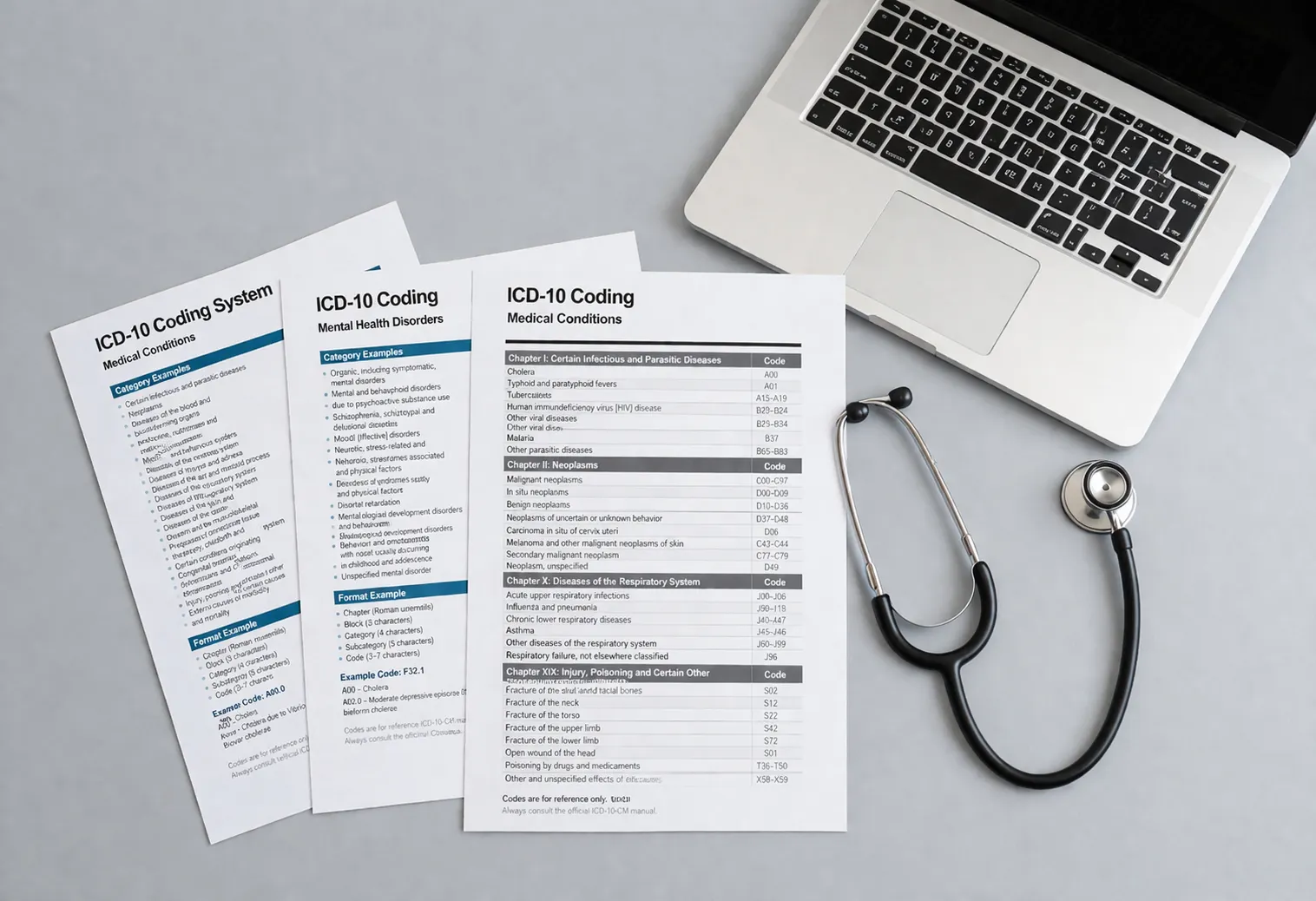
When you use the correct ICD-10 code for prediabetes, you ensure that insurance covers crucial lifestyle interventions, dietician visits, and lab tests. Understanding the nuances of these codes prevents revenue loss and ensures patients get the preventive care they desperately need.
The ICD-10 code most commonly used for prediabetes is R73.03 (Prediabetes). It is classified under abnormal glucose findings and is used when a patient has elevated blood sugar levels that do not yet meet the criteria for diabetes. Accurate documentation ensures proper billing, screening, and preventive care tracking.
Recently, I sat down with Sarah Jenkins, a certified medical billing specialist with over 15 years of experience, to discuss a growing issue in clinical practices. She noted a massive surge in denied insurance claims for preventive metabolic care.
The culprit was almost always improper documentation of early-stage blood sugar abnormalities. Many clinicians know the clinical signs of a patient at risk, but translating that risk into the correct alphanumeric format is a different challenge.
The transition between identifying a patient’s risk and securing coverage for their preventive care relies entirely on flawless coding accuracy.
What Is the ICD-10 Code for Prediabetes?
Medical coders and clinicians frequently ask, what is the ICD-10 code for prediabetes exactly? The answer lies within the “R” section of the ICD-10-CM manual, which deals with symptoms, signs, and abnormal clinical and laboratory findings.
Unlike full-blown diabetes, which is classified under the “E” category (endocrine, nutritional, and metabolic diseases), prediabetes is considered an abnormal finding.
Therefore, is there an icd-10 code for prediabetes specifically? Yes, and it is vital for tracking disease progression before it becomes a chronic endocrine disorder.
Primary Code: R73.03 Explained
The official ICD-10 code for prediabetes is R73.03. This specific code was introduced to provide a highly accurate way to track patients who are on the verge of developing type 2 diabetes.
| Code | Official Description | Category |
| R73.03 | Prediabetes | Abnormal findings on examination of blood, without diagnosis |
ICD-10 Code for Prediabetes (2020–2026 Updates)
The landscape of medical coding requires constant vigilance because guidelines shift annually. When looking at the 2020–2026 ICD-10 code for prediabetes timeline, it is important to understand the stability of this specific code.
Whether you were looking for the ICD-10 code for prediabetes in 2021, 2022, 2023, or 2024, the primary identifier remained firmly as R73.03.Even looking at recent manuals, the code for 2025 and the current 2026 updates reflect no major structural changes to R73.03.
However, what has updated over these years are the payer-specific guidelines regarding which preventive services (like nutritional counseling) are covered when this code is billed.
ICD-10 Code for Prediabetes Unspecified & Status
Sometimes, clinical documentation lacks the specificity required for a direct R73.03 assignment. Coders often search for an unspecified code when the physician notes “abnormal blood sugar” without formally diagnosing prediabetes.
In cases where the provider documents “elevated blood glucose” but does not explicitly write “prediabetes,” coders must use R73.09 (Other abnormal glucose). You cannot assume prediabetes simply based on lab values; the physician must state it.
Furthermore, some professionals look for a specific status code or one for non-clinical diabetes. While R73.03 is the most accurate status code, if the patient has a history of prediabetes but currently normal levels, coders might utilize a “Z” code for personal history, though active prediabetes remains under R73.03.
Coding Prediabetes with Complications
Coding becomes significantly more complex when a patient presents with multiple metabolic symptoms. Providers often wonder how to bill an ICD-10 code for prediabetes with hyperglycemia. Because prediabetes inherently involves elevated blood sugar, R73.03 usually covers the hyperglycemia aspect.
However, if a patient has distinct, documented hyperglycemia not explicitly linked to the prediabetes by the provider, R73.9 (Hyperglycemia, unspecified) might be used, though guidelines usually dictate coding the more specific R73.03 if both are present.
Similarly, coders look for an ICD-10 code for prediabetes with neuropathy. Unlike diabetes, where combination codes exist (e.g., diabetes with neurological complications), prediabetes does not have combination codes.
You must code R73.03 alongside the specific neuropathy code (e.g., G62.9 for polyneuropathy, unspecified) if the provider links them or treats them concurrently.
ICD-10 Code for Prediabetes in Pregnancy

Pregnancy completely alters how we code metabolic conditions. If you are looking for the ICD-10 code for prediabetes in pregnancy, you must pivot away from the “R” codes and look to the “O” codes (Pregnancy, childbirth, and the puerperium).
When a patient with pre-existing prediabetes becomes pregnant, the correct coding sequence typically involves an “O” code first. Specifically, you would look at the O99.81 category (Abnormal glucose complicating pregnancy, childbirth, and the puerperium).
This ensures the insurance payer understands that the abnormal glucose is directly complicating a maternal condition. Always verify with specific payer guidelines, as maternity coding requires sequencing the pregnancy complication first, followed by the specific condition (R73.03) as a secondary diagnosis.
Prediabetes vs Diabetes Coding
Let’s address a major source of medical claim denials today. Coders often search for an ICD-10 code for prediabetes type 2 incorrectly. Medical terminology strictly separates these two conditions based on exact laboratory thresholds.
You cannot use an ICD-10 code for prediabetes mellitus because the word “mellitus” defines full diabetes. If a patient’s A1C reaches 6.5%, the diagnosis technically shifts into the diabetes category entirely. Therefore, providers must clearly document whether the patient has crossed this critical diagnostic threshold.
If the documentation seems ambiguous or contradictory, you must query the provider immediately. You must never code diabetes when the physician only documents elevated fasting glucose. Ultimately, maintaining strict boundaries between these two disease states ensures flawless compliance audits.
What Is the ICD-10 Code for Diabetes Mellitus?
Medical professionals categorize established type 2 diabetes under the E11 coding category. Specifically, What is the ICD-10 code for diabetes mellitus without any complications?
Coders assign E11.9 for uncomplicated type 2 diabetes cases. This firmly separates the chronic endocrine disease from the R73.03 abnormal lab finding.
E11.8 vs E11.69 Differences
Coders frequently encounter complex diabetic complications requiring high analytical specificity. What is the difference between E11.8 and E11.69 exactly? You assign E11.8 for type 2 diabetes with unspecified complications.
Conversely, you apply E11.69 for type 2 diabetes with other specified complications. You cannot apply either of these complex complication codes to a prediabetes diagnosis. Prediabetes (R73.03) completely lacks combination complication codes in the current manual.
ICD-10 Codes for Screening & A1C Testing
Preventive medical care requires completely different coding logic than established conditions. When scheduling a baseline lab test, you need the correct ICD-10 code for prediabetes screening. Coders typically apply Z13.1 (Encounter for screening for diabetes mellitus).
| Procedure / Encounter | Appropriate ICD-10 Code |
| Routine Diabetes Screening | Z13.1 (Screening for diabetes mellitus) |
| Established Prediabetes Monitoring | R73.03 (Prediabetes) |
| BMI-based Screening | Z68.- (Body Mass Index codes) |
This specific Z code justifies the medical necessity for drawing blood initially. Furthermore, finding the correct ICD-10 code for hemoglobin a1c screening guarantees prompt payer reimbursement. Providers frequently ask our billing team, What codes cover A1C?
If the patient already holds an established R73.03 diagnosis, you use that exact code directly. Therefore, the prediabetes a1c ICD-10 strategy relies entirely on whether you are screening or actively monitoring. Always verify your specific commercial payer policies regarding annual screening frequency limits.
CPT Codes for Prediabetes & Lab Testing
While ICD codes explain the diagnostic “why,” CPT codes dictate the procedural “what.” You need a specific CPT code for prediabetes laboratory testing to generate a paid claim. For a standard hemoglobin A1C test, clinical laboratories bill CPT code 83036.
If the physician orders a basic fasting blood glucose panel, you use CPT 82947. Because insurance companies strictly match the ICD-10 diagnosis to the CPT procedure, both must align perfectly. Submitting an A1C test without an appropriate screening or monitoring diagnosis triggers immediate denials.
ICD-9 vs ICD-10 Coding for Prediabetes
Veteran medical billers vividly remember the chaotic transition from the legacy coding system. The old prediabetes ICD-9 identifier was 790.29 (Other abnormal glucose). The current alphanumeric system provides significantly better specificity for population health tracking.
You must never use legacy ICD-9 codes on any modern billing claims today. Updating older superbills and electronic health record templates prevents accidental legacy code submissions. Modern electronic systems usually map these legacy codes to R73.03 automatically.
ICD-11 Coding for Prediabetes
The World Health Organization constantly updates global health tracking systems for better accuracy. Medical administrators often ask: What is the ICD-11 coding for prediabetes currently? The new ICD-11 global system classifies it distinctly under code 5A14 (impaired fasting glycemia).
Although the United States has not fully adopted ICD-11 yet, proactive preparation matters heavily. This new coding framework offers even greater clinical granularity for modern metabolic disorders. Health informatics teams should monitor these upcoming transitions to update their billing software seamlessly.
Related ICD-10 Codes for Comorbid Conditions

Prediabetes rarely occurs in absolute clinical isolation during a standard patient visit. My colleague Sarah Jenkins notes that supporting secondary diagnoses often secure the claim approval fast. First, the ICD 10 code for obesity (E66.9) frequently accompanies early metabolic issues.
Also, providers regularly document the ICD 10 code for hyperlipidemia (E78.5) alongside elevated sugar. If the clinical documentation lacks specific lipid details, you use the ICD 10 code for hyperlipidemia unspecified (E78.5). Furthermore, the ICD 10 code for hypertension (I10) represents a massive concurrent cardiovascular risk factor.
Sometimes, the physician diagnoses the much broader ICD 10 code for metabolic syndrome (E88.81). Patients also report overwhelming daily exhaustion, requiring the ICD 10 code for fatigue (R53.83). Poor sleep often exacerbates blood sugar levels, utilizing the ICD 10 code for insomnia (G47.0).
Even unrelated conditions like the ICD 10 code for bph (N40.1) appear frequently in older male patients experiencing metabolic shifts.
Capturing all these active comorbidities paints a complete clinical picture for the insurance payer. Ultimately, comprehensive coding maximizes the risk adjustment factor for the entire medical practice.
What Is Prediabetes Now Called?
Medical terminology evolves rapidly as clinical research uncovers deeper cellular mechanisms. People often ask: What is prediabetes now called by leading endocrine specialists? Many progressive endocrinologists heavily prefer the terms “impaired fasting glucose” or “impaired glucose tolerance.”
Because the term “prediabetes” falsely implies an unavoidable progression to disease, some doctors avoid it. They believe alternative terminology empowers patients to focus heavily on active lifestyle reversal.
However, for strict medical billing and coding purposes, R73.03 (Prediabetes) remains the official, mandatory terminology.
Benefits of ICD-10 Coding for Prediabetes
Proper medical documentation offers massive systemic advantages beyond simple hospital reimbursement. What are the benefits of ICD 10 coding for prediabetes locally and nationally? First, accurate coding forces insurance companies to approve essential lifestyle intervention programs.
When you bill R73.03 accurately, patients gain immediate access to covered nutritional counseling services. Furthermore, national public health organizations use this aggregate billing data to track wider metabolic trends. Therefore, your daily coding accuracy directly shapes future healthcare funding and community prevention resources.
Frequently Asked Questions
What Is the ICD-10 Code for Prediabetes?
The official and most accurate identifier is R73.03. Medical coders apply this alphanumeric code when a provider explicitly documents “prediabetes” in the medical chart. It falls under the category of abnormal clinical findings rather than established endocrine diseases.
Is There an ICD-10 Code for Prediabetes?
Yes, R73.03 exists specifically to track elevated blood sugar levels that fall below the diabetes threshold. It separates high-risk patients from healthy individuals and those with fully developed type 2 diabetes. This code ensures patients receive proper preventive monitoring.
What Codes Cover A1C Testing?
For initial screening purposes, coders use Z13.1 (Encounter for screening for diabetes mellitus). For active monitoring of known elevated blood sugar, you use R73.03 directly. The associated procedural CPT code for the actual A1C laboratory test is 83036.
What Is the ICD-10 Code for Diabetes Mellitus?
Uncomplicated type 2 diabetes mellitus falls squarely under the code E11.9. If the patient has documented diabetic complications, coders utilize more specific codes within the E11 category. You must never mix this category with the R73.03 prediabetes code.
What Is ICD-11 Coding for Prediabetes?
The World Health Organization utilizes code 5A14 (impaired fasting glycaemia) in the newest ICD-11 framework. While not yet active for US billing, it represents the global standard for tracking this condition. It provides enhanced diagnostic precision for international health researchers.
Conclusion
In conclusion, mastering the proper diagnostic codes for abnormal blood sugar levels directly impacts both practice revenue and patient health outcomes. First of all, clinical teams must clearly document the specific term “prediabetes” to justify the use of R73.03 on medical claims.
Because ambiguous documentation leads to immediate payer denials, providers and coders must collaborate closely every single day. Furthermore, you must never confuse this preventive tracking code with established endocrine disease categories like the E11 series.
Maintaining strict diagnostic separation guarantees that patients receive crucial insurance coverage for vital lifestyle intervention programs. Ultimately, your meticulous attention to alphanumeric details transforms preventive healthcare tracking entirely.
Therefore, I highly encourage all medical practices to audit their current electronic health record templates today. Always verify coding with specific payer guidelines before submitting complex metabolic claims.
Finally, consult a certified medical coder for complex cases to ensure total compliance and maximize your clinical reimbursement successfully.
Medical & Billing Disclaimer: The information provided in this article is for educational and informational purposes only. While we strive to provide accurate and up-to-date coding information, medical billing guidelines vary by payer and region. Always consult the official ICD-10-CM guidelines and your specific insurance payer’s policies before submitting claims. This content is not a substitute for professional medical or legal advice.