
Continuous Glucose Monitor (CGM): Best Devices, Cost, OTC Options & How It Works
A continuous glucose monitor (CGM) is a wearable device that tracks blood sugar levels in real time throughout the day and night. It uses a small sensor inserted under the skin to measure glucose in interstitial fluid, acting as a blood sugar monitor without finger pricks to help users manage diabetes more effectively. The rising…

Reviewed by
Christine Fallabel, MPH
Written by
Quick Overview
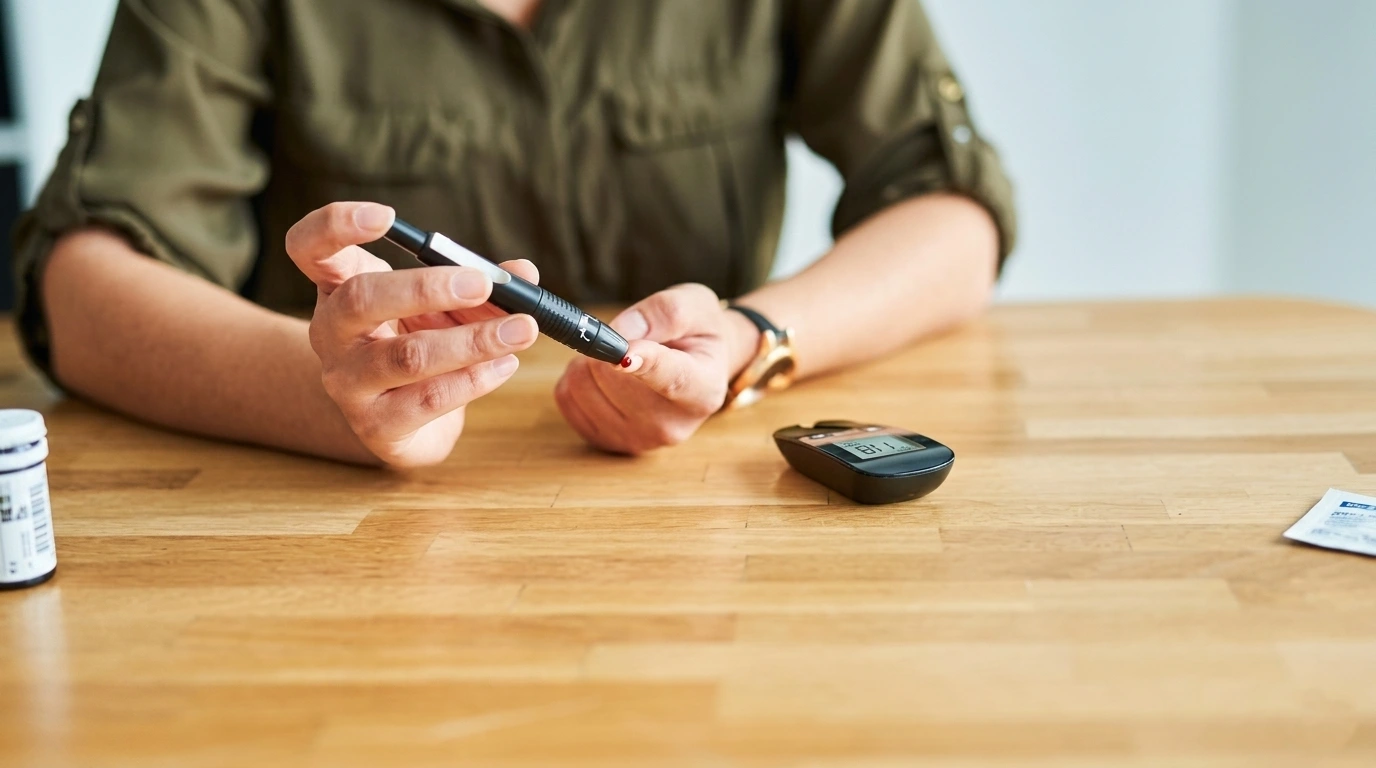
A continuous glucose monitor (CGM) is a wearable device that tracks blood sugar levels in real time throughout the day and night. It uses a small sensor inserted under the skin to measure glucose in interstitial fluid, acting as a blood sugar monitor without finger pricks to help users manage diabetes more effectively.
The rising popularity of the CGM has fundamentally changed metabolic health management. Once reserved strictly for insulin-dependent diabetics, continuous glucose monitoring devices are now mainstream health tools used by millions.
Recent continuous glucose monitor news highlights a massive shift toward accessible, non-prescription devices. For people managing diabetes or prediabetes, having 24/7 access to real-time blood sugar trends is completely life-changing.
This constant data flow allows users to see exactly how certain meals, workouts, and sleep patterns impact their bodies. Instead of relying on random fingersticks, you get a full, continuous picture of your metabolic health.
What Is a Continuous Glucose Monitor?
If you are wondering exactly what a continuous glucose monitor is, it is essentially a tiny wearable laboratory. The clinical continuous glucose monitoring definition describes it as a biosensor system that tracks glucose levels automatically.
The system typically consists of three main parts: a wearable sensor, a small transmitter, and a receiver or smartphone app. Together, these components measure, send, and display your blood sugar data in an easy-to-read graphical format, functioning like a real-time blood sugar chart.
During an interview I recently conducted with Dr Sarah Jenkins, an endocrinologist, she perfectly summarised their value. “A CGM gives my patients back their peace of mind,” she explained. “It removes the daily anxiety of guessing where their blood sugar is heading.”
How Does a Continuous Glucose Monitor Work?
Understanding how a continuous glucose monitor works is simpler than it seems. The device does not actually measure the sugar directly inside your blood vessels.
Instead, it measures the glucose present in the interstitial fluid, which is the fluid surrounding your tissue cells just beneath the skin. The sensor takes a microscopic reading every one to five minutes, depending on the specific model.
This data is then wirelessly beamed to a smartphone or dedicated receiver via Bluetooth technology. Software algorithms analyse this data to show your current glucose number and a trend arrow indicating whether your levels are rising, falling, or stable.
How Is a Continuous Glucose Monitor Inserted?
Many new users are anxious about how a continuous glucose monitor is inserted, but the process is nearly painless. The sensor comes inside a pre-loaded, spring-action applicator device. You simply clean the application site, usually the back of the upper arm or the abdomen, and press the applicator against the skin.
With the push of a button, a tiny, flexible filament (about the thickness of a human hair) is inserted just under the skin. Strong, medical-grade adhesive holds the sensor firmly in place for its entire lifespan, which is typically 10 to 15 days.
Best Continuous Glucose Monitors
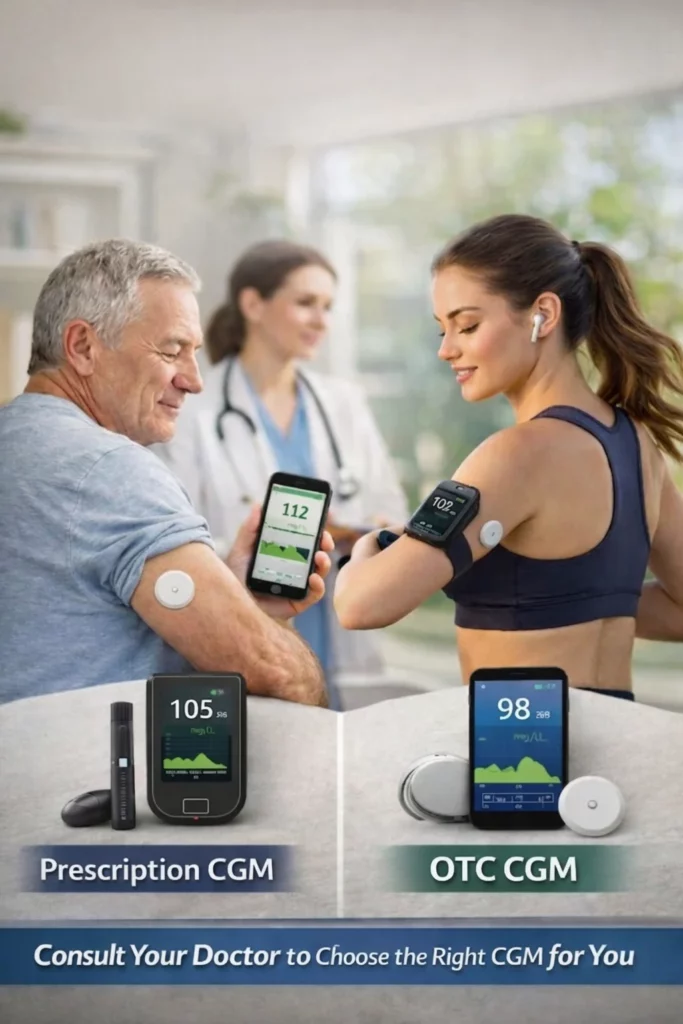
Choosing the best continuous glucose monitor depends entirely on your specific medical needs and lifestyle. In 2026, the market is flooded with highly accurate, user-friendly options for both diabetics and wellness enthusiasts.
When searching for the best continuous glucose monitor in 2026, you must consider whether you need high/low glucose alarms or just tracking data. Prescription models still offer the most robust safety features for insulin management.
Newer OTC models cater beautifully to non-insulin users looking for lifestyle adjustments. To determine which continuous glucose monitor is best for you, always consult with your primary care provider.
Popular CGM Brands
The Dexcom continuous glucose monitor line has long been the gold standard for accuracy and app integration. The Dexcom G7 continuous glucose monitor is their latest prescription model, featuring a drastically smaller profile and a rapid 30-minute warm-up time.
Abbott is another dominant player, recently expanding into the consumer wellness space with the Lingo continuous glucose monitor. Lingo is designed specifically for people without diabetes who want to build better nutritional and lifestyle habits.
Reflecting the difference between type 1 and type 2 clinical needs, the stelo continuous glucose monitor by Dexcom is a breakthrough device designed specifically for Type 2 diabetics not using insulin. Both Lingo and Stelo are highly rated continuous glucose monitor brands leading the charge in accessible metabolic health.
OTC Continuous Glucose Monitors (No Prescription)
The biggest medical technology shift in recent years is the arrival of the OTC continuous glucose monitor. An over-the-counter continuous glucose monitor means you no longer have to jump through insurance hoops to track your health.
These continuous glucose monitor non-prescription devices are game-changers for those with prediabetes or those simply pursuing better wellness. The best over the counter continuous glucose monitor options provide the same core sensor accuracy as prescription models.
Currently, Dexcom Stelo and Abbott Lingo dominate the OTC market, offering 14 to 15-day wear times.
Can You Buy a CGM Without a Prescription?
Yes, as of mid-2024 and expanding heavily into 2026, you can legally buy these devices freely. If you are asking, Do you need a prescription for a continuous glucose monitor?, the answer is no—provided you buy a designated OTC model.
So, can you buy a continuous glucose monitor over the counter right now? Absolutely, and they are readily available directly from the manufacturers’ websites and major online retailers.
Continuous Glucose Monitor Cost
Understanding continuous glucose monitor cost is often the biggest hurdle for new users. Historically, these systems were prohibitively expensive without comprehensive health insurance.
Fortunately, the rapid expansion of the market has driven prices down significantly for the average consumer. Knowing how much a continuous glucose monitor costs largely depends on whether you buy an OTC or prescription model.
Prescription models like the Dexcom G7 or FreeStyle Libre 3 often require a monthly pharmacy copay. For those without insurance coverage, the retail pharmacy cost can range from $130 to $300 per month, depending on the brand and pharmacy discounts.
CGM Cost Comparison Table (Estimated Monthly Average)
| CGM Brand / Model | Type | Estimated Monthly Cost (Out of Pocket) | Best For |
| Dexcom G7 | Prescription | $170 – $200 | Insulin users, tight control |
| FreeStyle Libre 3 | Prescription | $130 – $150 | Diabetics needing small profile |
| Dexcom Stelo | OTC | $89 – $99 | Type 2 (non-insulin), Pre-diabetics |
| Abbott Lingo | OTC | $89 – $120 | Health tracking, general wellness |
Cheapest CGM Options
If you are strictly looking for the cheapest continuous glucose monitor, the new over-the-counter models are your best bet. Devices like the Dexcom Stelo are priced specifically to be accessible for out-of-pocket buyers.
Many manufacturers offer subscription services directly on their websites, dropping the monthly cost significantly if you commit to a recurring order. Always check for manufacturer coupons, which can sometimes reduce the cost of prescription models to match OTC prices.
CGM Cost Without Insurance
Managing continuous glucose monitoring without insurance is now entirely feasible thanks to the direct-to-consumer OTC market. You no longer have to rely on a complex insurance pre-authorisation to secure a device.
If you still need a prescription model, utilise pharmacy discount cards like GoodRx to slash the retail price. Many doctors also keep manufacturer free-trial vouchers in their offices to help uninsured patients get started affordably.
Where to Buy a Continuous Glucose Monitor
Knowing exactly where to buy continuous glucose monitor systems depends on which route you choose. If you have a doctor’s prescription, you can pick up devices like the Dexcom G7 at any local retail pharmacy.
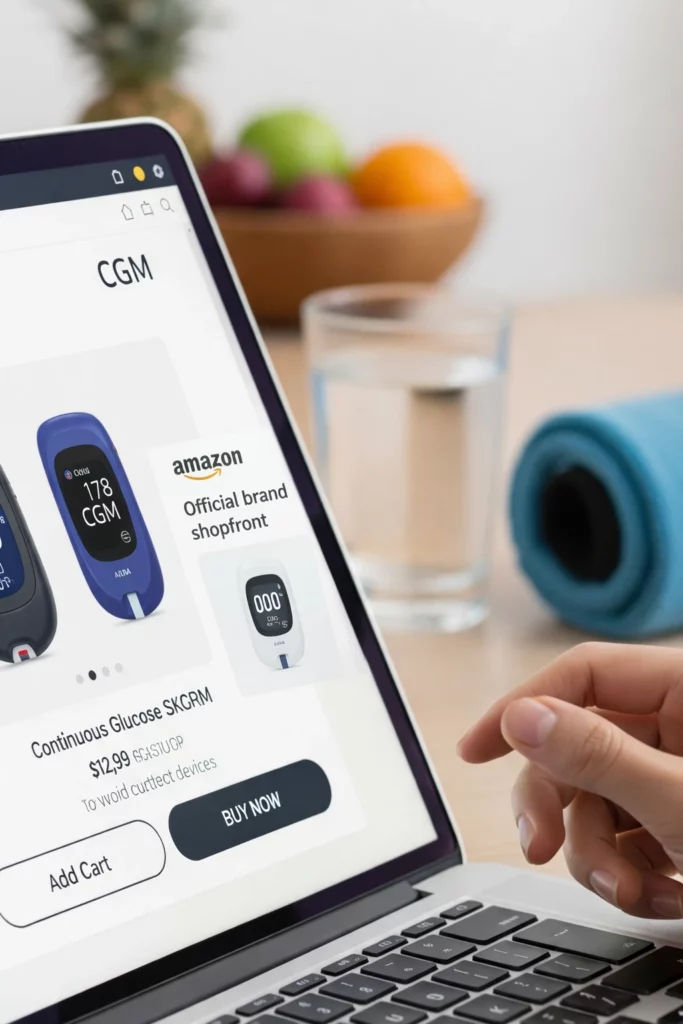
For the newer non-prescription models, purchasing directly from the manufacturer’s official website is the safest route. You may also wonder, where can I buy a continuous glucose monitor for general wellness?
Major online retailers are beginning to stock these items. Finding a continuous glucose monitor Amazon listing is becoming more common, though you must ensure you are buying directly from the official brand shopfront to avoid counterfeit medical devices.
How to Buy a CGM
Learning how to buy a continuous glucose monitor OTC is as simple as online shopping. You visit the brand’s website, select your subscription tier, fill out a basic health questionnaire, and check out.
The devices are then shipped discreetly directly to your front door. If you are buying a prescription model, your doctor must electronically send the order to your preferred pharmacy before you can purchase it.
How to Use a Continuous Glucose Monitor
Once you receive your device, learning how to use CGM software is the next step. After inserting the sensor, you will download the companion app to your smartphone and pair the device via Bluetooth.
Most modern sensors require a brief “warm-up” period, ranging from 30 minutes to two hours, before they start displaying data. Once active, the app will show your current glucose number and a trend arrow indicating the direction your blood sugar is moving.
Your main goal is to keep your glucose levels within a target range, typically between 70 and 180 mg/dL.By reviewing your daily graphs, you can quickly identify which specific foods cause unwanted spikes or what causes low blood sugar drops during activities.
Does a CGM Hurt? Safety & Comfort
A common hesitation among new users is the fear of needles. So, does a continuous glucose monitor hurt? The resounding answer from millions of users is no; it is practically painless.
The insertion device uses a tiny needle to guide the flexible filament under the skin, but the needle retracts instantly. Once applied, you only feel the medical tape; the internal filament is so thin and flexible that you cannot feel it moving inside your arm.
Can You Swim With a CGM?
Active users frequently ask, ‘Can you swim with a CGM?’ Yes, all major brands design their sensors to be highly water-resistant.
You can confidently shower, sweat heavily during workouts, and swim in pools or the ocean. However, most manufacturers recommend keeping water submersion under 30 minutes and avoiding depths greater than three feet to ensure the adhesive remains fully intact.
Continuous Glucose Monitor Reviews & User Feedback
Before investing, many consumers look to the continuous glucose monitoring Reddit communities for honest feedback. These forums are excellent resources for troubleshooting adhesive issues and comparing app interfaces.
General CGM reviews overwhelmingly highlight the mental relief these devices provide. Users frequently report that seeing their real-time data finally allowed them to break through stubborn weight loss plateaus by managing their hidden insulin spikes.
FAQs About Continuous Glucose Monitors
What is a continuous glucose monitor?
It is a wearable medical device that tracks your blood sugar levels 24/7 using a tiny sensor inserted just beneath your skin. It sends this data continuously to your smartphone, eliminating the need for constant finger-pricking.
How much does a CGM cost?
Costs vary widely, but over-the-counter models typically range from $89 to $120 per month. Prescription models paid for entirely out-of-pocket can range from $130 to over $200 per month without insurance or discount cards.
Can you buy a CGM over the counter?
Yes, as of recently, the FDA has cleared specific models like the Dexcom Stelo and Abbott Lingo for over-the-counter sale. You can purchase these directly online without needing a doctor’s prescription.
Does a CGM hurt?
No, the insertion process is virtually painless for the vast majority of users. The flexible sensor filament is roughly the thickness of a human hair, and you cannot feel it while wearing the device.
Which CGM is best?
The “best” device depends on your needs; the Dexcom G7 is phenomenal for insulin users needing precise alarms. If you are not on insulin and just want to improve your diet, the OTC Abbott Lingo or Dexcom Stelo are perfect, affordable options.
Conclusion
Adopting a CGM is one of the most proactive steps you can take for your metabolic health. Whether you are managing chronic diabetes, reversing prediabetes, or simply optimising your daily energy, the data these devices provide is invaluable.
With the recent explosion of affordable, over-the-counter options, you no longer have to rely on insurance approvals to understand your own body. Talk to your doctor before choosing a CGM to ensure it aligns with your health goals, and compare CGM options before buying.
Take advantage of this wearable technology to eliminate the guesswork and finally take complete control of your blood sugar today.
Evidence-Based References:

SOURCES
Related articles


Diabetic-Friendly Weight Loss Meals: 1500-Calorie Plans, Easy Recipes & 7-Day Guide


Online Counseling for Chronic Illness: Therapists, Platforms & Coping Strategies

Therapy for Diabetes Depression: Treatments, Mental Health Workbooks & Best Support Resources (2026)