
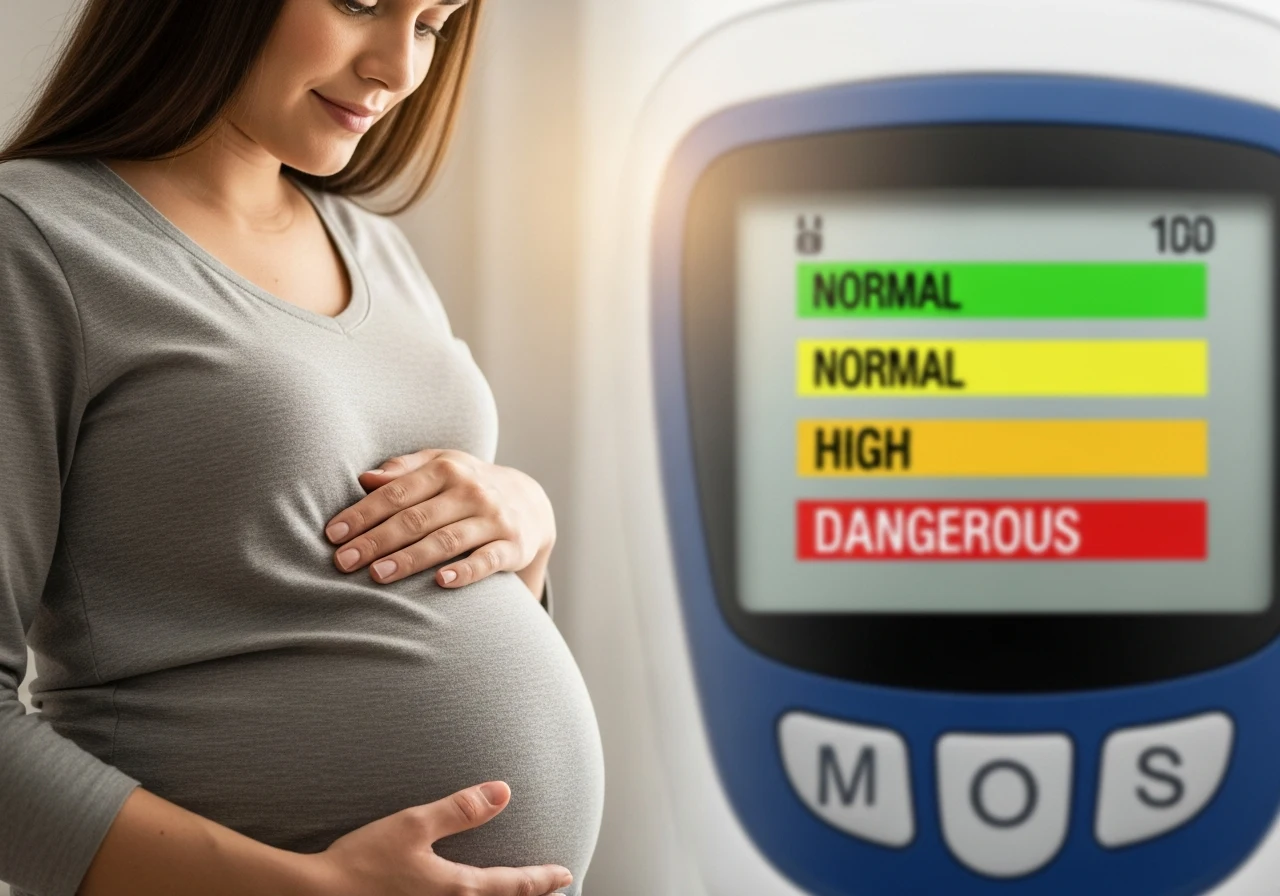
Hearing that your blood sugar is elevated during pregnancy can feel incredibly overwhelming. Gestational diabetes occurs when placental hormones actively block your body’s insulin. Consequently, your bloodstream retains too much glucose. Understanding the precise pregnancy gestational diabetes range is absolutely critical for maternal and fetal health.
When you know your numbers, you can protect your baby from complications. In my clinical experience reviewing prenatal metabolic panels, I always tell mothers that knowledge is their best defense.
Consistent monitoring of your blood sugar is the undisputed cornerstone of treatment. If you keep your levels within the recommended target, you will likely experience a perfectly healthy pregnancy.
Interestingly, the target gestational diabetes blood sugar levels differ slightly depending on your global location. For instance, the United States uses different measurement units than the UK, India, or Australia. Let us break down everything you need to know about navigating your gestational diabetes range securely.
What Is the Gestational Diabetes Range?
What is the gestational diabetes range exactly? Simply put, it is a set of strict medical thresholds defining healthy blood glucose levels. Doctors use these specific numbers to verify that your pancreas is handling pregnancy hormones properly.
Mothers frequently ask me, “What is the gestational diabetes range for daily management?” It dictates the maximum allowable sugar in your blood when you wake up and after you eat.
Knowing what the range for gestational diabetes is empowers you to adjust your daily meals effectively. By aiming for these targets, you actively prevent sudden glucose spikes.
- Fasting (Upon waking): < 95 mg/dL (5.3 mmol/L)
- 1-hour after a meal: < 140 mg/dL (7.8 mmol/L)
- 2-hours after a meal: < 120 mg/dL (6.7 mmol/L)
Gestational Diabetes Range Chart
Visualizing your targets makes daily tracking much easier. This gestational diabetes range chart breaks down the exact numbers you need to watch.
Understanding this gestational diabetes blood sugar levels chart helps you categorize your daily readings quickly. Keep a copy of this gestational diabetes fasting numbers chart near your testing kit for easy reference.
| Test Time | Normal Range | Borderline | High (Gestational Diabetes) |
| Fasting | < 95 mg/dL | 95 – 105 mg/dL | > 105 mg/dL |
| 1 Hour After Meal | < 140 mg/dL | 140 – 180 mg/dL | > 180 mg/dL |
| 2 Hours After Meal | < 120 mg/dL | 120 – 155 mg/dL | > 155 mg/dL |
Gestational Diabetes Test Ranges Explained
To officially diagnose this condition, obstetricians rely on specific glucose tolerance tests. These clinical tests deliberately challenge your pancreas with a heavy dose of liquid sugar.
We carefully measure your gestational diabetes results range to see how quickly your body clears the glucose. Let us examine the two primary diagnostic tests.
1-Hour Glucose Challenge Test
Around your 24th week of pregnancy, you will take the initial screening test. You will drink a sugary beverage, and doctors will check your gestational diabetes range 1 hour later.
For the gestational diabetes range 1-hour test, a normal result is typically under 140 mg/dL. If your blood sugar exceeds this threshold, you will need further diagnostic testing.
3-Hour Oral Glucose Tolerance Test (OGTT)
If you fail the initial screen, your doctor will order the 3-hour OGTT. This test requires you to fast overnight before drinking a highly concentrated glucose solution.
During this test, doctors draw your blood four distinct times. The diagnostic gestational diabetes range 3-hour targets are strictly defined by the American Diabetes Association. If two or more of your blood draws return high numbers, you officially have gestational diabetes.
Normal vs High vs Dangerous Levels
Interpreting your daily readings at home can sometimes feel confusing. What is a normal range for gestational diabetes compared to a dangerous spike?
In my practice, I teach patients to categorize their blood sugar into three distinct zones. Understanding these zones prevents unnecessary panic while highlighting when you need immediate help.
Normal Range
Your normal range represents optimal metabolic function. When fasting, your blood sugar should rest comfortably below 95 mg/dL.
Furthermore, your post-meal spikes should swiftly resolve. Hitting these daily targets means your current diet and lifestyle plan are working perfectly.
Borderline Range
Many patients fall into a frustrating gray area. The borderline gestational diabetes range indicates that your pancreas is struggling, but not entirely failing.
If your fasting numbers consistently hover between 95 and 105 mg/dL, you require immediate dietary adjustments. Wondering what range is considered gestational diabetes? Consistent borderline numbers often lead to a formal diagnosis if left unmanaged.
Dangerous Levels
We must clearly define what constitutes an alarming sugar level in pregnancy. Any blood sugar reading consistently over 200 mg/dL is considered highly dangerous.
Extremely elevated gestational diabetes levels require urgent medical intervention. Prolonged exposure to these levels severely risks both your cardiovascular health and your baby’s development.
Gestational Diabetes Range in Different Countries
Medical standards vary slightly depending on your geographic location. Consequently, reading international pregnancy forums can cause immense confusion regarding target ranges.
Different countries utilize different measurement units for blood glucose. The United States uses milligrams per deciliter (mg/dL), while most of the world uses millimoles per liter (mmol/L).
International Guidelines
The gestational diabetes range UK guidelines are dictated by the National Institute for Health and Care Excellence (NICE). They recommend a fasting target below 5.3 mmol/L and a 1-hour post-meal target below 7.8 mmol/L.
Similarly, the gestational diabetes range in Australia follows standards set by the Royal Australian College of General Practitioners. Their targets align very closely with the UK guidelines.
Meanwhile, the gestational diabetes range in India often adopts criteria from the World Health Organization (WHO). If you need to convert your numbers, remember that 1 mmol/L roughly equals 18 mg/dL. Therefore, having a normal blood sugar level during pregnancy, as indicated in mmol/L, is essential if you live outside the US.
Blood Sugar Targets During Pregnancy

Major medical organizations provide strict targets to ensure maternal safety. Both the American Diabetes Association (ADA) and the World Health Organization (WHO) agree on these core metrics.
Maintaining your gestational diabetes range during pregnancy relies heavily on daily tracking. Doctors require you to test your blood usually four times every single day.
Consequently, your core target is to keep your fasting numbers below 95 mg/dL. Furthermore, your overarching goal is to stabilize your gestational diabetes range for blood sugar throughout the entire day.
In my clinical practice, I always emphasize that consistency matters more than perfection. One elevated reading will not harm your baby, but prolonged elevation requires clinical intervention.
What Happens If Levels Go Above Range?
Patients frequently panic and ask me, “What is a bad gestational diabetes score?” Generally, any reading consistently hovering 20% over your target range warrants immediate concern.
If your gestational diabetes blood sugar levels remain uncontrolled, severe complications can arise. First, excess glucose directly feeds the baby, leading to a condition called macrosomia, or abnormally high birth weight.
Furthermore, high blood sugar significantly increases the risk of premature birth. The extra metabolic stress can sometimes force doctors to induce labor early to protect the child.
Additionally, mothers face a much higher risk of developing preeclampsia, a dangerous blood pressure condition. Finally, after birth, the baby might experience neonatal hypoglycemia, meaning their blood sugar drops dangerously low.
How to Keep Blood Sugar in Range
Learning how to reduce diabetes in pregnancy effectively combines lifestyle shifts and medical oversight. The most effective gestational diabetes treatment always begins directly in your kitchen.
First, strategically modifying your diet prevents sharp glucose spikes. You must pair your carbohydrates with healthy fats and lean proteins to slow down digestion.
Second, gentle physical activity is a powerful tool for blood sugar management. I highly recommend taking a 15-minute brisk walk immediately after eating.
This simple habit effectively lowers your gestational diabetes range after meal readings. Because your muscles use glucose for energy, walking literally pulls sugar directly out of your bloodstream.
Best Foods to Maintain a Healthy Range

Nutrition is your absolute best defense against insulin resistance. Many mothers ask me, “What are the 5 best foods for diabetics?“
First, focus heavily on non-starchy, fiber-rich vegetables like broccoli, spinach, and cauliflower. Second, incorporate whole grains like quinoa or steel-cut oats instead of refined white bread.
Third, lean proteins are essential for stabilizing your energy. To answer a very common question: Is chicken good for diabetes? Yes, grilled or baked chicken is an excellent, zero-carb protein source.
Fourth, healthy fats are crucial. Many wonder, is peanut butter good for diabetes? Yes, natural, unsweetened peanut butter prevents sugar spikes when paired with an apple.
Finally, nuts and seeds are perfect snacks. Do almonds lower blood sugar? While they do not lower it actively, their healthy fats and fiber beautifully prevent it from rising.
Foods to Avoid
Just as some foods heal, others actively disrupt your metabolic balance. Refined carbohydrates and sugary beverages are the biggest culprits, causing massive blood sugar spikes.
Furthermore, you must be careful with certain natural sugars. Patients often ask, “What 7 fruits should diabetics avoid?”
While no fruit is explicitly “banned,” you must strictly limit high-glycemic fruits. Therefore, avoid large portions of watermelon, pineapple, overripe bananas, dates, raisins, canned fruits in heavy syrup, and sweetened dried cranberries.
Instead, opt for low-glycemic fruits like berries, green apples, and kiwi. Always eat fruit alongside a handful of nuts to buffer the natural sugar release.
Gestational Diabetes Range by Trimester
Interestingly, your blood sugar targets and management strategies may shift as your pregnancy progresses. During the first trimester, insulin resistance is typically very low.
However, placental hormones peak drastically between weeks 24 and 28. Consequently, this is exactly when maintaining your gestational diabetes range becomes the most difficult.
By the late third trimester, some women actually notice their blood sugar levels stabilizing slightly. Regardless of the trimester, continuous monitoring remains vital until delivery.
Monitoring & Testing Tips
Proper testing techniques ensure your numbers are highly accurate. Always wash your hands with warm water and soap before pricking your finger, avoiding alcohol wipes.
Test your fasting blood sugar the exact moment you wake up, before getting out of bed. For post-meal tests, start your timer from the very first bite of your meal, not the last.
Finally, maintain a detailed digital or physical logbook of your results. Bring this logbook to every single prenatal appointment so your doctor can adjust your care plan.
Expert Tips to Stay Within Range
In my years of helping mothers navigate this condition, a few simple tricks stand out. First, eat three smaller meals and three snacks daily to prevent hunger and massive sugar loads.
Second, strictly avoid eating heavy carbohydrates late at night. A late-night bowl of cereal will almost certainly ruin your fasting numbers the next morning.
Ultimately, stay highly hydrated by drinking plenty of water. Mild dehydration actually concentrates the glucose in your blood, artificially inflating your monitor readings.
Frequently Asked Questions
What is a normal sugar level for gestational diabetes?
A normal fasting sugar level upon waking should remain below 95 mg/dL. Additionally, your levels should drop below 120 mg/dL two hours after finishing a meal.
What is borderline gestational diabetes in pregnancy?
Borderline gestational diabetes occurs when your fasting blood sugar consistently reads between 95 and 105 mg/dL. While not a full diagnosis, it requires immediate dietary changes to prevent progression.
What is an alarming sugar level in pregnancy?
Any blood sugar reading consistently exceeding 200 mg/dL is considered highly alarming and dangerous. If your glucose reaches this level, you must contact your healthcare provider immediately.
Is a boiled egg good for diabetes?
Yes, boiled eggs are an outstanding food choice for managing blood sugar. They are packed with high-quality protein, contain almost zero carbohydrates, and keep you feeling full for hours.
Are bananas good for diabetics?
Bananas can be tricky; while nutritious, they are high in carbohydrates. If you eat them, choose slightly green bananas, eat only half, and pair them with a protein like almond butter.
Conclusion
Navigating your gestational diabetes range can feel like a full-time job at first. However, please remember that this condition is highly manageable with the right tools and knowledge.
By strictly monitoring your daily numbers, adjusting your diet, and staying active, you take control. Every healthy meal and short walk actively protects your growing baby.
Do not let the numbers overwhelm you; they are simply data points guiding your care. Work closely with your medical team, trust the process, and look forward to meeting your healthy baby.