
How Many Calories Should a Diabetic Eat Per Day? A Doctor-Backed Guide
Just last week, a newly diagnosed patient named Mark sat in my office staring blankly at a stack of nutrition printouts. He was completely overwhelmed by carbohydrate ratios and insulin timing, but he realized he was missing the most fundamental piece of the puzzle. He looked up and asked me directly, “Exactly how many calories…

Reviewed by
Dt. Maryam Fatima
Written by
Quick Overview
Just last week, a newly diagnosed patient named Mark sat in my office staring blankly at a stack of nutrition printouts. He was completely overwhelmed by carbohydrate ratios and insulin timing, but he realized he was missing the most fundamental piece of the puzzle. He looked up and asked me directly, “Exactly how many calories should a diabetic eat per day?”
It is a brilliant question that many patients overlook. While controlling your sugar and carbohydrate intake is vital, your total caloric intake dictates your overall weight, which is the primary driver of insulin resistance.
You cannot effectively manage your blood glucose if you are chronically overeating, even if you are eating “healthy” foods.
In this comprehensive guide, I am going to break down the exact calorie targets I use in my clinic. We will explore how to calculate your individual needs, portion your meals, and balance your macros to achieve excellent metabolic health.
Key Takeaways
- Individual needs vary: Calorie requirements are not one-size-fits-all; they range heavily from 1,200 to over 2,000 depending on your body and lifestyle.
- Balance beats restriction: A sustainable balance of lean proteins, healthy fats, and high-fiber carbohydrates is far more effective than extreme calorie cutting.
- Carbs matter most: Calorie control must be paired directly with strict carbohydrate management (typically 45–60g per meal) to keep blood glucose stable.
How Many Calories Should a Diabetic Eat Per Day?
Most adults with diabetes should consume between 1,200 and 2,000 calories per day, depending on their age, sex, weight, and daily physical activity level.
There is no single “magic number” that works for every patient. Your body is a complex engine, and your energy requirements depend entirely on how much fuel that engine burns at rest and during exercise.
The goal is to consume exactly enough calories to maintain a healthy weight without overloading your pancreas or your injected insulin supply.
Recommended Daily Calorie Intake for Diabetics
When patients ask for diabetic calorie intake daily recommendations, I start by evaluating their basal metabolic rate (BMR) and their lifestyle. A sedentary office worker requires far less energy than a construction worker who is on their feet all day.
Here is a general clinical guideline based on activity levels and gender:
| Group | Estimated Calories/Day |
| Women (sedentary) | 1,200–1,600 |
| Women (active) | 1,600–2,000 |
| Men (sedentary) | 1,600–2,000 |
| Men (active) | 2,000–2,400 |
These baseline numbers provide a starting point. If your goal is weight loss, we typically reduce your daily target by 300 to 500 calories. If your goal is to build muscle or stop unhealthy disease-driven weight loss, we may increase your target.
How Many Calories Should a Type 2 Diabetic Eat?
Managing Type 2 diabetes is almost always linked directly to managing your body weight. Because this condition is characterized by insulin resistance—where your cells ignore the insulin your body produces—reducing excess body fat is the most powerful medical intervention available.
When determining how many calories a type 2 diabetic should eat, I typically prescribe intake at the lower end of the recommended range. For a patient actively trying to lose weight to improve their insulin sensitivity, this often means a daily target of 1,200 to 1,600 calories.
We restrict calories carefully to force the body to burn its stored visceral fat (belly fat) for energy. As this fat disappears, the patient’s cells become “unlocked,” allowing their natural insulin to function properly again.
However, this type 2 diabetic calorie intake must be heavily biased toward lean proteins and high-fiber vegetables to prevent severe hunger.
How Many Calories Should a Type 1 Diabetic Eat?
Type 1 diabetes requires a completely different clinical approach. These patients do not produce their own insulin, so their weight does not directly cause their disease. Therefore, severe calorie restriction is rarely the primary goal unless the patient happens to be a higher-weight person.
When asked how many calories a type 1 diabetic should eat, I focus entirely on their baseline energy needs and matching their insulin dosing to their food intake. A healthy, active Type 1 diabetic male might easily require 2,400 calories a day to maintain his weight and fuel his workouts.
The challenge here is precision. Every calorie—particularly every carbohydrate calorie—must be meticulously accounted for and covered by an exact dose of injected insulin. The total calorie count matters less than the consistency and timing of those calories to prevent dangerous high or low blood sugar spikes.
How Many Calories Should a Diabetic Eat Per Meal?
Once we establish your daily target, we must strategically divide it. Eating all your calories in one massive sitting will cause a massive blood sugar spike that no medication can safely control. Pacing is critical.
So, how many calories should a diabetic eat per meal? If your target is 1,600 calories, you should aim for three meals of roughly 450 to 500 calories each. This leaves room for one or two 100-calorie snacks between meals to prevent hypoglycemia.
By spreading your caloric load evenly throughout the day, you provide your body with a steady, manageable trickle of glucose. This prevents your pancreas from becoming exhausted and keeps your energy levels stable from morning until night.
How Many Calories Should a Diabetic Eat for Breakfast?

Breakfast sets your metabolic tone for the entire day. Many patients wake up with elevated blood sugar due to the “dawn phenomenon,” making their morning meal choices incredibly important.
When counseling patients on how many calories a diabetic should eat for breakfast, I generally recommend a moderate range of 300 to 450 calories. This should not be a massive, heavy meal, nor should it be a carbohydrate-heavy meal like cereal or toast.
Your morning calories should be heavily weighted toward protein and healthy fats, such as eggs and avocados. This specific macronutrient profile provides sustained energy without triggering a rapid glucose spike right at the start of your day.
Is 1,200 Calories Enough for a Diabetic?
I frequently see patients who have drastically cut their food intake, asking, “Is 1200 calories enough for a diabetic?” The honest medical answer is that it is highly situational and often too low for the average adult.
A 1,200-calorie diabetic diet plan may be appropriate for a smaller, older, sedentary woman whose primary goal is weight loss. However, for a taller individual, a man, or anyone who exercises regularly, 1,200 calories is a starvation diet.
Consistently eating only 1,200 calories when your body requires more can lead to severe muscle loss, extreme fatigue, and nutrient deficiencies. Furthermore, extreme restriction almost always leads to eventual indulgence, eating, which causes massive, dangerous blood sugar swings.
Special Populations
Caloric needs can shift dramatically based on specific life circumstances. Let’s look at a few unique populations that require tailored dietary planning.
Calorie Requirements for Diabetic Women
Women generally have a lower muscle mass and a lower BMR than men. For a woman looking to maintain her weight, 1,600 to 1,800 calories is a standard benchmark. However, hormonal fluctuations during menopause or the menstrual cycle can temporarily impact insulin resistance, requiring slight dietary adjustments.
Calorie Needs During a Diabetic Pregnancy
Pregnancy changes everything. If you are pregnant and managing gestational or pre-existing diabetes, your caloric needs will increase to support fetal growth, usually by an additional 300 to 400 calories in the second and third trimesters.
This requires strict medical supervision, as you must eat enough to nourish the baby while keeping your blood sugar perfectly flat to prevent birth complications.
A Note on Diabetic Dogs
Surprisingly, patients frequently ask me about their pets. While I am a physician for humans, the principles of metabolic disease are similar.
If you are wondering how many calories a diabetic dog should eat, the answer relies strictly on their breed, weight, and the insulin regimen prescribed by your veterinarian. Always consult your vet rather than applying human dietary guidelines to an animal.
Carbohydrate Intake for Diabetics
While calories dictate your overall weight, carbohydrates are the primary macronutrient that directly drives your blood sugar levels. You cannot discuss caloric intake without simultaneously addressing how many carbs you are consuming within those calories.
Recently, I reviewed a food log with a patient who was perfectly hitting his 1,800-calorie target but was still experiencing massive blood sugar spikes. The culprit? He was spending almost all of his daily calorie allowance on simple carbohydrates like white rice and fruit juices.
When patients ask how many carbs a diabetic should eat daily, the standard clinical starting point is roughly 135 to 180 grams per day. This is typically divided evenly across your meals. As a general rule, we recommend aiming for 45 to 60 grams of complex carbohydrates per meal.
However, this is a highly individualized approach. An active patient taking insulin might need more, while a sedentary patient trying to reverse insulin resistance might thrive on fewer than 100 grams a day. Always prioritize high-fiber carbohydrates, which digest more slowly and prevent sudden glucose surges.
Sugar Intake Guidelines
Sugar is simply a very fast-acting carbohydrate. While naturally occurring sugars in whole fruits and dairy are acceptable within your total carb limit, added sugars must be strictly limited. Added sugars provide “empty calories” that rapidly spike glucose and promote liver fat.
When considering how much sugar a diabetic should eat daily, I align closely with the American Heart Association’s strict guidelines. We advise limiting added sugars to less than 25 grams per day for women and less than 36 grams per day for men.
Checking nutrition labels is critical here. Many “healthy” yogurts, protein bars, and sauces contain hidden added sugars that can easily push you over your daily limit in a single serving.
The 40/30/30 Diet for Diabetics
Patients frequently ask me about specific macro-ratio diets to simplify their meal planning. One of the most effective approaches I see in clinical practice is the 40/30/30 diet.
What is the 40/30/30 diet for diabetics? It is a structured nutritional plan where 40% of your daily calories come from carbohydrates, 30% from lean proteins, and 30% from healthy fats.
This specific ratio provides a fantastic balance. The slightly reduced carbohydrate load (40%) prevents massive blood sugar spikes, while the generous amounts of protein and fat (60% combined) ensure you feel completely full and satisfied between meals, eliminating the urge to snack.
What Is the Most Important Meal of the Day for a Diabetic?
You have likely heard the old adage that breakfast is the most important meal of the day. In the context of diabetes management, the reality is slightly different. What is the most important meal of the day for a diabetic?
Medically speaking, consistency matters far more than timing. Every meal is equally important because skipping a meal usually leads to intense hunger and eventual overeating.
However, your first meal of the day is critical for breaking the overnight fast and setting a stable blood sugar baseline. If you start your day with a high-protein, low-carbohydrate meal, you are much less likely to experience erratic glucose swings later in the afternoon.
Diabetic Diet Food List
Building a safe and satisfying meal plan requires knowing exactly which foods support your metabolic goals. Your daily calories should primarily come from these highly nutritious, low-glycemic categories.
- Non-Starchy Vegetables: Spinach, kale, broccoli, cauliflower, zucchini, and bell peppers. Eat these in abundance.
- Lean Protein: Skinless chicken breast, turkey, eggs, tofu, and fish (especially salmon for omega-3s).
- Whole Grains and Complex Carbs: Steel-cut oats, quinoa, lentils, chickpeas, and sweet potatoes.
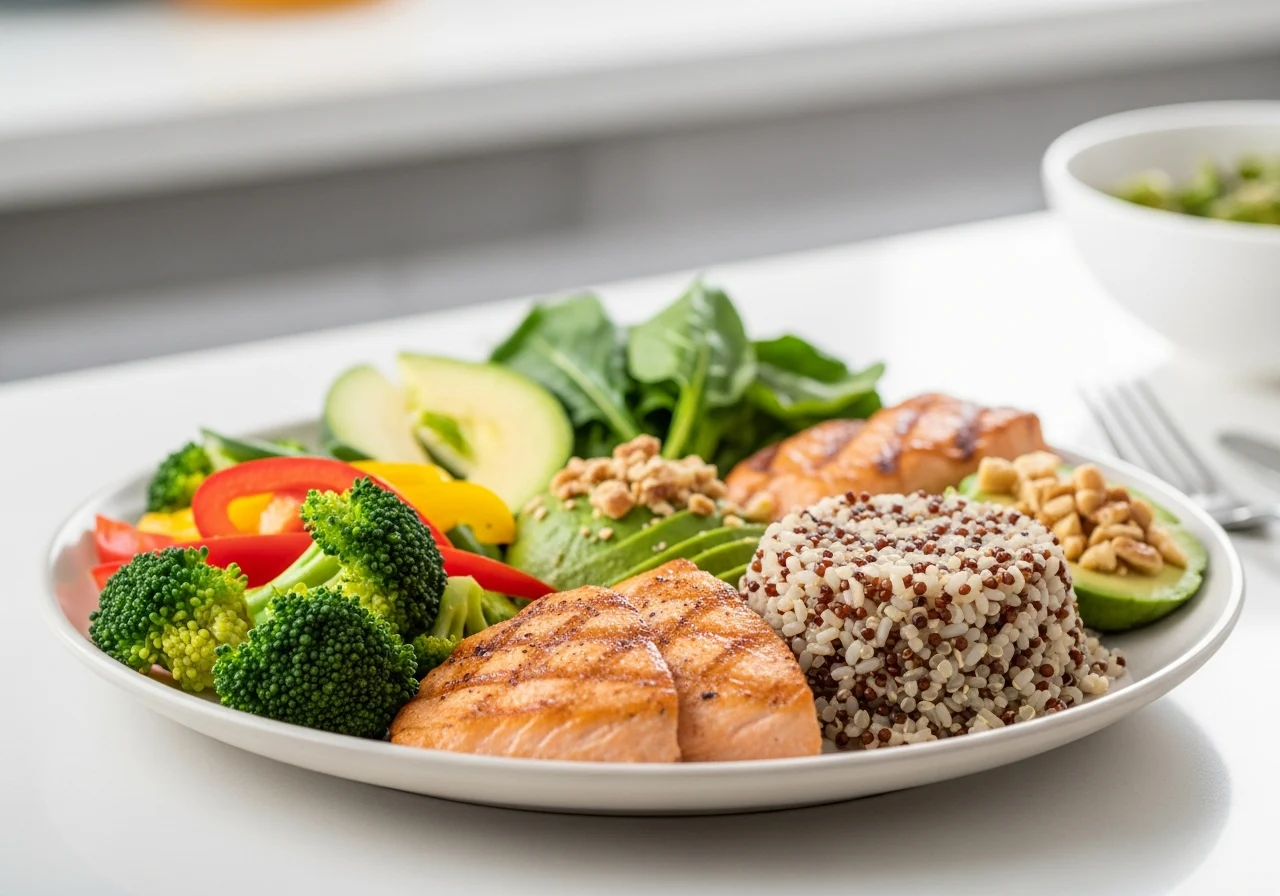
- Healthy Fats: Avocados, olive oil, almonds, walnuts, and chia seeds.
Diabetic Calorie Intake Chart
To simplify the math, I provide this basic reference chart in my clinic. It helps patients visualize their daily energy needs based on their current health goals.
| Goal | Calories/Day | Recommended Patient Profile |
| Weight Loss | 1,200–1,500 | Individuals seeking to lower insulin resistance and reduce body fat. |
| Maintenance | 1,600–2,000 | Individuals at a healthy weight with moderate daily activity. |
| Active Lifestyle | 2,000–2,400 | Highly active individuals or Type 1 diabetics need steady fuel for exercise. |
7-Day Diabetic Meal Plan
Visualizing your week takes the stress out of daily calorie counting. Below is an example of a simple, balanced 7-day diabetic meal plan designed around a roughly 1,600-calorie target.
| Day | Breakfast | Lunch | Dinner |
| Monday | Oatmeal with berries & walnuts | Grilled chicken salad with olive oil | Baked salmon with roasted asparagus |
| Tuesday | Two scrambled eggs & half an avocado | Turkey wrap in a whole-wheat tortilla | Lean beef and broccoli stir-fry |
| Wednesday | Greek yogurt with chia seeds | Lentil soup with a side salad | Baked chicken breast with zucchini |
| Thursday | Protein smoothie (spinach & protein powder) | Tuna salad over mixed greens | Turkey meatballs with spaghetti squash |
| Friday | Cottage cheese with sliced almonds | Quinoa bowl with roasted chickpeas | Baked cod with green beans |
| Saturday | Vegetable omelet (3 eggs, spinach) | Chicken salad lettuce boats | Lean steak with a small sweet potato |
| Sunday | Steel-cut oats with cinnamon | Leftover lean steak over greens | Baked tofu with mixed roasted veggies |
30-Day Diabetic Meal Plan Overview
While a 7-day plan is a great start, long-term success requires building permanent habits. A 30-day diabetic meal plan focuses on rotating a core set of reliable, blood-sugar-friendly recipes to prevent diet fatigue.
Instead of cooking 30 different dinners, I teach my patients to master five healthy dinners and rotate them throughout the month. This drastically reduces the mental burden of calorie counting and ensures you always have safe, predictable foods in your refrigerator.
1,200-Calorie Diabetic Diet Plan

If you and your doctor have determined that a calorie deficit is medically appropriate for you, a free printable 1200-calorie diabetic diet plan can be a helpful guide.
An example day might look like this: 300 calories for breakfast (two eggs and spinach), 400 calories for lunch (large salad with grilled chicken), 400 calories for dinner (baked fish and asparagus), and one 100-calorie snack (a handful of almonds).
However, safety is paramount. You must monitor your blood sugar aggressively when dropping your calories this low, as your medication dosages will almost certainly need to be reduced to prevent severe hypoglycemia.
How to Count Calories with Diabetes
Accurate tracking is the only way to ensure you are actually hitting your targets. Most patients vastly underestimate their daily caloric intake until they start measuring it.
First, use a digital food scale. Eyeballing a “tablespoon” of peanut butter often results in eating twice the intended calories. Second, use a food tracking app on your smartphone to scan barcodes and automatically log your macronutrients.
Finally, always read nutrition labels meticulously. Pay close attention to the specified serving size. A small bag of chips might contain 150 calories per serving, but if the bag holds three servings, you just consumed 450 calories without realizing it.
Action Plan: What to Do Next
- Calculate your target: Speak with your endocrinologist or registered dietitian to establish your specific daily caloric and carbohydrate goals.
- Plan your meals: Pick 3 simple breakfasts and 3 healthy dinners to rotate this week to eliminate the guesswork.
- Log your food: Commit to tracking your meals in an app for just 7 days to get a realistic picture of your baseline intake.
- Monitor your glucose: Test your blood sugar before and two hours after meals to see exactly how your new calorie targets affect your body.
Frequently Asked Questions
How many calories should a diabetic eat per day?
Typically, an adult with diabetes should consume between 1,200 and 2,000 calories daily. This number shifts depending on your age, gender, weight loss goals, and how physically active you are throughout the day.
How many carbs should a diabetic eat daily?
As a general starting point, most patients aim for roughly 135 to 180 grams of carbohydrates per day. This is usually divided into manageable portions of 45 to 60 grams per meal to prevent sudden glucose spikes.
Is 1,200 calories enough for a diabetic?
It may be appropriate for a smaller, sedentary individual actively trying to lose weight under medical supervision. However, for many taller adults or those who exercise regularly, 1,200 calories is too restrictive and can lead to dangerously low blood sugar.
What is the best diet for diabetics?
The best diet is one you can sustain long-term. Generally, this means a balanced meal plan focused heavily on whole foods, such as lean proteins, abundant non-starchy vegetables, and strictly portion-controlled complex carbohydrates.
Can I save my daily calories for one large meal?
I strongly advise against doing this. Eating one massive meal forces your body to handle a huge metabolic load all at once, leading to dangerous, unmanageable glucose spikes. Spreading your caloric intake evenly across three balanced meals is the safest clinical approach.
Conclusion
Figuring out exactly how many calories to eat with diabetes doesn’t have to be a source of constant anxiety. As I often tell my patients, the numbers are simply tools to help you understand your body’s unique energy needs.
Whether your goal is to shed stubborn visceral fat or simply stabilize your daily blood sugar, your caloric intake is the foundation of your success.
Remember, it is never just about slashing calories to the absolute minimum. Extreme restriction is dangerous and highly unsustainable.
True metabolic health comes from eating the right kind of calories—prioritizing nutrient-dense proteins, healthy fats, and high-fiber vegetables that nourish your body without exhausting your pancreas.
Take the time to work with your healthcare provider to find the daily target that fits your specific lifestyle and medication routine. By combining a realistic caloric goal with consistent carbohydrate management, you can confidently take control of your weight, lower your A1C, and drastically improve your overall quality of life.
Authoritative Medical References:
- PubMed (National Library of Medicine) – Nutrition Therapy for Adults With Diabetes or Prediabetes: A Consensus Report
- National Institute of Diabetes and Digestive and Kidney Diseases (NIDDK) – Diabetes Diet, Eating, & Physical Activity
- American Diabetes Association (ADA) – Food & Nutrition
- Centers for Disease Control and Prevention (CDC) – Healthy Eating
- Mayo Clinic – Diabetes diet: Create your healthy-eating plan

SOURCES
Related articles


Diabetic-Friendly Weight Loss Meals: 1500-Calorie Plans, Easy Recipes & 7-Day Guide


Online Counseling for Chronic Illness: Therapists, Platforms & Coping Strategies

Therapy for Diabetes Depression: Treatments, Mental Health Workbooks & Best Support Resources (2026)