

You have probably noticed Ozempic trending everywhere lately. Social media feeds overflow with rapid transformation stories. Yet most creators completely overlook its original medical purpose. Physicians prescribe Ozempic for diabetes as a foundational treatment.
This medication transforms daily glucose management completely. Millions of Americans rely on it safely. But does it actually match your specific health needs? You deserve straightforward, evidence-based answers before starting. Let’s separate clinical facts from viral marketing hype.
How does a simple weekly injection regulate metabolism so effectively? The science behind semaglutide continues to evolve rapidly. It mimics natural intestinal hormones perfectly. Consequently, your pancreas releases insulin precisely when required.
Blood sugar stabilizes without dangerous daily fluctuations. Furthermore, many patients experience meaningful weight changes automatically. These secondary benefits spark endless curiosity online. However, major medical decisions always require careful evaluation. We will walk you through every critical detail below.
What about the actual financial commitment? Will your insurance carrier approve it quickly? Many patients face confusing coverage rules initially. Prior authorization paperwork delays treatment unnecessarily sometimes. Therefore, we break down every pricing tier clearly.
You will also discover realistic dosage expectations. Common side effects are explained in plain English. Finally, we compare proven alternatives fairly. Your health choices demand complete transparency. Read thoroughly before your next clinical consultation.
I recently reviewed a patient case that highlights this perfectly. She struggled with stubborn A1C numbers despite strict lifestyle changes. Adding this therapy stabilized her labs within eight weeks.
Her energy returned dramatically. This real-world experience reinforces why proper dosing and monitoring matter. You deserve the same clinical attention. Keep reading for complete, MD-reviewed guidance.
TL;DR
- Ozempic (semaglutide) is a GLP-1 receptor agonist FDA-approved for type 2 diabetes.
- It lowers blood sugar, supports weight loss, and may reduce cardiovascular risk.
- Taken as a once-weekly injection with doses from 0.25 mg to 2 mg.
- Common side effects include nausea, vomiting, and diarrhea.
- Insurance coverage varies; copay assistance may be available.
What Is Ozempic for Diabetes?
Ozempic belongs to the GLP-1 receptor agonist class. The FDA approved it specifically for type 2 diabetes management. This medication mimics a natural gut hormone. It helps regulate glucose after meals. Patients administer it via a simple weekly injection.
The pen device makes dosing straightforward. Unlike daily pills, this schedule improves adherence. However, it requires a prescription and medical supervision. We never use it as a first-line treatment alone. Lifestyle changes remain foundational to care.
Is Ozempic for Type 1 or Type 2 Diabetes?
This distinction matters critically. Ozempic carries FDA approval only for type 2 diabetes. It helps when the body resists insulin. Type 1 diabetes involves complete insulin deficiency.
Consequently, Ozempic does not replace insulin therapy there. Using it off-label for type 1 lacks robust safety data. Always confirm your diagnosis with an endocrinologist. Proper classification guides safe, effective treatment choices.
How Does Ozempic Work for Diabetes?
Understanding the mechanism builds confidence. Ozempic activates GLP-1 receptors throughout your body. First, it stimulates insulin release when glucose rises. This action depends on current blood sugar levels. Therefore, the risk stays relatively low.
Second, it suppresses glucagon secretion from the liver. This reduces unnecessary glucose production. Third, it slows gastric emptying significantly. Food absorbs more gradually, preventing sharp spikes.
Finally, it enhances satiety signals in the brain. Patients naturally eat less without feeling deprived. These combined effects improve metabolic control profoundly.
Benefits of Ozempic for Diabetes
Clinical evidence supports multiple advantages. The SUSTAIN trials demonstrated consistent HbA1c reductions. Patients typically see drops of 1.0–1.5% on average. Furthermore, weight loss accompanies glucose improvement. Many participants lost 5–10% of their body weight.
Cardiovascular outcomes also improved in high-risk groups. The SUSTAIN-6 trial showed reduced heart attack and stroke risk. Additionally, kidney protection signals emerged in recent analyses. These benefits extend beyond simple sugar control. We consider these factors when recommending therapy.
Ozempic for Diabetes and Weight Loss

Weight management often improves alongside glucose control. Ozempic’s appetite effects support sustainable changes. However, it is not FDA-approved solely for weight loss. Wegovy contains the same active ingredient at higher doses.
That formulation targets obesity treatment specifically. Insurance coverage differs between these indications. We discuss goals openly with each patient. Realistic expectations prevent disappointment later.
How Effective Is Ozempic for Diabetes?
Real-world data aligns with clinical trial results. Most patients achieve target HbA1c levels within months. Weight loss tends to plateau after 6–12 months. Consistency with dosing maximizes benefits.
Missing injections reduces effectiveness noticeably. We monitor progress through regular lab work. Adjustments happen based on individual response patterns.
Ozempic Dosage for Diabetes
Proper titration minimizes side effects. The table below outlines the standard escalation schedule.
| Dose | Purpose | Timing |
|---|---|---|
| 0.25 mg | Starter dose | Weeks 1–4 |
| 0.5 mg | Initial maintenance | Weeks 5–8 |
| 1 mg | Standard therapeutic dose | Week 9+ |
| 2 mg | Maximum approved dose | If needed after 1 mg |
Furthermore, we never skip the starter phase. Rapid escalation increases gastrointestinal discomfort significantly. Patience during titration improves long-term adherence.
How Long Can You Take Ozempic?
Type 2 diabetes requires chronic management. Ozempic serves as a long-term therapy option. Studies followed patients for over two years safely. However, we reassess benefits versus risks annually.
Kidney function, weight trends, and glucose control guide decisions. Some patients transition to other agents over time. Individualized care plans optimize outcomes consistently.
Side Effects of Ozempic
Most side effects involve the digestive system. Nausea affects approximately 20% of users initially. Vomiting and diarrhea occur less frequently. These symptoms typically improve within weeks. Taking doses with food may help. Rare but serious risks require awareness.
Pancreatitis symptoms include severe abdominal pain. Thyroid C-cell tumor warnings appear in rodent studies. Human relevance remains uncertain. We screen for personal or family history of medullary thyroid cancer. Gallbladder issues occasionally emerge during weight loss. Report persistent symptoms to your provider immediately.
Ozempic Cost & Insurance Coverage
Pricing creates access challenges for many. The list price exceeds $900 monthly without insurance. However, most commercial plans cover Ozempic for diabetes. Prior authorization requirements vary by carrier.
Step therapy protocols may apply initially. Copay cards can reduce out-of-pocket costs significantly. We help patients navigate these processes routinely.
Medicare Coverage
Medicare Part D plans generally include Ozempic. Coverage specifics depend on your chosen formulary. The Inflation Reduction Act caps insulin costs. However, GLP-1 medications follow different rules. We verify benefits before prescribing whenever possible.
Medicaid Coverage
State Medicaid programs maintain separate formularies. Some require additional documentation for approval. Your pharmacy benefits manager provides exact details. Patient assistance programs exist for qualifying individuals.
Private Insurance
Major carriers like Blue Cross Blue Shield typically cover Ozempic. However, tier placement affects copay amounts. Specialty tiers may require higher cost-sharing. We submit clinical justification when denials occur. Persistence often secures approval eventually.
Ozempic Coupons & Savings Options
Manufacturer savings cards help eligible patients. These programs reduce monthly costs dramatically. However, they cannot combine with government insurance. Independent foundations also offer financial assistance. We discuss all options during treatment planning.
Ozempic vs Other Diabetes Treatments
Comparing therapies clarifies decision-making. We evaluate efficacy, safety, and practical factors.
Mounjaro vs Ozempic
Mounjaro (tirzepatide) activates both GLP-1 and GIP receptors. Clinical trials show slightly greater A1c and weight reductions. However, Ozempic has longer cardiovascular outcome data. Cost and coverage often drive final choices. Both represent excellent options for type 2 management.
Ozempic vs Insulin
Insulin remains essential for advanced diabetes. Ozempic offers a lower risk of hypoglycemia, typically. Weight loss favors Ozempic over most insulin regimens. However, insulin provides more potent glucose-lowering when needed. Many patients use both therapies concurrently eventually.
Ozempic vs Metformin
Metformin stays first-line for most newly diagnosed patients. It costs less and has decades of safety data. Ozempic adds benefits when metformin alone proves insufficient. We rarely choose between them as mutually exclusive options. Combination therapy often yields optimal results.
Alternatives to Ozempic for Diabetes
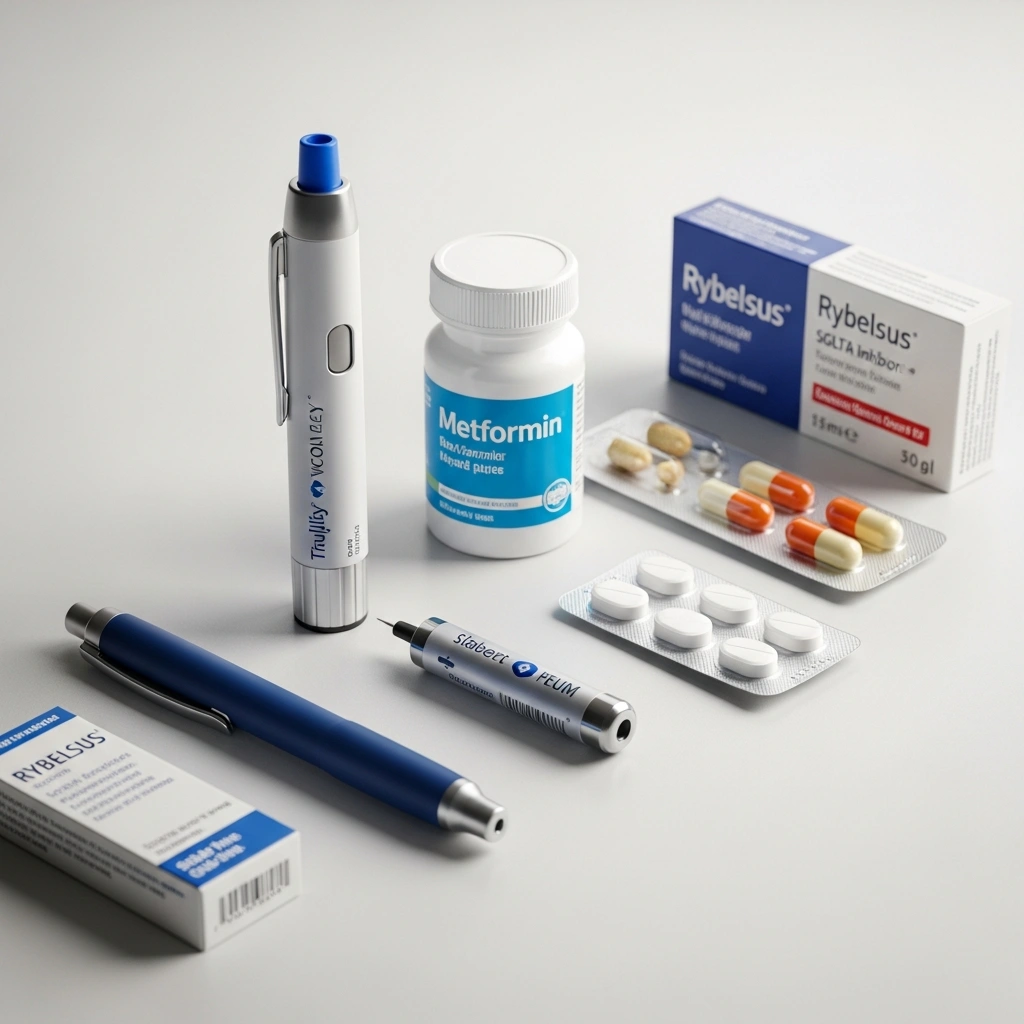
Several alternatives exist within the GLP-1 class. Trulicity, Victoza, and Rybelsus offer different dosing schedules. SGLT2 inhibitors provide complementary mechanisms. They promote glucose excretion through urine.
Insulin remains irreplaceable for certain patients. We tailor choices to individual physiology and preferences.
When Is Ozempic Not Recommended?
Contraindications protect patient safety. Type 1 diabetes represents a clear exclusion. Pregnancy and breastfeeding lack sufficient safety data. Personal or family history of medullary thyroid cancer warrants caution.
Multiple endocrine neoplasia syndrome type 2 also contraindicates use. Severe gastrointestinal disease may worsen with GLP-1 therapy. We screen thoroughly before initiating treatment.
Ozempic Injection: How It’s Taken
Administration proves straightforward with practice. The pre-filled pen delivers subcutaneous injections weekly. Rotate sites among the abdomen, thigh, or upper arm. Store unused pens refrigerated until first use. Room temperature storage works for up to 56 days after opening. We provide hands-on training during the initial visit.
Frequently Asked Questions
Is Ozempic for diabetes or weight loss?
Ozempic carries FDA approval specifically for type 2 diabetes management. Weight loss represents a beneficial secondary effect. Wegovy contains semaglutide at higher doses for obesity treatment.
Does Medicare cover Ozempic?
Most Medicare Part D plans cover Ozempic for diabetes. Coverage details vary by specific formulary. The Inflation Reduction Act affects insulin pricing differently than GLP-1 medications.
What is the max dose of Ozempic?
The maximum approved dose equals 2 mg once weekly. We escalate gradually from 0.25 mg to minimize side effects. Not all patients require the highest dose for optimal control.
Is Ozempic safe for long-term use?
Clinical trials followed patients safely for over two years. Real-world data continues to accumulate. We monitor kidney function, weight trends, and glucose control annually.
Can Ozempic be used for type 1 diabetes?
Ozempic lacks FDA approval for type 1 diabetes management. Insulin remains essential therapy for this condition. Off-label use requires careful specialist supervision and limited evidence.
Conclusion
You now hold the essential facts about this powerful medication. Ozempic offers real benefits for type 2 diabetes management. It lowers blood sugar effectively while supporting weight loss. Cardiovascular protection adds another layer of value. However, it requires careful medical supervision always.
Side effects like nausea typically improve with time. Proper titration minimizes discomfort significantly. Insurance coverage varies, but assistance programs exist. Comparing alternatives helps you choose wisely. Never start this therapy without professional guidance.
Remember, lifestyle changes remain foundational to care. Medication works best alongside healthy eating and activity. Regular monitoring ensures safe, effective treatment long-term. Your healthcare team tailors every decision to your unique needs.
Ultimately, Ozempic for diabetes represents a valuable tool when used correctly. It is not a magic solution, but a proven therapy. Discuss your goals openly with your doctor today. Together, you can build a sustainable management plan. Your metabolic health deserves this thoughtful investment.
Medical References:
- American Diabetes Association – 9. Pharmacologic Approaches to Glycemic Treatment: Standards of Care in Diabetes—2026
- New England Journal of Medicine (NEJM) – Semaglutide and Cardiovascular Outcomes in Patients with Type 2 Diabetes (SUSTAIN-6)
- National Institute of Diabetes and Digestive and Kidney Diseases (NIDDK) – Type 2 Diabetes
- Mayo Clinic – Semaglutide (Subcutaneous Route): Description and Brand Names