

In my two decades as an endocrinologist, the landscape of diabetes care has never shifted as dramatically as it has in the last few years. I remember a time when our primary goal was simply to “lower the numbers” on a lab report.
Today, in 2026, the clinical focus has evolved into something much more profound: the total optimization of metabolic health.
Last week, I consulted with a patient named Sarah who felt defeated by her fluctuating A1C levels. She had tried every dietary trend, yet her metabolic markers remained stubborn.
When we discussed integrating glp 1 agonists for type 2 diabetes into her regimen, it wasn’t just about the medication; it was about reclaiming the biological signaling that her body had lost over time.
These medications represent a massive leap forward because they don’t just “fix” blood sugar—they mimic the body’s natural communication system.
By acting on the gut, the pancreas, and the brain simultaneously, GLP-1 receptor agonists address the multifaceted nature of Type 2 Diabetes. They offer a sophisticated, “intelligent” approach to glucose management that was previously unimaginable.
For many of my patients, this therapy is the key to breaking the cycle of insulin resistance and chronic inflammation. As we navigate the complexities of modern metabolic medicine, understanding the science, safety, and variety of these drugs is essential.
This guide is designed to provide you with a clear, expert-led roadmap to the most effective treatments available in 2026.
TL;DR: Quick Clinical Overview
GLP-1 receptor agonists are powerful medications that lower blood sugar, promote significant weight loss, and heavily reduce cardiovascular risk in type 2 diabetes. Popular options include semaglutide, liraglutide, and dulaglutide.
They are generally safe but may cause initial gastrointestinal side effects. The right choice depends on your specific metabolic needs and medical history.
In my years practicing endocrinology, I have witnessed a massive shift in how we manage metabolic health. Recently, a patient named John sat in my office, deeply frustrated that his blood sugar remained high despite strict diet changes.
We discussed transitioning his care plan to include glp 1 agonists for type 2 diabetes, a decision that ultimately transformed his metabolic control. These medications have revolutionized modern diabetes care by addressing both glucose levels and stubborn weight gain simultaneously.
What Is a GLP-1 Receptor Agonist?
A GLP-1 receptor agonist is a specialized medication that mimics the natural GLP-1 hormone in your body, helping to regulate blood sugar levels and control appetite.
To truly understand these medications, we must look at how the gut and brain communicate. Naturally occurring Glucagon-Like Peptide-1 (GLP-1) is an incretin hormone released by your intestines immediately after you eat a meal. It signals your pancreas to release insulin and tells your brain that you are full.
However, in patients with type 2 diabetes, this natural incretin effect is severely blunted or entirely dysfunctional. GLP-1 receptor agonists are engineered synthetic versions of this vital hormone. They bind to the exact same receptors in your body but are designed to last much longer in your bloodstream.
This extended action time provides continuous, powerful blood sugar regulation throughout the day and night. It represents a fundamental shift from just treating high blood sugar symptoms to addressing the root metabolic dysfunction driving the disease.
How GLP-1 Agonists Work (Mechanism of Action)
The profound clinical success of these medications comes from their multi-organ approach to metabolic health. They do not just force blood sugar lower; they orchestrate a complex, highly efficient physiological response.
First, they stimulate the pancreatic beta cells to increase insulin secretion, but uniquely, they do this only when blood glucose levels are elevated. This glucose-dependent action drastically lowers the risk of severe hypoglycemia (dangerous blood sugar crashes).
Simultaneously, these medications target the pancreatic alpha cells to decrease the secretion of glucagon. Glucagon is the hormone responsible for telling your liver to pump its stored sugar reserves into your bloodstream.
By suppressing abnormal glucagon release, the liver stops overproducing glucose, which significantly improves your waking fasting blood sugar numbers.
Beyond the pancreas and liver, GLP-1 agonists profoundly affect the gastrointestinal tract. They physically slow down gastric emptying, meaning food stays in your stomach for a much longer period. This delayed digestion prevents massive post-meal glucose spikes, as sugar is absorbed into the bloodstream at a much slower, tightly controlled rate.
Finally, these medications cross the blood-brain barrier to interact directly with the appetite and reward centers of the brain. They enhance feelings of satiety and actively reduce hunger signals and intense food cravings. This neurological effect is the primary mechanism behind the significant, sustained weight loss observed in so many of my clinical patients.
GLP-1 Therapy for Type 2 Diabetes
Deciding exactly when to start this specific therapy requires a highly individualized clinical approach. Historically, we relied almost exclusively on metformin as the first line of defense for every patient. However, current medical guidelines have shifted dramatically, placing incretin therapies much earlier in the modern treatment algorithm.
I frequently prescribe these medications when a patient’s A1C remains consistently above target despite using metformin and making aggressive lifestyle interventions. They are also incredibly valuable for patients who require significant weight loss to improve their overall metabolic syndrome and reduce joint stress.
Furthermore, if a patient has established cardiovascular disease, such as a prior history of heart attacks or strokes, this therapy becomes an absolute priority. Many of these modern drugs have proven, FDA-approved benefits for actively reducing major adverse cardiovascular events.
GLP-1 Agonist Drugs List (2026)
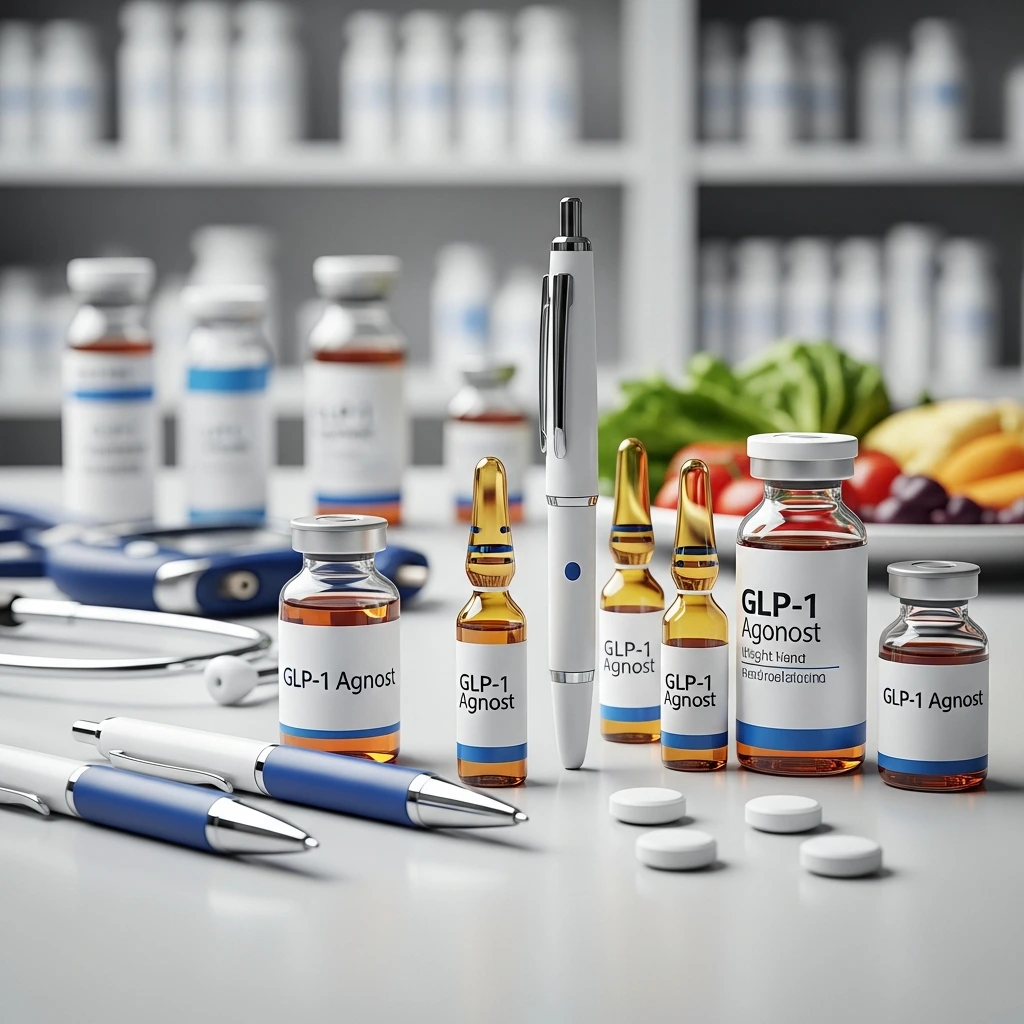
The landscape of available medications has expanded rapidly, giving doctors and patients multiple highly effective options. Navigating this list requires understanding the nuanced differences in dosing, delivery methods, and specific clinical benefits. Below is a breakdown of the most prominent options currently shaping diabetes care in 2026.
| Drug Name | Frequency | Key Clinical Benefit |
| Semaglutide | Weekly / Daily (Oral) | Strongest weight loss and A1C reduction |
| Liraglutide | Daily | Proven, established cardiovascular benefits |
| Dulaglutide | Weekly | Highly convenient, easy-to-use auto-injector |
| Exenatide | Weekly / Twice Daily | Established option with a long safety record |
Semaglutide: This is currently one of the most potent options available in our clinical toolkit. It is available as a once-weekly subcutaneous injection and also as a daily oral tablet. In my practice, semaglutide consistently produces the most dramatic reductions in both HbA1c and total body weight.
Liraglutide: Administered as a once-daily injection, this was one of the first medications in this class to prove significant cardiovascular protection. I often recommend it for patients who prefer a daily routine over a weekly injection and have a high baseline risk of heart disease.
Dulaglutide: This once-weekly injection is highly favored for its incredibly user-friendly device. The needle is completely hidden, and the injection is virtually painless, making it an excellent choice for patients who experience severe needle anxiety. It also carries strong cardiovascular event reduction data.
Exenatide: Available in both a twice-daily formulation and an extended-release once-weekly version. While newer agents often surpass it in sheer weight loss metrics, it remains a reliable, foundational option for many patients needing steady glycemic control.
How Many GLP-1 Agonists Are Available?
There are currently multiple FDA-approved options in this specific drug class, and the category is continuously growing every year. Pharmaceutical research is aggressively expanding this field due to the unprecedented clinical success of incretin-based hormones.
Patients now have choices ranging from twice-daily injections to once-a-week pens, and even advanced oral formulations. This variety allows endocrinologists to tailor the treatment entirely to the patient’s lifestyle, insurance coverage, and personal medical preferences.
Is Ozempic a GLP-1?
Yes, absolutely. Ozempic is simply the brand name for the generic drug semaglutide when it is prescribed specifically for the treatment of type 2 diabetes.
It has become one of the most widely recognized medications globally, but it is important to remember it belongs entirely to the GLP-1 receptor agonist family. The medication inside the Ozempic pen acts by directly mimicking your body’s natural incretin hormones.
Liraglutide as a GLP-1 Agonist
Liraglutide remains a cornerstone therapy in modern endocrinology. Because it requires a daily injection, its action profile closely mimics the natural daily rhythm of hormone release in the human body.
It was a true trailblazer in diabetes care because it was among the very first to demonstrate clear, undeniable cardiovascular benefits in large-scale, peer-reviewed clinical trials. For patients with a history of heart issues, liraglutide offers a profound protective effect alongside robust blood sugar control.
Best GLP-1 for Type 2 Diabetes
When a patient asks me to name the “best” medication, I always explain that the ideal choice is highly subjective. The absolute best option depends entirely on a careful balance of your specific medical goals, your tolerance for gastrointestinal side effects, and your financial or insurance coverage.
If the primary clinical goal is aggressive blood sugar reduction paired with significant weight loss, semaglutide often takes the top spot. Its unmatched potency in slowing gastric emptying and reducing appetite makes it a heavy hitter in this drug class.
However, if a patient has severe dexterity issues or needle phobia, the “best” option might be dulaglutide due to its simple, hidden-needle auto-injector mechanics. Ultimately, the most effective medication is the one the patient can take consistently, safely, and comfortably.
Most Effective GLP-1 for Type 2 Diabetes
When looking purely at the clinical data for sheer efficacy, semaglutide consistently ranks as the most powerful single-agonist option available. In numerous head-to-head clinical trials, it has demonstrated superior reductions in HbA1c compared to older medications in the same class.
However, the medical landscape in 2026 is rapidly evolving. We are now utilizing dual-targeted therapies, such as tirzepatide, which combines GLP-1 action with GIP (glucose-dependent insulinotropic polypeptide) receptor activation.
While technically a “twincretin” rather than a pure GLP-1, tirzepatide currently holds the crown for the most profound blood sugar and weight reductions in clinical practice. For patients struggling with severe, treatment-resistant metabolic syndrome, these newer dual-action agents are highly effective.
Best GLP-1 for Weight Loss
The conversation around weight loss in endocrinology has completely transformed thanks to this medication class. If shedding excess body fat is the primary clinical objective alongside blood sugar control, the weekly injectable semaglutide is the gold standard.
In my clinic, patients utilizing high-dose semaglutide frequently achieve 10% to 15% total body weight loss over a year. The dual-agonist tirzepatide pushes these boundaries even further, with clinical trials showing unprecedented weight reductions approaching 20% in some patients.
It is vital to understand that achieving these results requires consistency. The medication acts as a powerful biological tool, but it must be paired with sustained nutritional changes and increased protein intake to prevent muscle loss during the weight reduction phase.
GLP-1 Agonist Benefits
The clinical advantages of this therapy extend far beyond simple glucose numbers on a lab report.
- Lower A1C: They provide robust, sustained reductions in average blood sugar levels, often bringing patients back into non-diabetic ranges.
- Weight Loss: By delaying gastric emptying and suppressing appetite centers in the brain, they drive profound, long-term fat reduction.
- Reduced Heart Risk: Leading options specifically reduce the risk of major adverse cardiovascular events (MACE), protecting against heart attacks and strokes.
- Low Hypoglycemia Risk: Because they only stimulate insulin when blood sugar is elevated, the risk of dangerous low blood sugar crashes is incredibly rare.
Are GLP-1 Agonists Safe?
Snippet Answer: GLP-1 receptor agonists are generally highly safe and well-tolerated when prescribed appropriately under continuous medical supervision.
Every medication carries some risk, but the safety profile of this drug class is exceptionally strong, backed by over a decade of rigorous cardiovascular outcome trials. The FDA requires extensive long-term monitoring for these drugs, and the data consistently show that the metabolic benefits vastly outweigh the risks for the average patient.
The key to safety is appropriate patient selection and starting at the lowest possible dose. By slowly titrating the medication upward over several months, your body is allowed to acclimate to the hormone levels, minimizing the shock to your gastrointestinal system.
Which GLP-1 Is Safest?
From a purely pharmacological standpoint, all FDA-approved incretin therapies possess a highly similar safety profile. There is no single “safest” drug across the board; rather, safety is determined by how an individual patient tolerates the specific formulation.
For example, a patient might experience severe nausea on a weekly injectable but tolerate a daily, lower-dose option perfectly well. Your doctor will monitor your kidney function and gastrointestinal response during the first few weeks to determine which specific medication interacts safest with your unique biology.
GLP-1 Side Effects

Understanding and managing side effects is the most crucial part of starting this therapy. The vast majority of adverse reactions are entirely gastrointestinal and tend to peak during the first few days after a dose increase.
Common Side Effects:
- Nausea: The most frequently reported issue, usually mild to moderate.
- Vomiting: Can occur if patients overeat while the stomach is emptying slowly.
- Diarrhea or Constipation: Changes in bowel habits are highly common as the digestive tract adjusts.
Rare but Serious Risks:
- Pancreatitis: Inflammation of the pancreas is a rare but documented risk requiring immediate medical attention.
- Gallbladder Issues: Rapid weight loss can occasionally trigger the formation of gallstones.
Can a Type 2 Diabetic Take GLP-1?
Yes, absolutely. In fact, type 2 diabetes is the primary, FDA-approved medical indication for the vast majority of these drugs.
Modern clinical guidelines from the American Diabetes Association (ADA) now strongly recommend them as a first-line or early-stage treatment, often alongside or even ahead of traditional metformin, especially for patients with heart disease or obesity.
GLP-1 for Prediabetes
While these medications are strictly approved for full clinical diabetes or specific obesity classifications, endocrinologists frequently prescribe them off-label for severe prediabetes.
If a patient is on the absolute verge of developing full diabetes and is struggling with severe insulin resistance, intervening early with an incretin hormone can successfully halt the progression of the disease. It provides a powerful metabolic reset, allowing the pancreas to rest and recover.
What Is the New Diabetes Drug in 2026?
The pharmaceutical landscape in 2026 is dominated by the rise of newer incretin-based therapies that go beyond a single hormone. We are now utilizing dual agonists and even exploring triple-hormone receptor agonists in late-stage clinical trials.
These next-generation medications combine GLP-1 with GIP and sometimes Glucagon receptors. This multi-hormonal approach creates a synergistic effect, offering exponentially greater weight loss and tighter glycemic control than the older, single-target medications of the past decade.
What Do Japanese Patients Take for Diabetes?
Diabetes management in Japan offers a fascinating contrast to Western medicine. While Japanese physicians absolutely prescribe GLP-1 agonists, they often utilize much lower doses.
This is largely because the average Body Mass Index (BMI) of a type 2 diabetic patient in Japan is significantly lower than in the United States. Furthermore, a different class of medications called DPP-4 inhibitors (which subtly enhance the body’s natural GLP-1) remains historically very popular and effective within the Japanese healthcare system.
GLP-1 Drugs for Weight Loss vs Diabetes
One of the most common sources of confusion for my patients is the difference between the diabetes and weight loss versions of these drugs.
The active pharmaceutical ingredient is often exactly the same. For example, semaglutide is branded as Ozempic for diabetes and Wegovy for weight loss.
The primary difference lies in the FDA-approved dosing schedules, the maximum allowable dose, and how insurance companies process the prescriptions. Both uses require strict medical supervision.
Who Should NOT Use GLP-1 Agonists
While highly effective, these medications are strictly contraindicated for specific patient populations.
Anyone with a personal or family history of Medullary Thyroid Carcinoma (MTC) or Multiple Endocrine Neoplasia syndrome type 2 (MEN 2) must completely avoid this entire drug class.
Additionally, patients with a history of severe pancreatitis or advanced gastroparesis (paralysis of the stomach) should not use these drugs, as they can severely exacerbate these conditions.
Frequently Asked Questions
Which GLP-1 is most effective for weight loss?
In my clinical experience, semaglutide (the active ingredient in Ozempic and Wegovy) remains a top-tier choice for weight reduction. However, newer dual-agonist therapies like tirzepatide often show even more profound weight loss results.
The “best” choice usually comes down to how your specific metabolism responds to the hormone during the first three months of treatment.
How can I manage the initial nausea from GLP-1 medications?
Nausea is the most common hurdle my patients face, but it is usually manageable with a slow titration schedule. I often recommend eating smaller, more frequent meals and avoiding heavy, high-fat foods that sit in the stomach longer.
Staying well-hydrated and focusing on lean proteins can also significantly reduce gastrointestinal discomfort during the adjustment period.
What is the difference between Ozempic and Wegovy?
While both medications contain semaglutide, they are marketed for different primary medical goals. Ozempic is FDA-approved specifically for the management of type 2 diabetes and cardiovascular risk reduction. Wegovy is approved for chronic weight management and typically involves a higher maximum maintenance dose to optimize fat loss.
Are there any long-term risks associated with GLP-1 therapy?
These medications have been studied for over 15 years and have a very robust long-term safety profile. While rare risks like pancreatitis or gallbladder issues exist, they are infrequent when patients are monitored closely. We strictly avoid these drugs in patients with a personal or family history of medullary thyroid cancer due to specific clinical precautions.
How long does it take to see results on a GLP-1 agonist?
Most patients notice a decrease in appetite and an improvement in fasting blood sugar levels within the first week of starting the lowest dose. However, the most significant changes in HbA1c and body composition typically occur after three to six months. This timeframe allows us to gradually increase the dose to a level that is both effective and comfortable for your system.
Conclusion: Reclaiming Your Metabolic Future
In my two decades of clinical practice, I have seen many medical breakthroughs, but the shift toward incretin-based therapies is arguably the most significant for metabolic health. For patients like John, whom I mentioned earlier, the transition to glp 1 agonists for type 2 diabetes was the key that finally unlocked a healthier future.
It wasn’t just about a lower number on a lab report; it was about the renewed energy and confidence that came from having his metabolism work with him instead of against him.
We are no longer in an era where we simply react to high blood sugar. In 2026, we have the tools to be proactive, addressing weight, cardiovascular risk, and glucose control through a single, sophisticated pathway.
These medications represent a partnership between advanced science and your body’s natural biology, offering a more intuitive way to manage a complex chronic condition.
However, it is important to remember that these drugs are most effective when they are part of a comprehensive lifestyle strategy. No pill or injection replaces the fundamental benefits of a nutrient-dense diet and consistent movement.
Instead, they act as a powerful metabolic foundation, making those healthy choices more sustainable and effective in the long run.
If you are struggling to reach your goals with traditional therapies, I encourage you to have an open, honest conversation with your healthcare provider. Whether you are focused on heart protection, weight loss, or simply stabilizing your daily energy, there is likely a GLP-1 therapy that aligns with your specific clinical needs.
Your metabolic health is the engine of your life—it is worth protecting with the best tools modern medicine has to offer.
Authoritative References (Evidence-Based)
- American Diabetes Association (ADA) – Pharmacologic Approaches to Glycemic Treatment (2026 Standards of Care)
- FDA Postmarket Drug Safety Information for Patients and Providers
- National Institute of Diabetes and Digestive and Kidney Diseases (NIDDK) – Insulin, Medicines, & Other Diabetes Treatments
- World Health Organization (WHO) – Management of Diabetes
SEO Title: GLP-1 Agonists for Type 2 Diabetes: Benefits, Safety & Best Options (2026)
Meta Description: Explore glp 1 agonists for type 2 diabetes in our 2026 medical guide. Learn about benefits, safety, and weight loss. Start your journey today!