
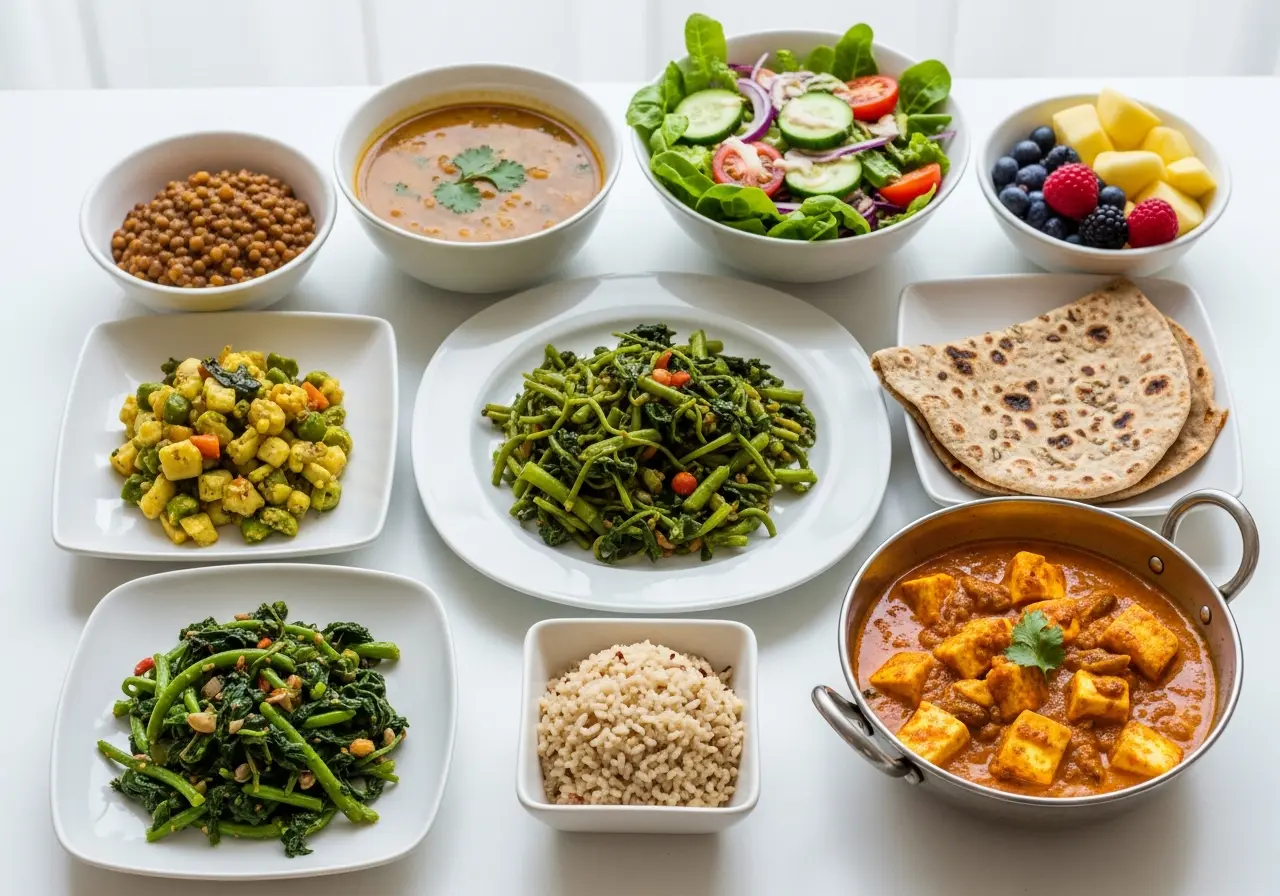
A gestational diabetes diagnosis can feel overwhelming, especially when you’re suddenly required to monitor blood sugar closely during pregnancy. Many expecting mothers begin searching for a 7-day meal plan for gestational diabetes to understand what’s safe to eat and how to balance their meals. Questions like “What should I add to my plate?” and “What should I eat if I have gestational diabetes?” are incredibly common.
Having a structured plan removes the guesswork and replaces uncertainty with clear, practical steps. A well-designed approach focuses on balanced carbohydrates, adequate protein, and consistent meal timing to help keep glucose levels stable. This guide outlines simple, doctor-aligned meal ideas that support both maternal health and baby development.
In clinical practice, many first-time mothers worry that eating carbohydrates could harm their baby. In reality, a proper gestational diabetes diet is not about restriction or starvation. It’s about smart food combinations, portion control, and understanding how your body processes nutrients during pregnancy.
Quick Answer: The 7-Day Strategy
It is a highly structured, week-long diet plan specifically designed to control blood sugar, support optimal fetal development, and maintain stable maternal glucose levels. A successful plan strictly includes:
- Balanced ratios of complex carbohydrates, lean proteins, and high dietary fiber.
- Small, frequent meals spaced evenly to prevent sudden spikes and crashes.
- Careful portion control aligned with modern obstetric endocrinology guidelines.
Understanding Gestational Diabetes
Gestational diabetes mellitus (GDM) is a form of elevated blood sugar that develops exclusively during pregnancy. Around the 24th week, your placenta begins producing large amounts of hormones necessary for the baby’s growth.
Unfortunately, these hormones also actively block your body’s natural insulin from functioning correctly.
When your body cannot produce enough extra insulin to overcome this heavy placental resistance, glucose builds up in your bloodstream. This is why following a precise gestational diabetes food list is the first line of defense. Managing this condition primarily relies on dietary intervention rather than immediate medication.
A well-crafted diet minimizes the burden on your pancreas. By eating foods that digest slowly, you allow your natural insulin enough time to process the sugars safely. This protects your baby from excess glucose and reduces the risk of pregnancy complications.
Core Diet Principles for Blood Sugar Control
To effectively manage your glucose, you must understand the underlying principles of a diabetic pregnancy diet. The foundational rule is simple: never eat a carbohydrate by itself. You must always pair it with a strong source of protein or healthy fat to drastically slow down digestion and absorption.
So, what should I eat if I have gestational diabetes? You need to focus heavily on low-glycemic-index (GI) foods. These include high-fiber vegetables, whole intact grains, and lean proteins like poultry, fish, and legumes.
Healthy fats, such as avocados, olive oil, and almonds, are also crucial for keeping you full and stabilizing your sugar.
Conversely, you must know what to avoid when gestational diabetes is present. You need to entirely eliminate refined sugars, heavily processed carbohydrates, and sugary beverages. White bread, standard pasta, sweet pastries, and fruit juices will cause rapid, dangerous blood sugar spikes that your insulin simply cannot handle.
Fruits to Limit
Patients frequently ask, “What 7 fruits should diabetics avoid?” While no fruit is universally “banned,” you should strictly limit highly concentrated or tropical fruits that trigger rapid glucose spikes. You should generally avoid:
- Watermelon (very high glycemic index)
- Overripe bananas (starches have converted to heavy sugar)
- Canned peaches in heavy syrup
- Dates
- Raisins
- Sweetened dried cranberries
- Pineapple
Gestational Diabetes Food List
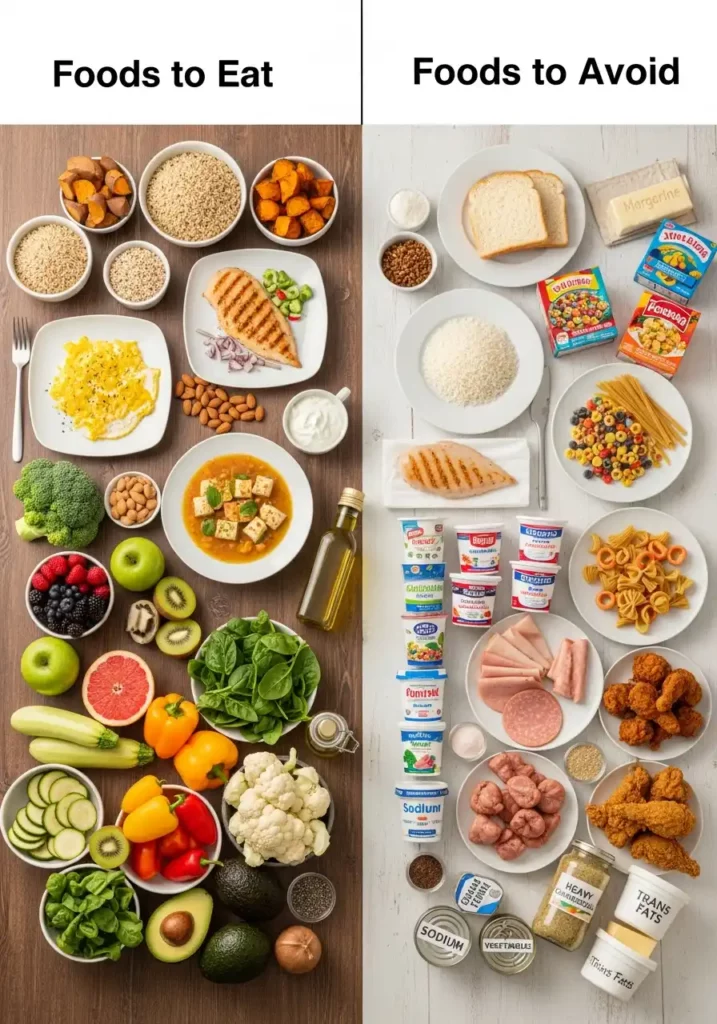
Having a clear diabetic food list for pregnant people makes grocery shopping significantly easier. Stick to this basic framework to build your meals.
| Food Category | Foods to Eat (Safe & Recommended) | Foods to Avoid (Spike Triggers) |
| Carbohydrates | Brown rice, quinoa, steel-cut oats, sweet potatoes | White bread, white rice, sugary cereals, and regular pasta |
| Proteins | Eggs, chicken breast, tofu, lentils, Greek yogurt | Processed deli meats, sweetened yogurts, and deep-fried meats |
| Fruits | Berries, green apples, grapefruit, kiwi | Mangoes, grapes, dried fruits, fruit juices |
| Vegetables | Broccoli, spinach, zucchini, bell peppers, cauliflower | Canned veggies with added sodium/sugar |
| Healthy Fats | Almonds, walnuts, avocado, olive oil, chia seeds | Trans fats, margarine, heavy commercial dressings |
The Complete 7-Day Meal Plan
This core section outlines a balanced, comprehensive week of eating. Remember to measure your portions and test your blood sugar exactly as directed by your healthcare provider.
Day One Meal Plan
Your day 1 gestational diabetes meal plan sets the tone for the week. Focus on establishing a rhythm of eating every 2.5 to 3 hours.
- Breakfast: 1/2 cup of plain steel-cut oats topped with 1 tablespoon of walnuts and a dash of cinnamon. Pair with one hard-boiled egg for protein.
- Mid-Morning Snack: 1 small green apple with 2 tablespoons of natural, unsweetened almond butter.
- Lunch: Grilled chicken salad on a large bed of mixed greens, cucumber, and tomatoes. Use 1 tablespoon of olive oil and vinegar dressing. Add 1/2 cup of chickpeas for complex carbs.
- Evening Snack: 1/2 cup of plain, unsweetened Greek yogurt with a small handful of blueberries.
- Dinner: 4 ounces of baked salmon, 1/2 cup of cooked brown rice, and a generous side of steamed broccoli.
Day Two Meal Plan
- Breakfast: Two scrambled eggs cooked in a tiny bit of butter, served with one slice of whole-grain sprouted bread and half a sliced avocado.
- Mid-Morning Snack: A small handful of unsalted mixed nuts (almonds and walnuts) and a string cheese stick.
- Lunch: Whole-wheat wrap filled with 3 ounces of sliced turkey breast, spinach, and a slice of Swiss cheese.
- Evening Snack: 1/2 cup of cottage cheese with a sprinkle of chia seeds.
- Dinner: 4 ounces of grilled lean steak, 1/2 cup of roasted sweet potatoes, and a side of sautéed zucchini.
Day Three Meal Plan
- Breakfast: 3/4 cup of high-protein plain Greek yogurt mixed with 1 tablespoon of flaxseeds and 1/4 cup of raspberries.
- Mid-Morning Snack: One hard-boiled egg and a few whole-grain crackers.
- Lunch: A hearty bowl of lentil soup (approx. 1 cup) paired with a side salad topped with grilled chicken strips.
- Evening Snack: Celery sticks dipped in 2 tablespoons of natural peanut butter.
- Dinner: Baked cod (4 oz) with a side of quinoa (1/2 cup) and roasted asparagus drizzled with olive oil.
Day Four Meal Plan
- Breakfast: A protein smoothie made with unsweetened almond milk, a scoop of unsweetened whey protein, a handful of spinach, and 1/4 cup of frozen berries.
- Mid-Morning Snack: 1 small pear paired with a small portion of cheddar cheese.
- Lunch: A large mixed salad topped with a scoop of tuna salad (mixed with plain Greek yogurt instead of heavy mayo) and a few cherry tomatoes.
- Evening Snack: 1/4 cup of dry-roasted edamame.
- Dinner: Ground turkey meatballs (no breadcrumbs) served over zucchini noodles (zoodles) with a low-sugar tomato marinara sauce.
Day Five Meal Plan
- Breakfast: One slice of whole-grain toast topped with mashed avocado and two poached eggs.
- Mid-Morning Snack: 1/2 cup of plain yogurt with a sprinkle of pumpkin seeds.
- Lunch: Leftover turkey meatballs from dinner, paired with a small side of quinoa (1/2 cup).
- Evening Snack: A handful of raw almonds and a few slices of cucumber.
- Dinner: Chicken stir-fry made with bell peppers, broccoli, and snap peas, cooked in sesame oil and served with 1/2 cup of brown rice.
Day Six Meal Plan
- Breakfast: A two-egg omelet filled with spinach, mushrooms, and a sprinkle of feta cheese.
- Mid-Morning Snack: 1/2 cup of cottage cheese.
- Lunch: A grilled chicken breast served alongside a large portion of roasted cauliflower and Brussels sprouts.
- Evening Snack: 1 small green apple with a handful of walnuts.
- Dinner: Baked tilapia (4 oz) with a side of wild rice (1/2 cup) and steamed green beans.
Day Seven Meal Plan
- Breakfast: 1/2 cup of plain oatmeal topped with chia seeds and a side of two turkey sausage links.
- Mid-Morning Snack: A string cheese stick and a few cherry tomatoes.
- Lunch: A large spinach salad topped with hard-boiled eggs, sliced almonds, and a light vinaigrette.
- Evening Snack: Celery sticks with almond butter.
- Dinner: A comforting bowl of beef and vegetable stew (ensure potatoes are limited and lean cuts of beef are used).
Indian Meal Plan Variation
In my clinical practice, I frequently work with South Asian mothers who worry that a traditional diet will cause dangerous glucose spikes. Adapting a 7-day meal plan for gestational diabetes, Indian style, does not mean abandoning your cultural foods. It simply requires smart ingredient substitutions and strict portion control.
Instead of standard white wheat roti, you can switch to multigrain flours or flours made from chickpeas (besan) and pearl millet (bajra). A typical safe lunch would be one small multigrain roti paired with a large bowl of dal (lentils) and a generous portion of green sabzi (vegetables).
If you prefer rice, always choose brown rice and serve it with a protein-heavy fish curry or chicken tikka to slow down carbohydrate digestion.
A 7-day meal plan for gestational diabetes, South Indian style, requires a bit more modification, as traditional breakfasts are heavily rice-based. You can still enjoy your favorites by making strategic swaps. For instance, replace standard white rice idlis with oat idlis or ragi (finger millet) idlis.
If you crave dosa, opt for a multigrain or moong dal (pesara) dosa rather than the traditional fermented rice batter. You can still enjoy coconut chutney, but keep the portion limited, as coconut is high in calories and saturated fats.
Always pair these meals with a hearty, vegetable-packed sambar to increase your fiber intake and keep your blood sugar incredibly stable.
Vegetarian Meal Plan Version
A 7-day meal plan for gestational diabetes, a vegetarian approach, is highly effective, provided you pay close attention to your protein-to-carbohydrate ratios.
Plant-based proteins often contain carbohydrates, so you must factor both into your daily macro counts. I always remind my vegetarian patients to lean heavily on high-quality dairy and soy products.
Excellent vegetarian protein sources include paneer (cottage cheese), which is extremely low in carbs and high in satisfying fats. Tofu, tempeh, and edamame are also outstanding additions to stir-fries or salads. When eating lentils or chickpeas, remember that they serve as both your protein and your carbohydrate for that meal.
If you are eating a bowl of chickpea curry (chana masala), you should skip the rice or bread entirely and serve it over a bed of cauliflower rice or alongside a large green salad. This ensures you get the necessary protein and fiber without overloading your system with excessive starch.
Simple Meal Plan Version
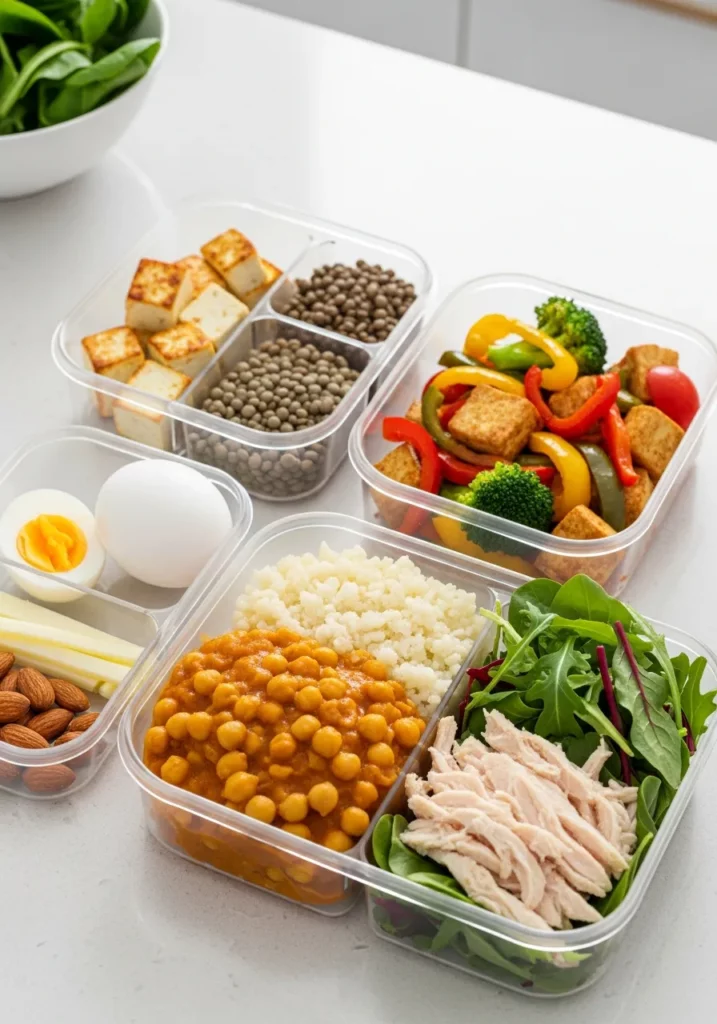
For expectant mothers managing busy careers or chasing toddlers, cooking elaborate diabetic pregnancy recipes is not always realistic. A simple gestational diabetes meal plan focuses on quick assembly and minimal cooking times without compromising your health.
Focus on “throw-together” meals that require fewer than five ingredients. A perfect example is purchasing a pre-cooked rotisserie chicken, shredding the breast meat, and mixing it with a pre-washed bag of salad greens and olive oil. Hard-boiled eggs, string cheese, and raw almonds are excellent, zero-prep snacks to keep in your purse.
Another incredibly simple option is utilizing a slow cooker. You can toss a lean beef roast, carrots, and celery into a pot in the morning and have a highly nutritious, low-glycemic dinner waiting for you at night. The goal is consistency and blood sugar control, not culinary perfection.
Meal Timing Strategy
Proper timing is just as critical as the food itself. A common question I hear is what to eat first thing in the morning with gestational diabetes. Morning is often the most difficult time to control blood sugar because of the “dawn phenomenon,” where pregnancy hormones cause a natural glucose surge before you even wake up.
To combat this, your breakfast must be heavily skewed toward protein and healthy fats, with very minimal carbohydrates. Two scrambled eggs cooked in butter with a single slice of sprouted-grain toast is the clinical gold standard. Avoid milk and fruit entirely first thing in the morning, as they hit the bloodstream too quickly.
Conversely, what to eat at night for gestational diabetes? Your evening snack should be a light, protein-dense option to keep your fasting blood sugar stable overnight. A small piece of cheese, a handful of walnuts, or half a cup of plain Greek yogurt will prevent your liver from dumping excess sugar into your blood while you sleep.
Healthy Snack Options for Glucose Control
Snacking is mandatory on this diet. Expectant mothers often ask, “What are good snacks?” Good snacks provide sustained energy without triggering an insulin response.
Nuts are your best friend during this time. Almonds, walnuts, and macadamia nuts are packed with healthy fats that keep you full. Hard-boiled eggs are portable protein powerhouses. You can also rely heavily on plain, full-fat yogurt, string cheese, and celery sticks heavily coated in natural peanut butter.
Practical Diet Rules and Lifestyle
Patients frequently ask me, “What is the 10 10 10 rule for diabetes?” While variations exist, in the context of gestational diabetes, it is a practical method to remember your macro distribution and daily habits.
It often translates to ensuring balanced carb distribution across meals, adding 10 minutes of walking after eating, and taking 10 minutes for mindful stress reduction.
Beyond diet, your daily lifestyle choices directly impact your insulin sensitivity. I strongly advise all my pregnant patients to engage in a 10 to 15-minute brisk walk immediately after their heaviest meals. Walking forces your muscles to absorb circulating glucose for energy, completely bypassing the need for insulin.
Furthermore, proper hydration is an unsung hero of blood sugar control and pregnancy management. Drinking plenty of water helps dilute the concentration of glucose in your bloodstream and flushes excess sugar out through your urine. Aim for at least 8 to 10 large glasses of water a day.
Can You Have a Healthy Baby?
A diagnosis often triggers severe anxiety about fetal health. Mothers sit in my office with tears in their eyes, asking, “Can I have a healthy baby if I have gestational diabetes?” As a medical professional, I can definitely assure you that the answer is yes.
When you proactively manage your diet, monitor your blood sugar, and stay in close contact with your healthcare provider, your chances of delivering a perfectly healthy baby are incredibly high.
The complications associated with this condition—such as high birth weight or neonatal hypoglycemia—almost entirely stem from uncontrolled, ignored blood sugar levels.
Weekly Meal Prep Strategy
Trying to figure out healthy pregnancy meals three times a day while exhausted is a recipe for frustration. To succeed, you must embrace a meal-prep for gestational diabetes strategy. Dedicate two hours on a Sunday afternoon to batch-cooking your staples for the week.
Cook a large batch of quinoa or brown rice, roast a massive tray of mixed vegetables, and grill several chicken breasts. Store these in clear, glass portion-control containers in your refrigerator. When lunchtime arrives, you simply mix and match a carb, a protein, and a vegetable, heat it up, and eat a perfectly balanced meal in minutes.
Advanced Tracking and Tools
To truly master your blood sugar, you should consider using a gestational diabetes meal plan app. Modern tracking tools allow you to log your daily food intake alongside your exact blood sugar readings.
As a physician, I love it when patients bring this logged data to their appointments. The benefits of logging meals are immense; it allows us to identify hidden trigger foods and make precise, highly personalized adjustments to our diet.
Seeing the direct correlation between what you eat and your blood sugar reading empowers you to make smarter choices.
Frequently Asked Questions
What is a good dinner for gestational diabetes?
A perfect dinner consists of 50% non-starchy vegetables (like broccoli or spinach), 25% lean protein (like baked salmon, chicken, or tofu), and exactly 25% complex carbohydrates (like a small sweet potato or brown rice). This ratio ensures you feel full while keeping your overnight glucose perfectly stable.
Can I follow a meal plan if I have gestational diabetes?
Yes, strictly following a structured meal plan is actually the preferred medical treatment for this condition. A precise plan removes the daily guesswork, prevents accidental carbohydrate overloading, and dramatically improves your overall glycemic control throughout the third trimester.
What is the hardest week of gestational diabetes?
Clinically, the hardest period is usually between weeks 32 and 36 of your pregnancy. During this window, your placenta reaches its maximum size and produces peak levels of insulin-blocking hormones, making your blood sugar the most difficult to control, even with a strict diet.
Is A1C higher in pregnancy?
Actually, A1C levels are naturally slightly lower during a normal, healthy pregnancy due to the increased turnover rate of red blood cells. Because of this physiological change, standard A1C tests are less reliable for managing gestational diabetes, which is why daily finger-prick testing is mandatory.
Conclusion
Managing gestational diabetes is undoubtedly challenging, but it is a highly controllable condition. The most important takeaway from this guide is that your daily diet is your absolute most powerful tool. The foods you choose to put on your plate directly influence your health and the health of your baby.
Do not aim for absolute perfection; aim for daily consistency. If you have a single high blood sugar reading, do not panic. Simply analyze what you ate, adjust your carbohydrates for the next meal, and take a short walk. You have the knowledge and the power to navigate this successfully.
Take Action Today: Start by downloading a free printable meal plan template to map out your week. Commit to tracking your blood sugar diligently, and always consult your primary healthcare provider or registered dietitian before making drastic changes to your pregnancy diet.
Medical References:
- American Diabetes Association (ADA) – Diabetes Care Journal
- The American College of Obstetricians and Gynecologists (ACOG) – Gestational Diabetes Guidelines
- National Institute of Diabetes and Digestive and Kidney Diseases (NIDDK) – Managing Gestational Diabetes
- Centers for Disease Control and Prevention (CDC) – Gestational Diabetes Portal
- Mayo Clinic – Gestational Diabetes Diagnosis & Treatment