
Diabetes Medications (2026): Complete List, Types, Side Effects & Best Options
Navigating a diabetes diagnosis can feel overwhelming, especially when faced with a complex array of treatment options. Understanding your diabetes medications is the most critical step in taking control of your metabolic health and preventing long-term complications. Managing blood sugar levels requires precision, consistency, and the right medical tools. Today, diabetes medications encompass a massive…

Reviewed by
David T. Broome, MD, MS
Written by
Quick Overview
Navigating a diabetes diagnosis can feel overwhelming, especially when faced with a complex array of treatment options. Understanding your diabetes medications is the most critical step in taking control of your metabolic health and preventing long-term complications.
Managing blood sugar levels requires precision, consistency, and the right medical tools. Today, diabetes medications encompass a massive landscape of innovative therapies. From traditional daily pills to revolutionary once-weekly injectables, science has provided more ways to achieve metabolic stability than ever before.
This comprehensive 2026 guide will break down exactly what medications for diabetes are available today. You will learn about oral pills, advanced injectables, insulin therapies, their costs, and their potential side effects, empowering you to have informed conversations with your healthcare provider.
What Are Diabetes Medications?
Diabetes medications serve as pharmaceutical tools that help your body regulate glucose (sugar) in your bloodstream. When your pancreas does not produce enough insulin, or your cells resist it, these drugs step in to restore balance.
If you wonder which medications treat diabetes, they typically fall into two distinct categories: insulin therapies and non-insulin therapies. Insulin acts as a direct hormone replacement, while non-insulin drugs change how your body processes sugar, digests food, or uses existing insulin.
Understanding the available diabetes medications is essential because no two patients are exactly alike. Dr. Aris Thomas, a leading board-certified endocrinologist, emphasizes that modern diabetes care is highly individualized.
Types of Diabetes Medications
To understand the types of diabetes medications, categorize them by their entry methods and biological functions. The pharmaceutical landscape is vast, but healthcare providers divide the primary treatments into four main pillars.
Oral Diabetes Medications
Oral diabetes medications consist of daily pills that serve as the first line of defense for individuals newly diagnosed with type 2 diabetes. Patients favor these medications for their convenience, low cost, and ease of use.
These medications operate through various mechanisms, such as preventing the liver from releasing stored sugar or stimulating the pancreas to produce more insulin. When reviewing a list of diabetes medications, you will often encounter classes like biguanides, sulfonylureas, DPP-4 inhibitors, and SGLT2 inhibitors.
Biguanides, such as metformin, represent the global standard for initial treatment. SGLT2 inhibitors, a newer class of diabetes medications, compel the kidneys to excrete excess sugar directly into urine, providing significant benefits for cardiovascular and kidney health.
Injectable Diabetes Medications
When oral pills are no longer sufficient to control A1C, doctors frequently transition patients to injectable diabetes medications. These are not insulin; rather, they are powerful synthetic hormones that drastically alter metabolic function.
Understanding how injectable diabetes medications work involves looking at the gut. Medications like GLP-1 receptor agonists mimic natural digestive hormones. They slow down stomach emptying, send fullness signals to the brain, and prompt the pancreas to release insulin only when sugar levels are actively rising.
This class of medication has revolutionized endocrinology. Because they suppress appetite and slow digestion, these injectables frequently result in massive, life-changing weight loss alongside tight blood sugar control.
Insulin Therapy
For individuals with type 1 diabetes, the pancreas produces zero insulin. Therefore, type 1 diabetes medications exclusively revolve around lifelong synthetic insulin replacement.
Many patients with advanced type 2 diabetes will eventually need insulin if their pancreas becomes completely exhausted. When you ask what medications are used for type 1 diabetes, the answer always includes basal (long-acting) and bolus (rapid-acting) insulin delivered via injection or a wearable pump.
Combination Therapies
Because diabetes is a progressive disease, a single drug often loses its effectiveness over time. Combination therapies involve blending multiple types of diabetes medications to target the disease from different biological angles simultaneously.
For example, a doctor might prescribe an oral pill to stop the liver from producing sugar, while adding an injectable to help the pancreas secrete more insulin. When exploring what medications are used for type 2 diabetes, combination protocols are now the medical standard for optimal control.
Complete List of Diabetes Medications
To help you understand your prescriptions, here is a categorized list of diabetes medications showcasing the most common classes and their generic or brand names.
| Medication Category | Common Examples (Brand & Generic) | Primary Function |
| Biguanides | Metformin (Glucophage) | Decreases liver glucose production |
| GLP-1 Agonists | Ozempic, Trulicity, Victoza | Stimulates insulin, slows digestion |
| Dual Agonists (GLP-1/GIP) | Mounjaro (Tirzepatide) | Targets multiple gut hormones |
| SGLT2 Inhibitors | Jardiance, Farxiga, Invokana | Flushes sugar through urine |
| DPP-4 Inhibitors | Januvia, Tradjenta | Prolongs natural insulin action |
| Sulfonylureas | Glipizide, Glimepiride | Forces the pancreas to release insulin |
| Thiazolidinediones | Pioglitazone (Actos) | Increases cellular insulin sensitivity |
| Insulin | Lantus, Humalog, Novolog | Direct hormone replacement |
This complete list of diabetes medications represents the core toolkit endocrinologists use. Always consult your specific list of medicines for diabetes with your pharmacist to ensure no dangerous drug interactions exist.
What Are the Top 10 Diabetes Medications?
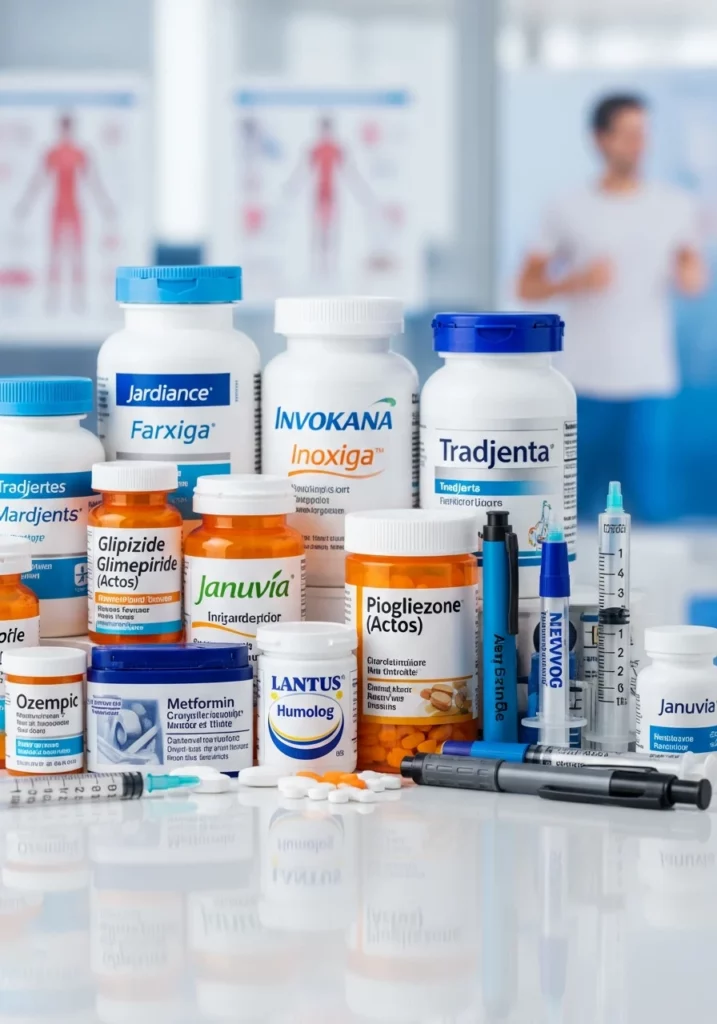
With dozens of options on the market, patients frequently ask the following: What are the top 10 diabetes medications prescribed today? While “best” is subjective and depends entirely on your specific health profile, the highest-rated diabetes medications in 2026 include:
- Metformin: The undisputed king of first-line defense; highly effective, incredibly cheap, and well-tolerated.
- Ozempic (Semaglutide): A weekly injectable famous for lowering A1C and inducing significant weight loss.
- Mounjaro (Tirzepatide): The newest dual-agonist injectable showing unprecedented results in blood sugar control.
- Jardiance (Empagliflozin): A daily pill that actively protects the heart and kidneys while lowering glucose.
- Lantus (Insulin Glargine): The global standard for long-acting, background basal insulin.
- Januvia (Sitagliptin): A gentle daily pill with a very low risk of causing severe low blood sugar.
- Rybelsus (Semaglutide): The only GLP-1 medication available as an oral daily pill instead of an injection.
- Farxiga (Dapagliflozin): Another powerful SGLT2 inhibitor that flushes sugar out through the urinary tract.
- Glipizide: An older, highly affordable pill that rapidly forces the pancreas to pump out insulin.
- Humalog (Insulin Lispro): A rapid-acting insulin essential for covering heavy carbohydrate meals.
Finding the best medicine for diabetes means finding the drug that perfectly balances efficacy with your lifestyle and budget.
Type 2 Diabetes Medications List
Type 2 diabetes involves insulin resistance, which prevents your body from using the insulin it produces effectively. As a result, the type 2 diabetes medications list emphasizes enhancing the body’s sensitivity to this hormone.
The foundational type 2 diabetes medication protocol almost always begins with metformin. If lifestyle changes and metformin fail to lower the A1C below 7%, specialists will move down the type 2 diabetes medications list to more advanced options.
Currently, the most highly recommended new type 2 diabetes medications are SGLT2 inhibitors (if the patient has a history of heart disease) or GLP-1 injectables (if the patient struggles with severe obesity).
Type 1 Diabetes Medications
For patients with an autoimmune diagnosis, the medical protocol is entirely different from that of type 2. Because the immune system has permanently destroyed the insulin-producing beta cells, type 1 diabetes medications strictly revolve around synthetic insulin.
Without this mandatory hormone replacement, the body will rapidly enter a fatal state of diabetic ketoacidosis (DKA). Therefore, when patients ask what medications are used for type 1 diabetes, the primary answer is always a highly customized regimen of basal (background) and bolus (mealtime) insulin injections.
However, adjunct therapies are occasionally utilized. Some endocrinologists prescribe pramlintide (Symlin), an injectable hormone that slows digestion, or “off-label” GLP-1s to help reduce massive post-meal blood sugar spikes alongside standard insulin therapy.
Prediabetes Medications
Catching insulin resistance early provides a golden opportunity to reverse the metabolic damage before it becomes permanent. While lifestyle intervention is the absolute best defense, prediabetes medications are increasingly prescribed for high-risk individuals.
If your A1C is hovering between 5.7% and 6.4%, and lifestyle changes have stalled, a doctor may prescribe a low dose of Metformin. This acts as a metabolic shield, reducing liver glucose production and potentially delaying the onset of full-blown type 2 diabetes by years.
Diabetes Medications That Cause Weight Loss
One of the most profound shifts in modern endocrinology is the intersection of blood sugar control and obesity management. Historically, insulin and older pills caused frustrating weight gain, but today’s most popular drugs do the exact opposite.
When patients inquire about diabetes medications for weight loss, the conversation immediately turns to GLP-1 and dual-agonist injectables. These drugs slow gastric emptying, making you feel incredibly full after eating small portions, while simultaneously silencing “food noise” in the brain.
If you want to know which diabetes medications cause weight loss most effectively, Mounjaro (tirzepatide) currently leads the data, followed closely by Ozempic (semaglutide). Furthermore, Wegovy (a higher dose of semaglutide) is FDA-approved specifically for chronic weight management in patients with metabolic syndrome.
New Diabetes Medications (2025–2026 Updates)
The pharmaceutical pipeline is producing breakthrough therapies at an astonishing rate. If you are tracking new diabetes medications, the focus has shifted entirely away from traditional insulin-boosting pills toward advanced incretin therapies.
The most exciting new diabetes medications 2025 and 2026 have to offer include oral GLP-1 pills that do not require daily or weekly injections. Companies are perfecting the absorption rates of these pills to match the efficacy of their injectable counterparts.
Additionally, “triple-G” agonists are currently in late-stage clinical trials. These highly anticipated new type 2 diabetes medications target three separate gut hormones (GLP-1, GIP, and Glucagon) to drive weight loss results that rival bariatric surgery.
How Diabetes Medications Work
To successfully manage your condition, you must understand the underlying biological mechanics of your prescription. Every drug targets a specific metabolic failure point.
Oral Medication Mechanisms
If you are wondering how oral diabetes medications work, it depends heavily on the pill class. Metformin works primarily in the liver, shutting off the body’s internal glucose faucet. SGLT2 inhibitors act on the kidneys, opening a cellular “trap door” that dumps excess blood sugar safely into your urine.
Injectable Medication Mechanisms
Understanding how injectable diabetes medications work requires looking at the gut-brain connection. These synthetic hormones mimic the body’s natural digestive signals. They force the pancreas to release precise amounts of insulin only when sugar is present, drastically lowering the risk of accidental hypoglycemia.
Side Effects of Diabetes Medications

No medication is completely without risk. As an endocrinologist, I strictly monitor my patients during the first 90 days of any new prescription to mitigate adverse reactions.
Common Adverse Reactions
The most widely reported side effects of diabetes medications are gastrointestinal. Metformin frequently causes temporary stomach upset or diarrhea, while GLP-1 injectables are notorious for causing nausea during the initial dosage escalation. Hypoglycemia (dangerously low blood sugar) is a primary risk, specifically when using insulin or sulfonylureas.
Serious Health Risks
While rare, serious complications require immediate medical intervention. SGLT2 inhibitors carry a slight risk of genital yeast infections and dehydration. Certain GLP-1 medications carry black-box warnings regarding a rare risk of thyroid C-cell tumors and severe, acute pancreatitis.
What Are the Safest Diabetes Medications?
Safety is always the primary concern when starting a lifelong treatment plan. When patients ask me what the safest diabetes medications are, I point directly to decades of clinical data.
Metformin has safely served patients globally for over 60 years and is widely recognized as the safest diabetic medicine for long-term use. It does not cause low blood sugar, does not lead to weight gain, and actually offers slight cardiovascular protective benefits.
Additionally, healthcare providers consider SGLT2 inhibitors and modern GLP-1s exceptionally safe for the heart and kidneys. They frequently prescribe these medications specifically to reduce the risk of cardiovascular death in high-risk diabetic patients.
Cost & Insurance Coverage
The financial burden of metabolic disease can be staggering. The overall cost of diabetes medications varies wildly depending on your required therapy and health insurance formulary.
Older, generic oral pills like metformin or glipizide cost mere pennies a day and are universally accessible. However, modern, brand-name weekly injectables can easily exceed $1,000 per month without comprehensive insurance coverage.
Older patients frequently ask what diabetes medications are covered by Medicare. Medicare Part D covers nearly all generic oral pills and standard insulins. However, Medicare currently has strict limitations regarding covering modern GLP-1 drugs if they are prescribed strictly for weight loss rather than documented type 2 diabetes.
Most Common Medications for Diabetes
When looking at pharmacy data across the globe, a few specific prescriptions dominate the metabolic landscape.
The undisputed most common diabetes medications are Metformin and standard basal insulin (like Lantus). These two therapies form the backbone of global diabetic management due to their proven efficacy and low generic pricing.
However, if you ask what the most common medications for diabetes are among newly diagnosed patients in 2026, SGLT2 inhibitors (like Jardiance) and GLP-1 injectables (like Ozempic) are rapidly catching up due to their heart-protective and weight-loss benefits.
FAQs
Which is the best medicine for diabetes?
There is no single “best” drug, as treatment is highly individualized. However, clinical guidelines universally recognize metformin as the best, safest first-line treatment for type 2 diabetes alongside lifestyle modifications.
Which is better, Ozempic or Metformin?
They serve entirely different medical purposes. Metformin is a foundational pill that stops liver glucose production, while Ozempic is a weekly injectable that slows digestion and promotes significant weight loss. They are frequently used together.
What drug is replacing metformin?
No drug is officially replacing Metformin as the first-line standard of care. However, modern GLP-1 receptor agonists and SGLT2 inhibitors are increasingly being prescribed much earlier in the treatment plan due to their organ-protective benefits.
What is the safest diabetic medicine?
Metformin is widely regarded as the safest diabetic medication due to its 60-year track record, low risk of hypoglycemia, and minimal severe side effects.
What is a normal A1C for diabetics?
For most healthy non-pregnant adults with diabetes, the clinical goal is maintaining an A1C of less than 7.0%. However, your endocrinologist will individualize this target based on your age and cardiovascular risks.
Conclusion: Taking Action on Your Metabolic Health
Navigating the massive landscape of diabetes medications can be daunting, but knowledge is your greatest asset. Whether you require standard oral pills, advanced weight-loss injectables, or precision insulin therapy, 2026 offers unparalleled tools to help you reclaim your metabolic health.
Remember, no medication can replace the foundational power of a low-glycemic diet and daily physical movement. The most successful patients view their prescriptions as powerful tools that support their lifestyle changes, rather than a magical cure for a poor diet.
Do not navigate this journey alone. Consult a board-certified endocrinologist before making any changes to your treatment plan. To further support your journey, explore our resources on what to drink to lower blood sugar immediately and review our comprehensive prediabetes diet guide to halt insulin resistance in its tracks.
Medical Disclaimer: This article is written by clinical professionals for educational purposes only. It is not a substitute for professional medical advice, diagnosis, or treatment. Always consult your endocrinologist or pharmacist before altering your medication dosages or trying new therapies.
Authoritative Medical References:
- American Diabetes Association (ADA) – Diabetes Care Journal: Standards of Care in Diabetes
- The New England Journal of Medicine (NEJM): Tirzepatide versus Semaglutide Once Weekly in Patients with Type 2 Diabetes (SURPASS-2 Trial)
- National Institute of Diabetes and Digestive and Kidney Diseases (NIDDK): Insulin, Medicines, & Other Diabetes Treatments
- The Lancet Diabetes & Endocrinology

SOURCES
Related articles


Diabetic-Friendly Weight Loss Meals: 1500-Calorie Plans, Easy Recipes & 7-Day Guide


Online Counseling for Chronic Illness: Therapists, Platforms & Coping Strategies

Therapy for Diabetes Depression: Treatments, Mental Health Workbooks & Best Support Resources (2026)