

Honey is an incredibly effective tool for treating mild low blood sugar. It contains simple sugars that enter your bloodstream very quickly. One tablespoon provides roughly 17 grams of fast-acting carbohydrates. This effectively raises your glucose levels during a sudden hypoglycemic event. Consequently, it helps you feel better while preventing dangerous medical complications.
Walking down the grocery store sweetener aisle can feel incredibly confusing for anyone actively managing their glucose levels. Many patients ask me, “Does honey help low blood sugar when they experience a sudden, scary crash?” While honey is marketed as a “perfect” health food, it remains a dense carbohydrate that impacts your system very rapidly.
Because honey is a natural syrup, many people wrongly assume it will never spike their daily glucose readings. However, my clinic patients frequently seek medical clarity on whether this sticky substance is truly safe for everyday diabetic consumption. Your body reacts to simple sugars in specific ways, meaning natural alternatives still require careful, consistent monitoring.
The medical truth is that while honey raises glucose quickly, it can act as a literal lifesaver during a sudden hypoglycemic emergency. Let’s break down the exact science together to ensure you stay safe. We will explore how honey affects your internal chemistry, which portions matter most, and how to balance natural sweetness with long-term medical safety.
TL;DR: Quick Overview
- Yes, honey rapidly raises low blood sugar during a dangerous, sudden crash.
- It contains fast-absorbing simple carbohydrates like natural glucose and pure fructose.
- Honey still raises blood sugar quickly, so it is absolutely not a free food.
- Diabetics can safely consume small amounts, but they must strictly count the carbohydrates.
- Treating severe hypoglycemia requires eating exactly fifteen grams of fast-acting carbs immediately.
Does Honey Help Low Blood Sugar?
Yes. Honey absolutely helps raise low blood sugar very quickly during a severe drop. It contains fast-absorbing natural sugars, primarily pure glucose and heavy fructose. Therefore, it provides an excellent, highly effective emergency carbohydrate source for your brain.
Just last week, I interviewed a diabetic patient who experienced a sudden, terrifying crash. She felt severely dizzy and intensely sweaty—common low blood sugar symptoms—and immediately grabbed a small spoonful of honey. Within fifteen short minutes, her blood glucose numbers safely stabilized entirely.
Is honey good for hypoglycemia when you feel incredibly weak and shaky? Yes, it works incredibly well because your digestive system processes it almost instantly. It functions very similarly to chewing fast-acting medical glucose tablets. However, you must carefully control the exact portion size during an emergency. Eating too much will aggressively spike your numbers far beyond the safe, normal range.
According to the National Institute of Diabetes and Digestive and Kidney Diseases, Low Blood Glucose (Hypoglycemia), low blood glucose is one of the most common and serious complications linked to glucose regulation disorders. Furthermore, you must always follow up with a highly balanced, protein-rich snack.
How Honey Affects Blood Sugar Levels
Your body reacts to different sweeteners in very specific, highly physiological ways. Understanding this exact internal mechanism helps you completely master your daily diabetes management plan. Your pancreas works constantly to perfectly balance the sugar flowing through your bloodstream.
Does Honey Raise Sugar Levels?
Does honey raise sugar levels after you swallow it? Yes, absolutely. Despite being completely natural, it is still fundamentally a heavy carbohydrate. Your digestive system rapidly breaks it down directly into pure, usable glucose.
Therefore, it will always cause a very noticeable, immediate glycemic response in your body. The exact blood impact sometimes varies slightly by the specific geographic flower type. However, you must always strictly count it in your daily medical meal plan.
Does Honey Increase Blood Sugar Slowly or Quickly?
Does honey increase blood sugar slowly or quickly compared to other foods? It acts fairly rapidly once it enters your warm digestive system. It lacks the complex dietary fiber found in fresh fruits or whole grains. Because it lacks fiber, absolutely nothing slows down this rapid sugar absorption into your blood.
It has a slightly lower glycemic index compared to plain white table sugar. Still, it is never a consequence-free food for anyone actively managing type 2 diabetes. As explained by the American Diabetes Association, Understanding Carbohydrates, all carbohydrates, including natural sweeteners like honey must be carefully counted in a daily meal plan.
| Sweetener | Glycemic Impact |
|---|---|
| Glucose tablets | Very rapid |
| Honey | Rapid |
| White sugar | Rapid |
| Fresh Fruit | Moderate |
Is Honey Acceptable for Diabetics?
Many folks feel deeply frustrated when trying to flavor their morning coffee or tea. Is honey good for diabetics who want a tiny touch of natural sweetness? Yes, honey may be acceptable for some diabetics in very small, strictly controlled amounts.
However, it still forcefully raises your blood glucose significantly after you consume it. Therefore, you must rigorously count it as part of your total daily carbohydrate allowance. Ignoring these liquid carbohydrates will easily ruin your strict daily glucose targets.
Is honey okay for diabetics who currently struggle with a highly elevated A1C? Usually, I firmly recommend avoiding it entirely until their daily numbers completely stabilize. Is honey safe for diabetics overall? Yes, but only through strict, uncompromising daily moderation and careful testing. The Mayo Clinic, Diabetes Diet: Create Your Healthy-Eating Plan recommends building a structured eating plan that carefully accounts for every carbohydrate source, including natural sweeteners like honey.
Is Honey Better Than Sugar for Diabetics?

The modern grocery store presents a massive, confusing battle between natural and artificial sweeteners. Patients constantly ask me to professionally evaluate this specific dietary rivalry. They desperately want to know the absolute best choice for their delicate daily health.
Honey vs Sugar for Diabetics
Let us directly compare honey vs sugar for diabetics right now. White table sugar undergoes intense chemical processing that strips away everything naturally beneficial. It provides purely empty calories that aggressively spike your daily glucose readings instantly.
In contrast, busy bees create honey through a highly natural, complex enzymatic process. Because of this, it retains tiny amounts of beneficial zinc, potassium, and rare antioxidants. However, we must view these trace nutrients through a highly realistic, strict medical lens.
| Factor | Honey | Table Sugar |
|---|---|---|
| Calories | Slightly higher | Lower |
| Sweetness | Higher | Standard |
| Glycemic index | Slightly lower | Higher |
| Nutrients | Trace antioxidants | None |
You would have to eat massive, highly dangerous amounts of honey to get enough vitamins. Consequently, using honey as a heavy sugar substitute for diabetics remains very medically tricky. It might have a slightly softer metabolic impact overall.
Nevertheless, it is absolutely not a diabetes-safe free pass to eat unlimited sweets. According to the Mayo Clinic, Diabetic Hypoglycemia – Diagnosis and Treatment, carefully managing all sugar intake is essential for preventing dangerous glucose fluctuations.
Can Diabetic Patients Eat Honey Daily?
Creating a sustainable, highly enjoyable daily diet is crucial for your long-term success. Can diabetics eat honey daily without causing major internal health issues? This completely depends on your highly individualized, unique daily glucose response. The American Diabetes Association, Hypoglycemia (Low Blood Sugar) emphasizes strict carbohydrate counting above absolutely all else when building a daily diabetic diet.
If you carefully measure one small, exact teaspoon, it might easily fit your daily diet. You must simply subtract those specific carbohydrates from another meal later that day. Is honey good for diabetics with type 2 specifically when eaten every single morning? Sometimes, but massive moderation is the absolute, uncompromising key here.
I highly suggest physically testing your blood sugar levels exactly two hours after eating it. This simple, quick test reveals exactly how your unique body handles the sticky syrup. As noted by MedlinePlus, Sweeteners and Sugars, the American Diabetes Association confirms that you do not need to avoid all sugar if you have diabetes — but you must eat it only in limited amounts in place of other carbohydrates.
Which Honey Is Best for Diabetics?
If you consciously choose to indulge, you want the absolute highest quality available. So, which honey is best for diabetics wandering the massive grocery store aisles? I always firmly recommend actively searching for raw, completely unpasteurized honey.
Raw honey retains much more of its natural, highly beneficial antioxidants and natural pollen. Furthermore, dark varieties like rich buckwheat or expensive Manuka honey offer slightly better nutritional profiles. They contain a heavier concentration of specific anti-inflammatory compounds.
However, let me definitively clarify a massive, dangerous medical misconception right now. Absolutely no honey is completely free of normal blood sugar effects. Even the most expensive, organic raw honey will forcefully spike your circulating glucose. As confirmed by the National Institute of Diabetes and Digestive and Kidney Diseases, Diabetes Diet, Eating, and Physical Activity, all forms of added sugar — natural or processed — must be limited as part of a healthy diabetic lifestyle.
Does Honey Affect Insulin Resistance?
Insulin resistance is the primary, foundational driver behind type 2 diabetes and metabolic syndrome. Does honey affect insulin resistance positively or negatively over a long time? The current clinical evidence remains quite mixed and hotly debated among medical researchers.
Eating massive, excessive amounts of any dietary sugar directly worsens your overall insulin resistance. It drives rapid, unhealthy weight gain, making it essential to understand exactly how insulin affects weight loss and metabolic health.
In contrast, very small amounts might fit peacefully into a highly balanced, active lifestyle. Some tiny clinical studies softly suggest raw honey causes slightly less metabolic stress overall. It might trigger a slightly lower inflammatory response than heavily refined white sugar.
However, you should absolutely never use it as a primary medical treatment for insulin issues. The National Institute of Diabetes and Digestive and Kidney Diseases, Insulin Resistance and Prediabetes explains in detail how excess sugar consumption accelerates insulin resistance over time.
Will Honey Lower Blood Sugar?
The internet unfortunately spreads massive amounts of highly dangerous, completely unverified medical misinformation. Let us definitively bust a very dangerous, popular internet myth right now. Will honey lower blood sugar naturally if you eat it before bed? No.
Honey absolutely does not lower your circulating blood glucose levels ever. Despite being highly natural, it still consists mostly of fast-acting, simple dietary sugars. Therefore, it generally increases your blood glucose levels rapidly and significantly.
Using honey to attempt to treat high blood sugar is incredibly dangerous. It will only forcefully make your already high numbers soar much higher. Always rely on prescribed medications and daily exercise to lower your blood sugar safely. As noted by MedlinePlus, Low Blood Sugar – Self-Care, using fast-acting carbohydrates like honey should only happen during a confirmed low blood sugar emergency — never to manage elevated glucose levels.
Does Honey Cause Diabetes?
Many newly diagnosed patients deeply blame themselves and their past specific dietary choices. Does honey cause diabetes if you eat it frequently throughout your entire life? Type 2 diabetes is a highly complex, deeply multifactorial metabolic disease involving heavy genetics.
Consuming moderate amounts of honey alone absolutely does not directly cause it. However, eating massive excess added sugars directly contributes to dangerous, rapid weight gain. This heavy, visceral weight gain eventually leads directly to severe systemic insulin resistance.
Therefore, constantly overeating any sweetener heavily increases your long-term metabolic disease risk. You must actively focus on maintaining a highly healthy body weight through daily movement. Eating a perfectly balanced diet protects your vital pancreas for many decades. The National Institute of Diabetes and Digestive and Kidney Diseases, Symptoms and Causes of Diabetes thoroughly explains how lifestyle factors combine with genetic predisposition to trigger the disease.
Can Diabetics Eat Honey and Cinnamon?
Herbal remedies constantly trend online, promising massive, miraculous medical results overnight. Can diabetics eat honey and cinnamon together for vastly better overall health? You have probably seen this viral, highly shared remedy across social media platforms.
Some specific research shows plain cinnamon might slightly improve your daily insulin sensitivity. However, the strict medical evidence remains deeply mixed and somewhat scientifically weak. Furthermore, mixing it with heavy honey still introduces significant, unavoidable dietary carbohydrates.
You must rigorously avoid exaggerated internet claims promising quick, magical herbal cures. These viral trends frequently distract patients from doing the real, necessary dietary work. Always consult your clinic doctor before starting any new supplement routine.
As confirmed by the MedlinePlus, Glycemic Index and Diabetes, no single food or spice can replace consistent carbohydrate management as the primary tool for controlling blood glucose in diabetic patients.
How to Increase Sugar Level Immediately
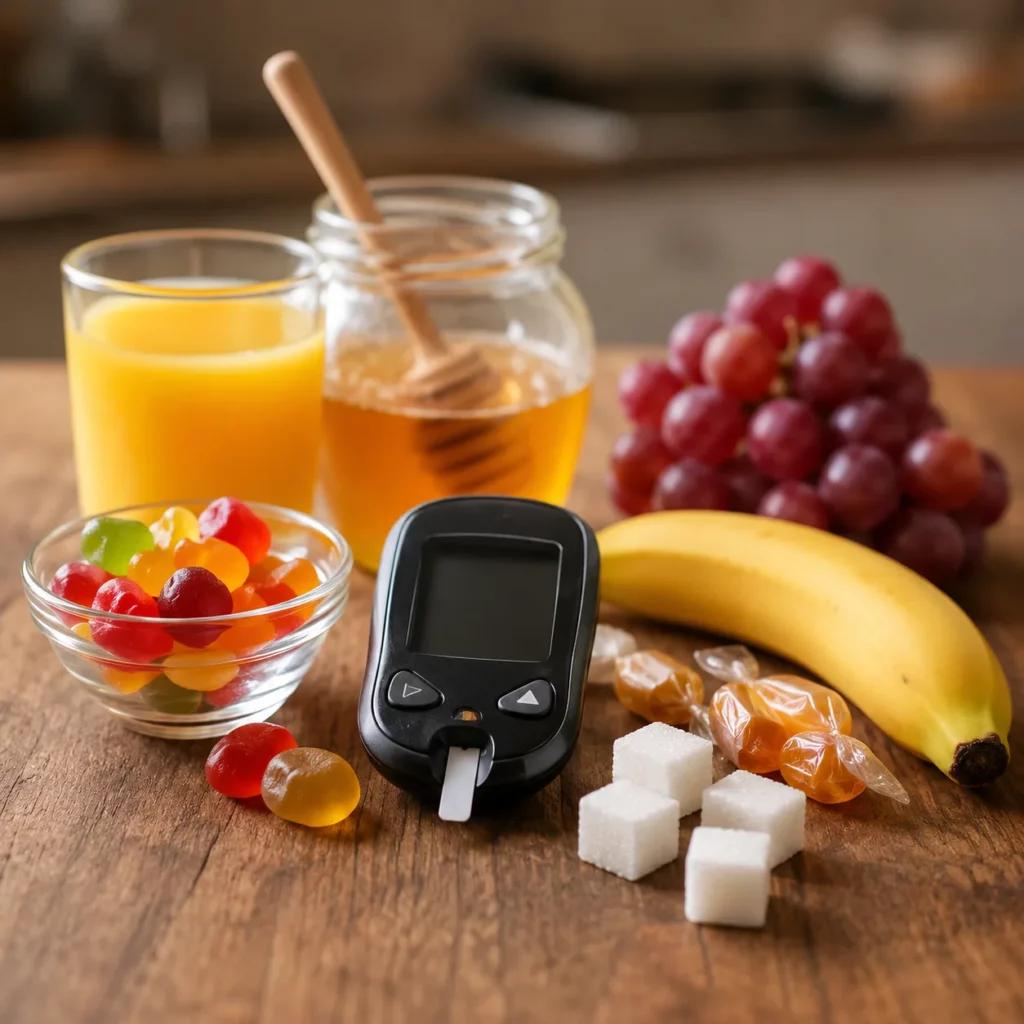
When a dangerous, terrifying crash hits, you desperately need highly rapid action. How to increase your sugar level immediately and safely before you completely pass out? We strictly teach the famous 15-15 rule so you know exactly what to eat when blood sugar is low during emergency hypoglycemia events.
First, instantly consume exactly fifteen grams of fast-acting, highly simple emergency carbohydrates. One exact tablespoon of pure honey works absolutely perfectly here. Other fantastic, reliable options include chewing medical glucose tablets or drinking pure fruit juice. You can also drink half a small can of regular soda or eat hard candy.
Next, you must wait exactly fifteen minutes and recheck your blood glucose levels carefully. If your glucose remains dangerously low, immediately repeat the entire fifteen-gram process again. The American Diabetes Association, Hypoglycemia (Low Blood Sugar) recommends following the 15-15 Rule as the gold standard emergency response for all diabetic patients experiencing a crash.
Risks of Using Honey for Blood Sugar Management
Relying too heavily on this sticky syrup carries major daily health risks. First of all, chronic overconsumption easily leads to massive, highly unexpected spikes in glucose. Furthermore, honey contains many hidden liquid calories that completely ruin your daily weight loss goals.
Additionally, measuring sticky syrups accurately with a simple metal spoon is notoriously difficult. You might easily pour two heavy tablespoons when you only intended to eat one. This massive caloric error instantly derails your strict, careful dietary management plan.
Finally, it is very messy and hard to access quickly during a severe nighttime emergency. You might accidentally under-dose and severely delay your vital, life-saving medical treatment. Glucose tablets are always vastly superior for exact, rapid medical dosing.
Best Alternatives to Honey for Diabetics
If you deeply want rich sweetness without the aggressive spike, try modern alternatives. Plant-based stevia comes from natural leaves and is incredibly popular today. It provides massive sweetness while remaining completely calorie-free for your strict daily diet.
Monk fruit extract provides fantastic, rich flavor without touching your sensitive glucose levels at all. Furthermore, modern sugar alcohols like pure erythritol are extremely safe, highly reliable daily choices. They do not forcefully cause the terrible stomach upset associated with older artificial sweeteners.
| Sweetener | Blood Sugar Impact | Calories |
|---|---|---|
| Stevia | None | Zero |
| Monk Fruit | None | Zero |
| Erythritol | Very Low | Near Zero |
Finally, allulose is a highly rare sugar that safely passes right through your body. Exploring these fantastic alternatives heavily protects your daily, long-term metabolic health.
When to Talk to a Doctor
You must quickly recognize the severe, glaring red flags of poor daily glucose management. If you experience repeated, severe low blood sugar episodes, call your clinic immediately. Furthermore, completely unexplained hypoglycemia symptoms require a very thorough, immediate medical investigation.
If your diabetes remains totally uncontrolled despite your efforts, you need professional assistance. Your doctor might need to heavily adjust your specific daily insulin or pill dosages. Finally, experiencing sudden, severe dizziness or completely fainting is a massive medical emergency.
Never try to manage these terrifying, highly severe symptoms alone at home. Seeking early, aggressive medical care absolutely prevents massive, life-altering metabolic complications later. Your health is simply far too important to leave to random guesswork.
Frequently Asked Questions
Is honey safer than sugar for diabetics?
Honey is slightly better than refined white sugar because it contains trace antioxidants and beneficial natural enzymes. However, it still significantly raises your circulating blood sugar levels. Therefore, you must rigorously count it as a heavy carbohydrate. Furthermore, always monitor your numbers closely if you add it to your daily meal plan.
How much honey can a diabetic eat?
Most clinical dietitians recommend eating no more than one small teaspoon daily. Ultimately, this exact amount depends entirely on your specific personal carbohydrate limits. Because every patient reacts differently, you must physically check your glucose levels exactly two hours after consuming it. Additionally, always discuss new sweet treats with your doctor first.
Does raw honey spike blood sugar?
Yes, raw honey absolutely spikes your numbers rapidly. While the raw form is slightly less processed, it still contains massive amounts of natural fructose and pure glucose. Consequently, it increases your circulating blood sugar levels just like normal maple syrup. In fact, your pancreas cannot distinguish between raw honey and standard table sugar.
Is honey okay during hypoglycemia?
Yes, honey acts as an excellent, highly effective emergency rescue food during a sudden crash. Because your stomach digests it incredibly fast, one exact tablespoon quickly raises dangerously dropping numbers. Therefore, it safely resolves mild hypoglycemia within exactly fifteen short minutes. Afterward, always remember to recheck your glucose to confirm your safety.
Which is better for diabetes: honey or stevia?
Stevia is definitively better for strict daily diabetes management. Unlike natural syrups, stevia contains absolutely zero calories and firmly does not spike your delicate glucose levels. Conversely, honey remains a heavy, high-carbohydrate food requiring intense, careful daily measurement. Consequently, I always encourage my diabetic patients to choose stevia for sweetening their morning coffee.
Conclusion
Managing your sweet tooth while actively balancing a complex metabolic condition is incredibly tough. Your body absolutely requires steady, highly reliable energy to function beautifully every single day.
As we have extensively discussed, natural sweeteners still pack a massive, unavoidable carbohydrate punch. Therefore, rigorous moderation and precise, exact portion control remain your absolute best daily tools.
Throughout my medical career, I have constantly reminded my patients to stay highly vigilant. You simply cannot treat natural syrups as an unlimited, completely free dietary pass. Instead, you must carefully monitor your unique bodily response after every single sweet meal. If you experience a sudden, scary crash, fast-acting carbohydrates are your true lifesaver.
Always keep emergency medical glucose tablets or a small honey packet constantly nearby. Remember to strictly consult your healthcare provider before dramatically altering your daily diabetic diet. Tracking your exact daily numbers helps you completely avoid dangerous, unexpected systemic spikes.
Ultimately, clinical knowledge is your most powerful, protective defense against severe metabolic complications. So, does honey help low blood sugar emergencies safely and quickly? Yes, it certainly does, when you use it smartly and cautiously.
Evidence-Based References
- Mayo Clinic — Hypoglycemia – Symptoms and causes https://www.mayoclinic.org/diseases-conditions/hypoglycemia/symptoms-causes/syc-20373685
- Mayo Clinic — Diabetes diet: Create your healthy-eating plan https://www.mayoclinic.org/diseases-conditions/diabetes/in-depth/diabetes-diet/art-20044295
- PubMed — Effect of honey on glycemic control and anthropometric measures in patients with type 2 diabetes https://pubmed.ncbi.nlm.nih.gov/28137453/
- PubMed — Honey and Diabetes Mellitus: Obstacles and Challenges https://pubmed.ncbi.nlm.nih.gov/29323714/
- PubMed — Natural honey and cardiovascular risk factors; effects on blood glucose, cholesterol, triacylglycerole, CRP, and body weight compared with sucrose https://pubmed.ncbi.nlm.nih.gov/15117561/
- Cleveland Clinic — Hypoglycemia (Low Blood Sugar) https://my.clevelandclinic.org/health/diseases/11647-hypoglycemia-low-blood-sugar
- Johns Hopkins Medicine — Hypoglycemia https://www.hopkinsmedicine.org/health/conditions-and-diseases/diabetes/hypoglycemia
- World Health Organization — Diabetes https://www.who.int/news-room/fact-sheets/detail/diabetes
- MedlinePlus — Hypoglycemia https://medlineplus.gov/hypoglycemia.html
- Harvard Health Publishing — The sweet danger of sugar https://www.health.harvard.edu/heart-health/the-sweet-danger-of-sugar
- Endocrine Society — Hypoglycemia https://www.endocrine.org/patient-engagement/endocrine-library/hypoglycemia